China tests its missile interception equipment
 China conducted a land-based, midcourse missile interception test on Thursday-the fifth land-based, anti-ballistic missile test the country has publicly announced.
The Defense Ministry said in a brief statement late on Thursday that the test had achieved its goals, and the operation was defensive in nature, not targeting any other country.
Before the latest operation, China had succe
China conducted a land-based, midcourse missile interception test on Thursday-the fifth land-based, anti-ballistic missile test the country has publicly announced.
The Defense Ministry said in a brief statement late on Thursday that the test had achieved its goals, and the operation was defensive in nature, not targeting any other country.
Before the latest operation, China had succe Russian cosmonauts to test new shielding material for radiation protection
 An award-winning composite material that has proven effective against radiation in nuclear submarines will be sent to the orbital outpost for further testing this year, the Russian space agency said on Monday.
"Space is known for its elevated radiation levels... The invention has already been tested in nuclear subs. If the space experiment proves to be equally successful the material will
An award-winning composite material that has proven effective against radiation in nuclear submarines will be sent to the orbital outpost for further testing this year, the Russian space agency said on Monday.
"Space is known for its elevated radiation levels... The invention has already been tested in nuclear subs. If the space experiment proves to be equally successful the material will NASA seeks seat on April Soyuz mission to ISS
WASHINGTON — NASA announced Feb. 9 it wants to obtain a seat on the next Soyuz mission to the International Space Station, launching in just two months, to ensure a U.S. presence on the station in the event of any commercial crew delays.
NASA selects Falcon Heavy to launch first Gateway elements
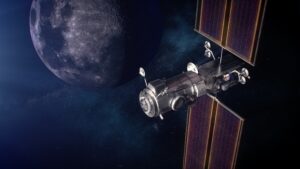
WASHINGTON — NASA awarded a contract to SpaceX Feb. 9 for the launch of the first two elements of its lunar Gateway on a Falcon Heavy in 2024.
NASA will use a Falcon Heavy rocket to launch the Power and Propulsion Element (PPE) and Habitation and Logistics Outpost (HALO) modules of the Gateway, destined for the near-rectilinear halo orbit around moon.
ESA's Solar Orbiter ducks behind the sun
Name: Solar Orbiter, or "Solo' as the mission control team fondly call it, is one of the European Space Agency's pluckiest missions and is now cruising toward the sun.
Age: One year old! We launched on 10 February 2020. Granted, it was first powered up on Earth at some point during construction, but launch is 'when it came alive."
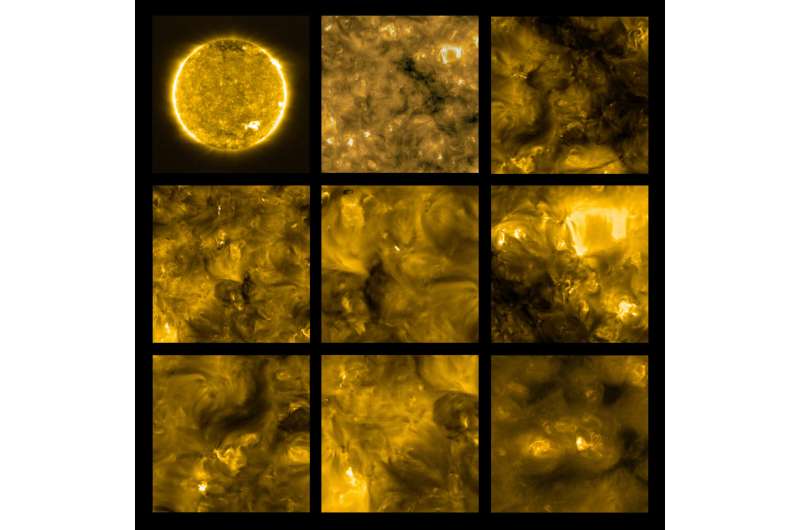
What's it doing out there? It's imaging our star, observing the solar wind and unraveling mysteries of the solar cycle. It's already returned some of the best images of ol'Sol ever, revealing omnipresent miniature solar flares, dubbed 'campfires," near the surface.
Anything else? Well, it uses prehistoric cave pigment as a coating to withstand temperatures up to 520°C. The sun's pretty darn hot, you know.
So, what's happening now? The spacecraft's orbit is taking it behind the sun, and starting a few days ago the apparent angle, as seen from Earth, between Solar Orbiter and the sun started falling below 5 degrees.
Meet ESA’s R&D department
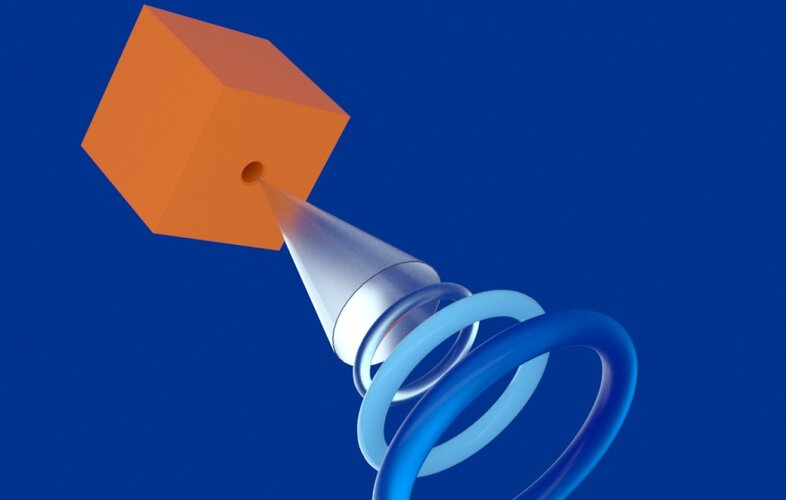
Our new brochure introduces ESA’s R&D department: the engineers charged with inventing the new technologies needed for Europe to push further out into space, and develop the novel services improving our lives here on Earth.
Analytical Space wins $26.4 million to establish optical network
SAN FRANCISCO – Satellite communications startup Analytical Space Inc. won a $26.4 million contract to develop and launch six cubesats and two hosted payloads to begin establishing the Fast Pixel Network for optical communications.
The three-year contract was awarded by AF Ventures, the service’s venture arm, with funding from the U.S.
China’s Tianwen-1 enters orbit around Mars
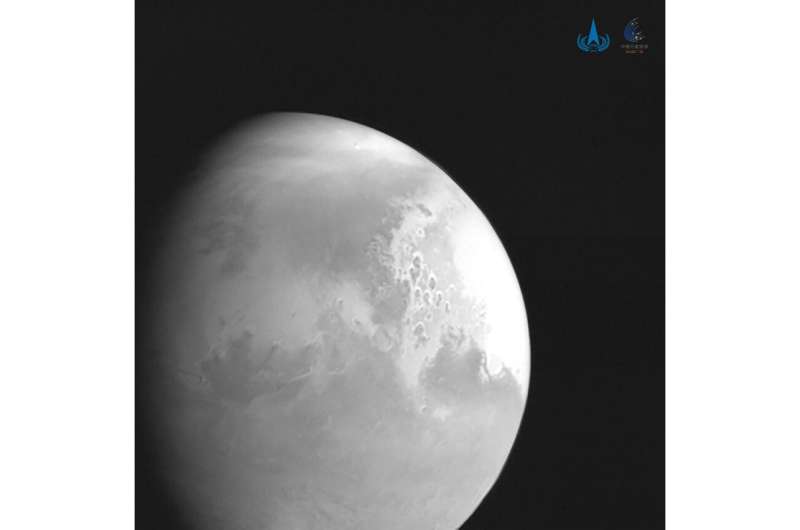
HELSINKI — China’s first interplanetary mission, Tianwen-1, successfully entered Mars orbit Feb.
Chinese spacecraft enters Mars' orbit, joining Arab ship
Keeping it fluid: Probing how fluids behave in weightlessness
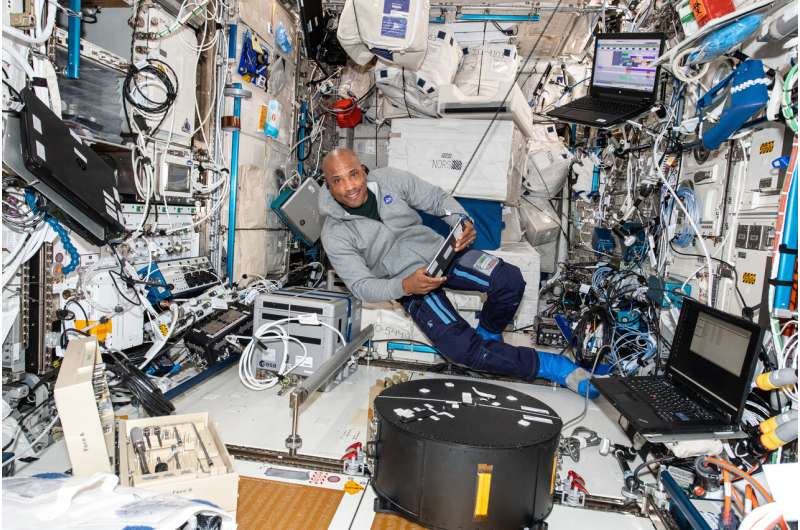
NASA astronaut Victor Glover installs the Fluid Dynamics in Space experiment, or Fluidics for short. Fluidics is the black cylinder pictured in the foreground of the European Columbus module of the International Space Station.
Developed by French space agency CNES and co-funded by Airbus, the Fluidics experiment is probing how fluids behave in weightlessness.
The experiment is made up of six small, transparent spheres housed in the black centrifuge seen here and is studying two phenomena.
The first is 'sloshing' or how liquids move inside closed spaces, which is hard to predict both with and without gravity. Think how frustrating it can be to get the last drop out of a packet of orange juice, then imagine the challenge for engineers designing satellites to use every drop of fuel in weightlessness, or designing rockets with fuel tanks that must deliver fuel to the engines under extreme loads. Insights can help industry design better satellite fuel-systems to increase their life and make them less expensive.
A second part of the experiment looks at wave turbulence in liquids. On Earth, gravity and surface tension influence how energy dissipates in waves or ripples.