

China's space station achieves 100 pct regeneration of oxygen resources
 China's space station, with the Shenzhou-15 crew now in orbit, can produce 100 percent of its oxygen supply through its onboard regeneration system, according to a space technology conference in Harbin, capital of China's northernmost Heilongjiang Province.
The development reflects that fundamental transformation of the environmental control and life-support system for China's manned space
China's space station, with the Shenzhou-15 crew now in orbit, can produce 100 percent of its oxygen supply through its onboard regeneration system, according to a space technology conference in Harbin, capital of China's northernmost Heilongjiang Province.
The development reflects that fundamental transformation of the environmental control and life-support system for China's manned space ESA working on human spaceflight scenarios for European space summit

The European Space Agency is preparing for a space summit this fall to win support for a new human spaceflight initiative as well as a new launch strategy.
AWS chooses 14 startups for its third space accelerator program

Amazon Web Services said April 18 it picked 14 U.S.
Solar sails could guide interplanetary travel, says new study (Update)
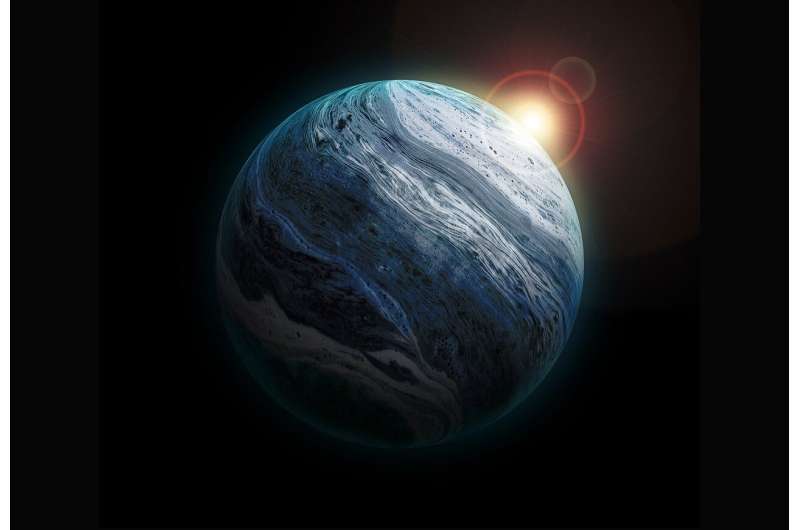
Space travel has brought us to our next-door neighbor, the moon, and to the depths of our larger solar community inhabited by giants such as Saturn and Jupiter.
In 1982, Voyager 2 whisked past Uranus closer than any other spacecraft has since, and now is sailing—46 years after its launch—through the constellation of Pavo, some 179 light years from Earth.
But there have been few comparable satellite missions in recent years. Cost is the main obstacle, but time frame is also a factor. The design for such long journeys takes years to calculate, and planning and construction of a space vehicle would take about a decade. Factoring in the time a satellite would require to reach distant targets means our next peek into the stars will likely not come any time soon.
A team of scientists led by Slava Turyshev of the Jet Propulsion Laboratory at the California Institute of Technology, which launched the Voyager satellites back in 1977, is anxious to get space exploration back on track. The team proposes a novel means of travel that could get us to the stars faster and cheaper.
10 remarkable Earth facts
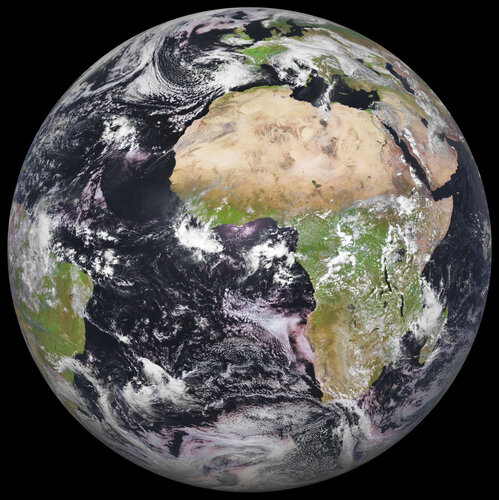
Every year on 22 April, we’ve celebrated Earth Day and the beautiful planet we call home. Earth Day, established in 1970, has been used to highlight our planet’s environmental challenges and raise awareness of the importance of protecting our world for future generations. But shouldn’t every day be Earth Day? We only have one beautiful planet after all. We hope you enjoy this curated list of 10 of the most remarkable facts about Earth.
Scroll to the end of the article to take part in ESA's 'You like, we plant' campaign.
Axiom announces new government human spaceflight program

Axiom Space has introduced a new program to allow countries to create human spaceflight programs without needing to develop their own infrastructure or other capabilities.
Inmarsat working to restore L-band services in Asia Pacific after satellite outage

An aging Inmarsat satellite that pilots use to keep in touch with air traffic control beyond the range of very high frequency (VHF) ground radars is experiencing a prolonged outage.
Northrop Grumman clears design hurdle for military communications satellite

Northrop Grumman completed a critical design review of a Space Development Agency communications satellite in 13 months, a fraction of the time required for traditional space programs.
NASA releases architecture for human exploration of the moon and Mars

NASA has released new details on the initial phases of its architecture to return humans to the moon as a step towards eventual missions to Mars.
Maxar secures Dish Network order in its first satellite contract of 2023

Dish Network said April 18 it has ordered a satellite from Maxar Technologies to expand high-definition broadcast services over North America.


