

There are 40 billion billions of Black Holes in the Universe!
 With a new computational approach, SISSA researchers have been able to make the fascinating calculation. Moreover, according to their work, around 1% of the overall ordinary (baryonic) matter is locked up in stellar mass black holes. Their results have just been published in the prestigious 'The Astrophysical Journal'.
How many black holes are out there in the Universe? This is one of the
With a new computational approach, SISSA researchers have been able to make the fascinating calculation. Moreover, according to their work, around 1% of the overall ordinary (baryonic) matter is locked up in stellar mass black holes. Their results have just been published in the prestigious 'The Astrophysical Journal'.
How many black holes are out there in the Universe? This is one of the Scientists are a step closer to finding planets like Earth
 The UK Space Agency has invested 25 million pounds in innovative science for the European Space Agency mission, called Planetary Transits and Oscillations of stars (PLATO), ensuring UK scientists and engineers, led by the University of Warwick, will take part in all aspects of the mission.
Caroline Harper, Head of Space Science at the UK Space Agency, said:
The critical milestone rev
The UK Space Agency has invested 25 million pounds in innovative science for the European Space Agency mission, called Planetary Transits and Oscillations of stars (PLATO), ensuring UK scientists and engineers, led by the University of Warwick, will take part in all aspects of the mission.
Caroline Harper, Head of Space Science at the UK Space Agency, said:
The critical milestone rev PLATO clears decisive hurdle
The European Space Agency (ESA) has given the green light to build the flight models of the spacecraft and science payload for the PLATO mission to search for extrasolar planets. The Critical Milestone Review officially concluded on 11 January 2022. This means that the production of the hardware for the space telescope system can now commence. The German Aerospace Center (Deutsches Zentrum fur L Quantum computing in silicon hits 99% accuracy
 Australian researchers have proven that near error-free quantum computing is possible, paving the way to build silicon-based quantum devices compatible with current semiconductor manufacturing technology.
"Today's publication shows our operations were 99 per cent error-free," says Professor Andrea Morello of UNSW, who led the work with partners in the US, Japan, Egypt, and at UTS and the U
Australian researchers have proven that near error-free quantum computing is possible, paving the way to build silicon-based quantum devices compatible with current semiconductor manufacturing technology.
"Today's publication shows our operations were 99 per cent error-free," says Professor Andrea Morello of UNSW, who led the work with partners in the US, Japan, Egypt, and at UTS and the U Semiconductor spin qubits gain further credibility as leading platform for quantum computing
 Researchers at QuTech-a collaboration between the Delft University of Technology and TNO-have taken an important step for semiconductor spin qubits by surpassing the 99% barrier for two-qubit gate fidelity. They report on their findings in Nature on 19 January 2021 and are featured on the issue's cover. Two independent works from groups at UNSW Sydney and at RIKEN report similar results in the s
 Scientists achieve key elements for fault-tolerant quantum computation in silicon spin qubits
 Researchers from RIKEN and QuTech-a collaboration between TU Delft and the Netherlands Organisation for Applied Scientific Research (TNO)- have achieved a key milestone toward the development of a fault-tolerant quantum computer.
They were able to demonstrate a two-qubit gate fidelity of 99.5 percent-higher than the 99 percent considered to be the threshold for building fault-tolerant comp
Researchers from RIKEN and QuTech-a collaboration between TU Delft and the Netherlands Organisation for Applied Scientific Research (TNO)- have achieved a key milestone toward the development of a fault-tolerant quantum computer.
They were able to demonstrate a two-qubit gate fidelity of 99.5 percent-higher than the 99 percent considered to be the threshold for building fault-tolerant comp On National Security | Solar power from space: Will it ever get off the ground?
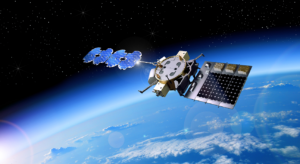
Space-based solar power is an idea that has been studied for decades. But even though the United States was a pioneer in this technology, government interest in taking it from the lab to orbit has been tepid at best.
Summit to ignite Europe’s bold space ambitions

European leaders will reaffirm plans to launch Europe on a world-leading trajectory during a high-level space summit to be held on 16 February in Toulouse, France.
Fitness in 360° | Cosmic Kiss
 Video:
00:01:36
Video:
00:01:36
You’ve heard of spacewalking astronauts but how do astronauts run? Join ESA’s Matthias Maurer for a workout on the International Space Station’s T2 treadmill and explore Node 3 in 360°.
Astronauts living and working on the International Space Station exercise for around two hours a day six days a week to stay fit and healthy in orbit. This helps counteract muscle and bone loss caused by life in microgravity.
The T2 treadmill is attached to the wall in Node 3 and astronauts secure themselves using a harness and bungies. This creates a feeling like running on a treadmill on
Proposed NTSB commercial space regulation criticized by industry and FAA
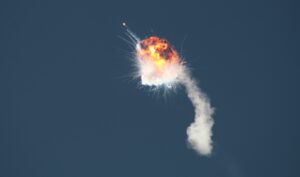
A proposal by NTSB that would give the agency a greater role in investigating failures of commercial launches is facing strong opposition from both the industry and the FAA.
The post Proposed NTSB commercial space regulation criticized by industry and FAA appeared first on SpaceNews.


