Rover escapes from sand trap
 Video:
00:01:09
Video:
00:01:09
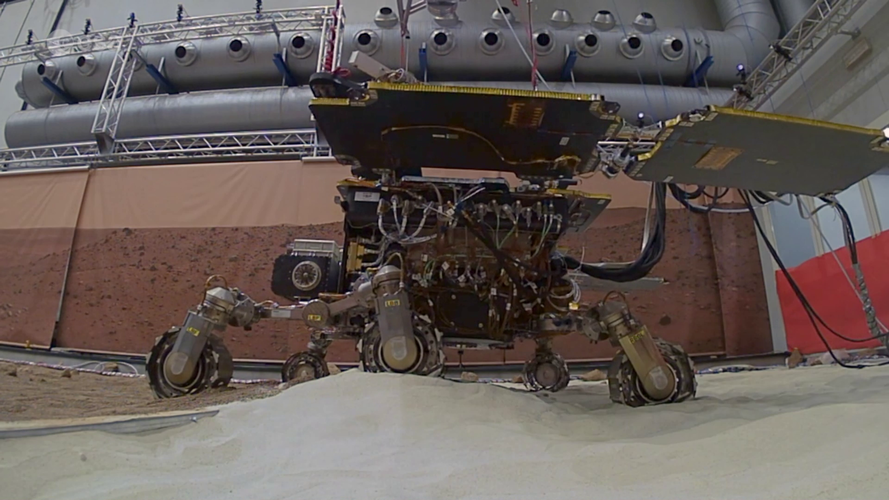
The ExoMars rover used in the Earth-based Mars Terrain Simulator makes escaping from a sand trap look easy in this exercise.
The rover initially has its front two wheels almost completely buried in sand, but easily escapes using its unique wheel-walking mode.
It takes about 20 minutes to complete the 2 m drive – slow and careful being the key to getting out of a difficult situation.
Rovers on Mars have previously been caught in sand, and turning the wheels dug them deeper, just like a car stuck in mud or snow. To avoid this, the ExoMars rover Rosalind Franklin
Earth from Space: White Nile, Sudan
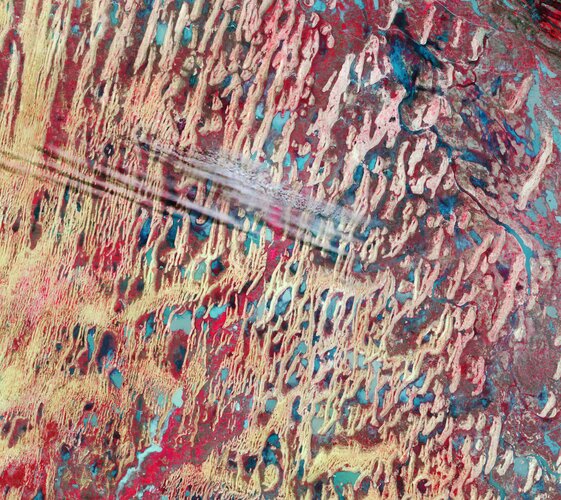
A part of the White Nile state in Sudan is featured in this false-colour image captured by the Copernicus Sentinel-2 mission.
Matthias launches into first month of space science
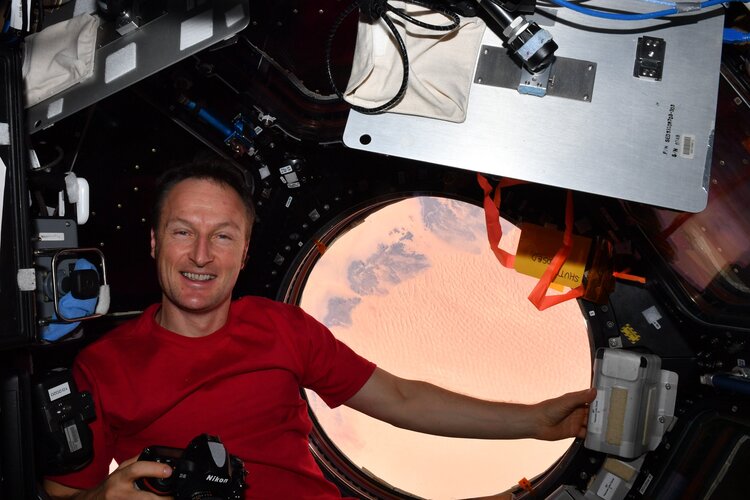
Barely three weeks into space life, first-time flyer Matthias Maurer has operated a robotic arm twice, welcomed a docking module, slept in a brand-new bed and changed plans a few times due to space debris alerts. Even science has not been routine, as he ran a handful of experiments for the very first time in orbit.
NASA awards funding to three commercial space station concepts
NASA issued awards Dec. 2 valued at more than $400 million to three groups of companies to advance development of commercial space stations, keeping those efforts on track to succeed the International Space Station by the end of the decade despite skepticism from the agency’s inspector general.
Week in images: 29 November - 3 December 2021
Week in images: 29 November - 3 December 2021
Discover our week through the lens
Webb stickers for Ariane 5 fairing
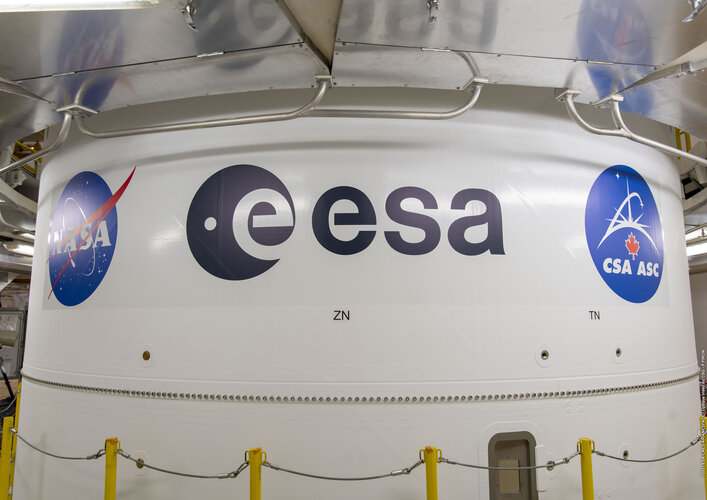 Image:
Webb stickers for Ariane 5 fairing
Image:
Webb stickers for Ariane 5 fairing U.S. Air Force Secretary Kendall: Short-term funding an ‘unfortunate’ reality for defense programs

Political fights that delay government funding bills are only helping U.S. adversaries, said Air Force Secretary Frank Kendall
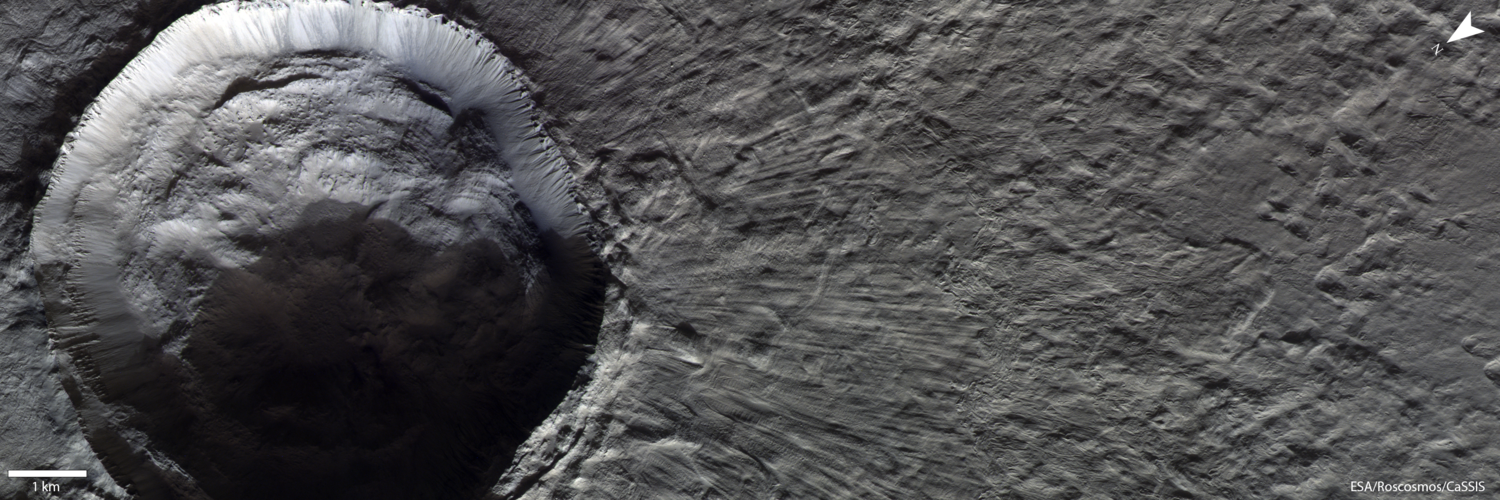
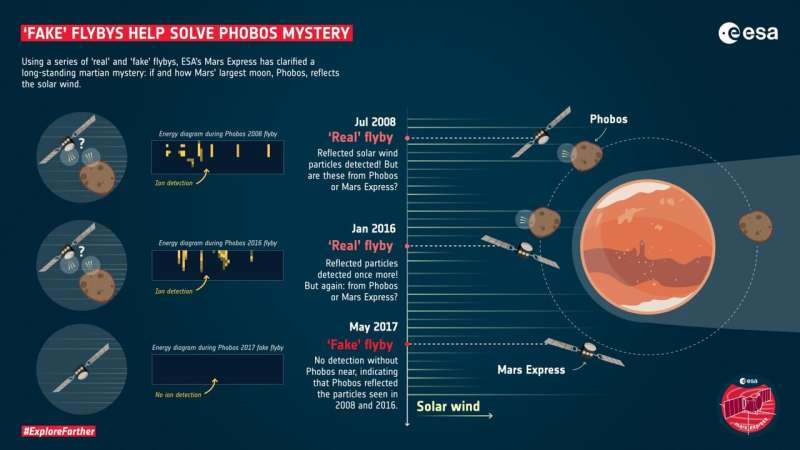
ESA's Mars Express unravels mystery of martian moon using 'fake' flybys
Video: Rover escapes from sand trap in Mars terrain simulator
The ExoMars rover used in the Earth-based Mars Terrain Simulator makes escaping from a sand trap look easy in this exercise.
The rover initially has its front two wheels almost completely buried in sand, but easily escapes using its unique wheel-walking mode.
It takes about 20 minutes to complete the 2 m drive—slow and careful being the key to getting out of a difficult situation.
Rovers on Mars have previously been caught in sand, and turning the wheels dug them deeper, just like a car stuck in mud or snow. To avoid this, the ExoMars rover Rosalind Franklin—and its replica—has a unique wheel walking locomotion mode. Similar to leg movements, wheel-walking combines motions of the deployment actuators (the legs) with the rotation of the wheels to progress without slippage. This motion gives very good traction in soft soils and high slopes, such as dunes.
"We hope to never need to use wheel walking on Mars to escape dangerous sand traps, but we are glad to have such functionality to potentially safeguard the mission," comments Luc Joudrier, ESA ExoMars Rover Operations Manager. "From a rover operational point of view, this is really our insurance again difficult terrains."
In the test run seen here, the back wheels drag once the front four wheels have gained good traction on firmer terrain.
Image: Tiny crystal of power as basis for solar cell
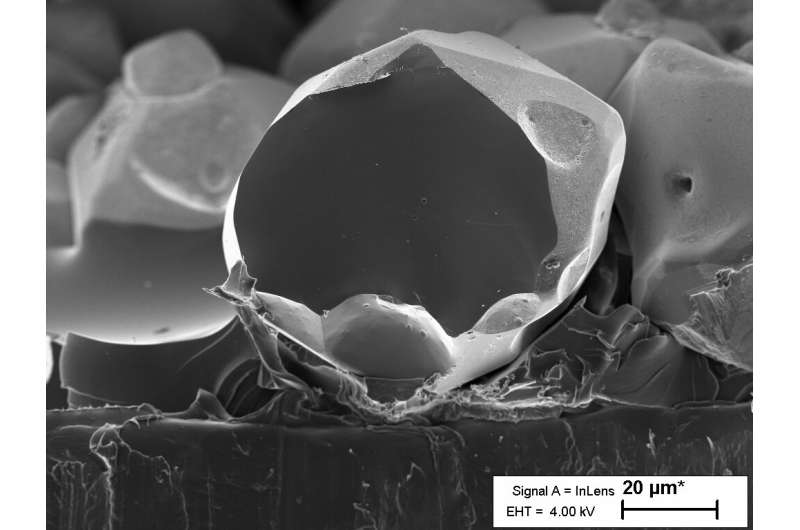
This crystal of iron pyrite, just four hundredths of a millimeter in size, could function as the light absorbing layer of a tiny solar cell—potentially a promising future source of power on the moon.
Working with Estonia's Tallinn University of Technology (TalTech), ESA has studied the production of sandpaper-like rolls of such microcrystals as the basis of monograin-layer solar cells.
"We're looking at these microcrystals in the context of future lunar settlement," explains ESA advanced manufacturing engineer Advenit Makaya. "Future moon bases will need to 'live off the land' in order to be sustainable, and the iron and sulfur needed to produce pyrite could be retrieved from the lunar surface."
Dr. Taavi Raadik from TalTech explains: "Our aim is to develop technology for pyrite microcrystal growth and to use them in a monograin layer solar cell, where each tiny crystal would work as an individual solar cell. The amount of power generated by one miniscule solar cell is small but in the normal-sized module there would be billions of them—and in principle there is no limitation in terms of their size and shape.