China launches new Gaofen-11 high resolution spy satellite to match U.S. capabilities
HELSINKI — China launched its third Gaofen-11 reconnaissance satellite Nov. 19, adding to a set of classified satellites with an optical resolution which may be comparable to top U.S.
ESA antenna to catch DART's first words
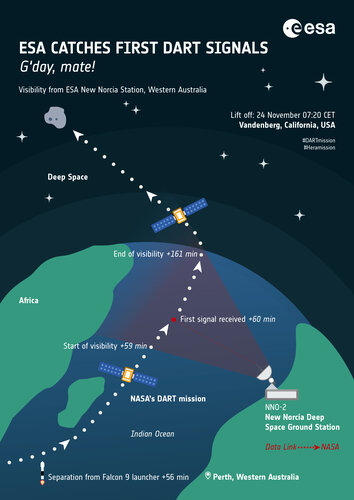 Image:
ESA's Australian ground station to catch DART's first words
Image:
ESA's Australian ground station to catch DART's first words Startup Cognitive Space using artificial intelligence to manage satellite operations
Cognitive Space raised $4 million in seed funding for its artificial intelligence-based software designed to manage constellations of imaging satellites.
Astra ready for commercial operations after first successful launch
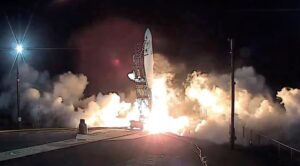
After reaching orbit for the first time, Astra Space executives said they are ready to begin commercial operations of their small launch vehicle and scale up production, while also preparing to test a new vehicle next year.
An absolutely bonkers plan to give Mars an artificial magnetosphere
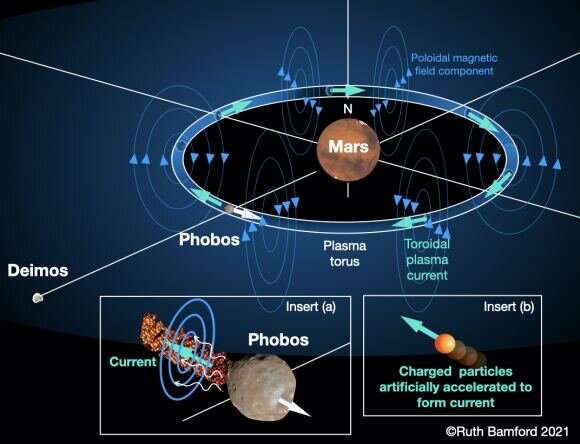
Terraforming Mars is one of the great dreams of humanity. Mars has a lot going for it. Its day is about the same length as Earth's, it has plenty of frozen water just under its surface, and it likely could be given a reasonably breathable atmosphere in time. But one of the things it lacks is a strong magnetic field. So if we want to make Mars a second Earth, we'll have to give it an artificial one.
The reason magnetic fields are so important is that they shield a planet from solar wind and ionizing particles. Earth's magnetic field prevents most high-energy charged particles from reaching the surface. Instead, they are deflected from Earth, keeping us safe. The magnetic field also prevents solar winds from stripping Earth's atmosphere over time. Early Mars had a thick, water-rich atmosphere, but it was gradually depleted without the protection of a strong magnetic field.
Analysis: DoD ‘pivot to LEO’ a win for commercial satellite industry
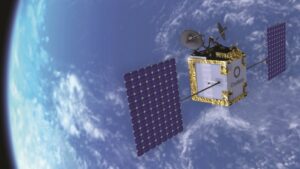
The U.S. Defense Department’s interest in low Earth orbit space services is a positive for satellite manufacturers and for commercial operators of broadband constellations, says a new report by the market research firm Quilty Analytics.
Online Discussion: We’ve picked the winners of the 2021 SpaceNews Awards

The SpaceNews Awards are held each year to recognize achievements in space commerce, exploration and stewardship.
Voyager Space acquires majority stake in Space Micro
Voyager Space Inc. is acquiring a majority stake in Space Micro Inc. as part of an agreement designed to help the San Diego-based supplier of space electronics and satellite components expand operations to meet demand.
Double Asteroid Redirection Test launch could be key step forward in planetary defense
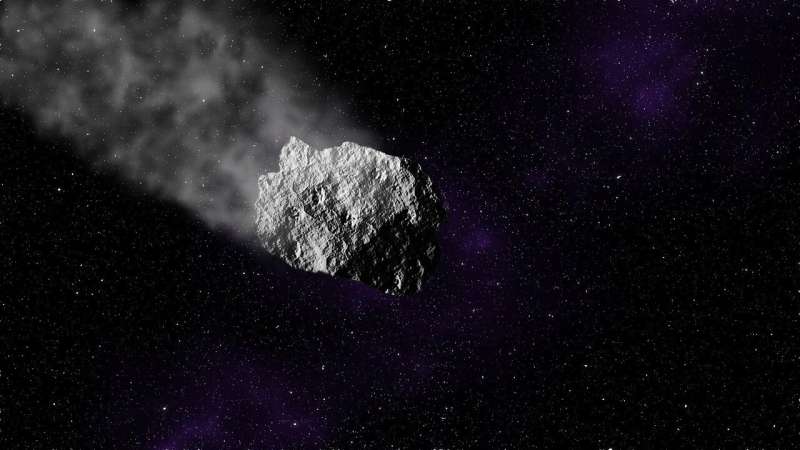
NASA's latest launch into outer space is going to make an impact. In fact, that's its entire mission.
DART (Double Asteroid Redirection Test), which is scheduled to launch at 10:20 p.m. PST on Nov. 23 out of Vandenberg Air Force Base in California, is NASA's first planetary defense mission. This mission will demonstrate asteroid deflection via kinetic impact. The goal is to collide with the target to see how the orbit changes. It's a test run to see if such a plan is feasible should we find an asteroid on a collision course with Earth one day.
Cristina Thomas, an assistant professor of astronomy and planetary sciences at Northern Arizona University and lead of the DART Observations Working Group, is excited to see the effects of the impact. She and her international team have been working for years to obtain a precise pre-impact orbit of Dimorphos, the satellite asteroid, around Didymos, the primary asteroid in a near-Earth asteroid system.
Near-Earth, of course, is relative; the planet is in no danger from Didymos. However, an asteroid heading toward Earth is possible, and scientists throughout the world are working on ways to identify these potential threats and how to mitigate them.
JWST launch slips after payload processing incident
NASA announced Nov. 22 that it is delaying the launch of the James Webb Space Telescope by at least four days to investigate an incident that took place preparing the spacecraft for launch in French Guiana.