China releases information of 15 new lunar samples online
 China has released the information of the third batch of lunar samples brought back by the country's Chang'e-5 mission.
Public users can log on to the website of China's Lunar and Deep Space Exploration (www.clep.org.cn) to check for the related information of the 15 new samples and submit applications for research.
The Chang'e-5 probe returned to Earth on Dec. 17, 2020, retrieving a
China has released the information of the third batch of lunar samples brought back by the country's Chang'e-5 mission.
Public users can log on to the website of China's Lunar and Deep Space Exploration (www.clep.org.cn) to check for the related information of the 15 new samples and submit applications for research.
The Chang'e-5 probe returned to Earth on Dec. 17, 2020, retrieving a Hunting for alien planets
 Thousands of alien worlds are known to orbit stars beyond our solar system. And many more worlds, possibly harboring life, lie waiting to be discovered. A new astronomical instrument called NEID, the NN-explore Exoplanet Investigations with Doppler spectroscopy, has come online in 2021 to help scientists hunt for new alien worlds.
The Texas Advanced Computing Center (TACC) is assisting the
Thousands of alien worlds are known to orbit stars beyond our solar system. And many more worlds, possibly harboring life, lie waiting to be discovered. A new astronomical instrument called NEID, the NN-explore Exoplanet Investigations with Doppler spectroscopy, has come online in 2021 to help scientists hunt for new alien worlds.
The Texas Advanced Computing Center (TACC) is assisting the Circumbinary planet discovered by TESS validates new detection technique
 A new technique developed in part by Planetary Science Institute Senior Scientist Nader Haghighipour has allowed astronomers to quickly detect a transiting circumbinary planet orbiting around two suns, according to a new Astronomical Journal paper on which Haghighipour is an author.
Circumbinary planets are planetary bodies that rotate around two stars. Although for years, they were merely
A new technique developed in part by Planetary Science Institute Senior Scientist Nader Haghighipour has allowed astronomers to quickly detect a transiting circumbinary planet orbiting around two suns, according to a new Astronomical Journal paper on which Haghighipour is an author.
Circumbinary planets are planetary bodies that rotate around two stars. Although for years, they were merely Roman Space Telescope will help drive new era of cosmological discovery
 A team of scientists has forecast the scientific impact of the Nancy Grace Roman Space Telescope's High Latitude Wide Area Survey on critical questions in cosmology. This observation program will consist of both imaging, which reveals the locations, shapes, sizes, and colors of objects like distant galaxies, and spectroscopy, which involves measuring the intensity of light from those objects at
 James Webb Space Telescope will reveal new insights into astrochemistry
 On Dec. 18, the James Webb Space Telescope (JWST) will launch from French Guiana to its destination almost a million miles from Earth. The telescope will give scientists unprecedented views of chemistry occurring throughout the universe. This information will provide new insights into how planetary systems form and whether life-sustaining conditions exist elsewhere in the universe, according to
 Morpheus unveils Sphere product line for satellite constellations
Morpheus, a German propulsion startup that opened an office in Los Angeles earlier this year, unveiled a suite of products, called the Sphere ecosystem, that are designed to work together to reduce the cost and complexity of satellite constellation operations.
Earth from Space: Cancún, Mexico
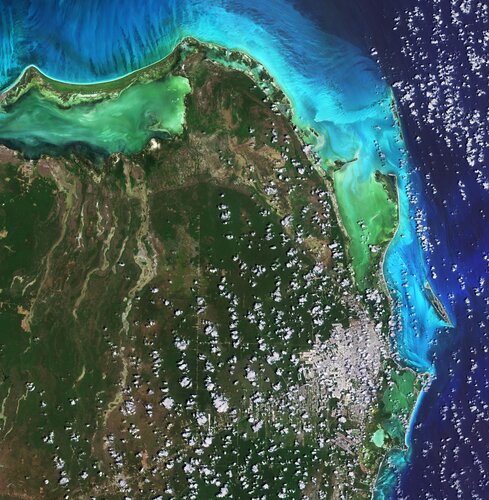
Cancún, situated in Quintana Roo on the northeast coast of Mexico’s Yucatán Peninsula, is featured in this image captured by the Copernicus Sentinel-2 mission.
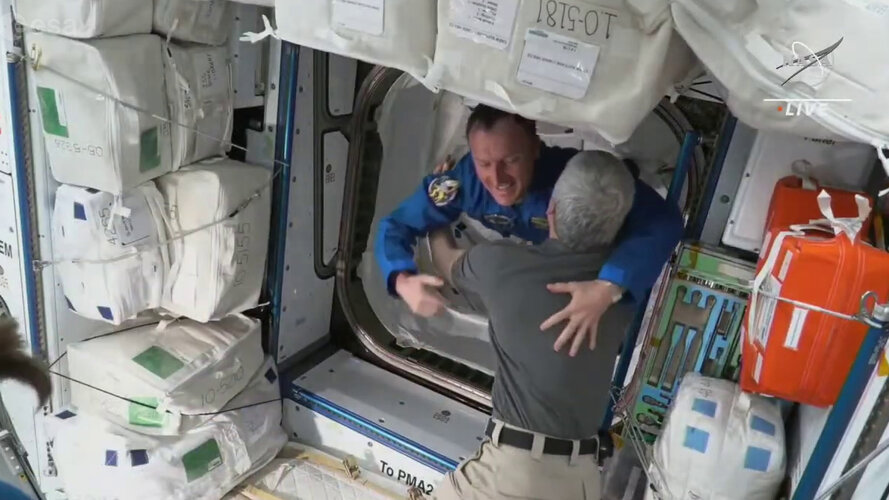
Crew-3 docking replay
 Video:
00:06:35
Video:
00:06:35
Relive the moment the SpaceX Crew Dragon spacecraft, Endurance, docked to the International Space Station with ESA astronaut Matthias Maurer and his NASA colleagues Raja Chari, Tom Marshburn and Kayla Barron on board.
Docking took place at 23:32 GMT Thursday, 11 November/00:32 CET Friday, 12 November, around 22 hours after Crew-3 was launched atop a Falcon 9 rocket from NASA’s Kennedy Space Center in Florida, USA.
Crew Dragon docking is autonomous. Once docked, astronauts on Endurance and aboard the Space Station conducted standard leak checks and pressurisation before the hatch between the two spacecraft was opened at 01:25 GMT/02:25
Nanoracks hires new CEO

Commercial space station company Nanoracks has hired a new chief executive as its co-founder and longtime head moves to a new position as its parent company.
Astra says focus is on launch as it files application for satellite constellation
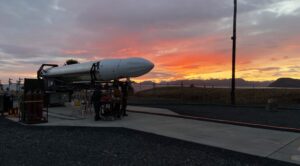
A week after a filing an application with the FCC for a constellation of more than 13,000 satellites, Astra Space executives said that their near-term focus remains on developing their launch capabilities.