Astroscale and New Zealand to partner on space sustainability projects
Astroscale signed an agreement with the government of New Zealand Nov. 10 to study advanced concepts for orbital debris removal.
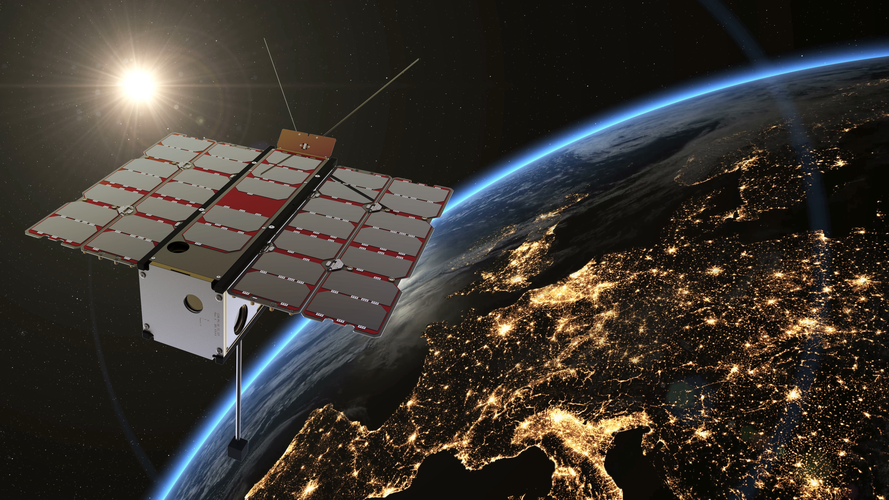 Image:
RadCube reaches out
Image:
RadCube reaches out Mapping our human footprint from space

The world’s population is expected to reach 9.7 billion in 2050, according to the UN Department of Economics and Social Affairs. Urban areas are already home to 55% of the world’s population and that figure is expected to grow to 68% by 2050. Rapid and unplanned urbanisation, combined with the challenges brought by climate change, can lead to an increase in air pollution, higher vulnerability to disasters, as well as issues related to the management of resources such as water, raw materials and energy.
To improve the understanding of current trends in global urbanisation, ESA and the German Aerospace Center (DLR),
Off-Earth manufacturing symposium: how to build a new home in space
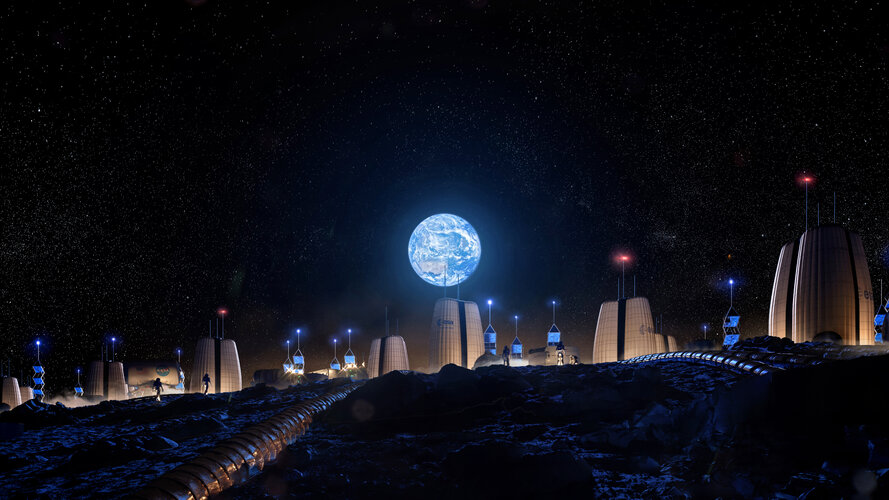
For long-term stays on the Moon and Mars, we would need to use local materials to build on location. Off-Earth manufacturing could be used to construct infrastructure that meets needs such as shielding crews and equipment from radiation, providing food and water, and generating electricity.
Medical experiments in space
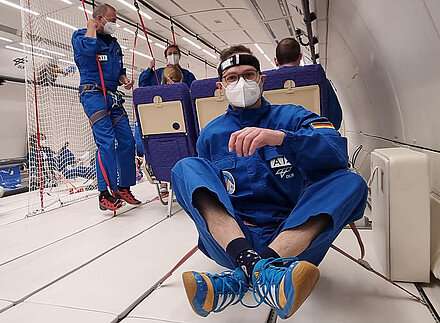
The SpaceX carrier rocket lifted off from NASA's Kennedy Space Center in Florida, U.S. early on Thursday morning, Central European Time. The 'Cosmic Kiss' mission's four crew members will travel to the International Space Station (ISS) on board a Crew Dragon capsule. They will remain on the ISS until April 2022. Joining his three NASA colleagues is ESA astronaut Dr. Matthias Maurer, the 12th German in space and the fourth German on the ISS. This will be the 51-year-old materials scientist's first-ever space flight, for which he has been training and preparing since April 2020.
During his mission, Dr. Maurer will conduct an array of experiments. Responsibility for the selection and coordination of the mission's German experiments rests with the German Space Agency at the DLR. All experiments have completed numerous testing stages, such as parabolic flights.
Thomas during event from Space Station
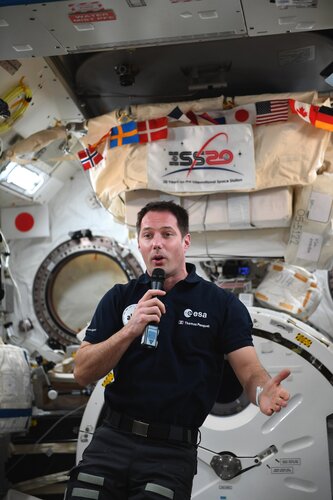 Image:
Thomas during event from Space Station
Image:
Thomas during event from Space Station South Korea to develop reusable rocket with 100-ton thrust engines
The plan to develop a reusable rocket came as a surprise because “reusability” was nowhere to be seen in the government’s budget request for 2022 — in which South Korea’s next-generation rocket was supposed to be an expendable rocket.
Space Force leader suggests education secretary should be on the National Space Council
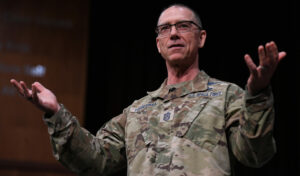
arly education about the value created by space technology should be a national priority, the top enlisted leader of the U.S. Space Force said Nov. 11.
U.S. Space Force buys three new GPS satellites from Lockheed Martin
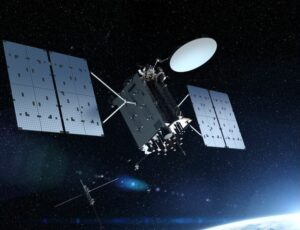
The U.S. Space Force has ordered three GPS 3F satellites from Lockheed Martin for $737 million, a spokesperson said Nov. 11.
Chinese rocket firms make new moves toward launch
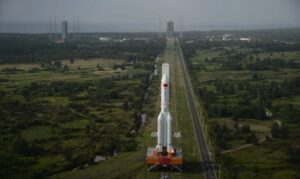
A number of Chinese launch firms have taken steps towards realizing plans in recent days with a series of agreements, engine tests and launch vehicle deliveries.