Astra files FCC application for 13,600-satellite constellation
Small launch vehicle developer Astra Space filed an application with the FCC Nov. 4 to deploy a constellation of more than 13,600 satellites that would provide broadband services.
Harris to convene first National Space Council meeting Dec. 1

Vice President Kamala Harris will announce Nov. 5 plans to hold her first meeting of the National Space Council at the beginning of December.
Image: Mind the stars
Space can be a cruel mistress, but she is a beautiful one.
As we await the launch of ESA astronaut Matthias Maurer and the return of Thomas Pesquet, let us marvel at the fact that humans live and work in space, an environment so inhospitable to us.
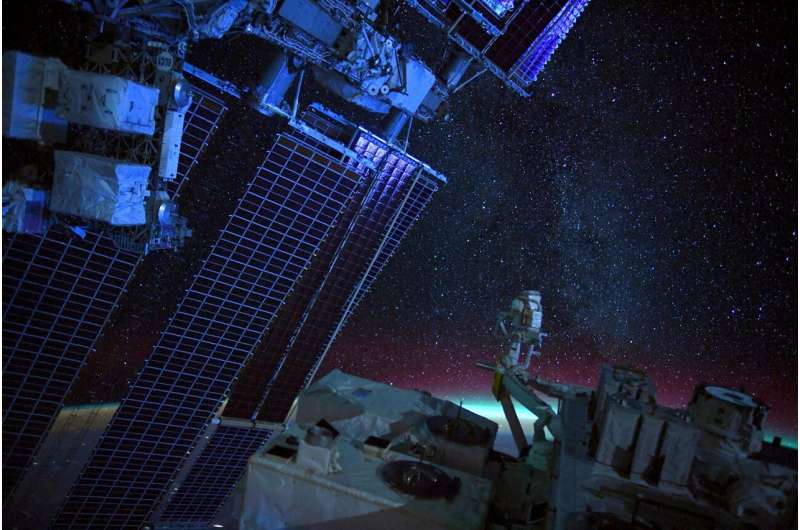
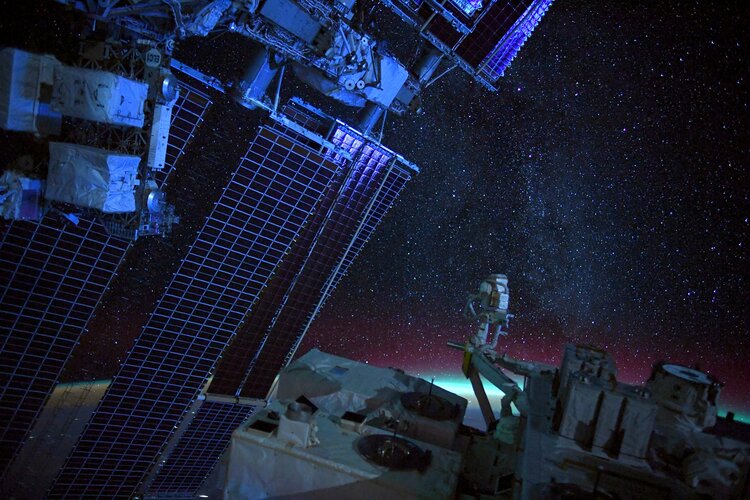
As Thomas nears the end of his six-month mission Alpha on the Space Station, he took this image, noting that living on the International Space Station "really feels like flying on a spaceship into the cosmos… or wait… that's what we do."
While astronauts are often pointing their cameras down to Earth, Thomas looked up for this image. "When you let your eyes adapt to the night, you start seeing millions of stars and it's amazing…there's also a lot of beauty in the cosmos itself, it's just harder to see (and to photograph) at first."
Thanks to collective human intelligence and cooperation, the International Space Station has been a reality for over 20 years, hosting astronauts who run experiments and monitor our planet from above. While launches are quite routine these days, delays happen but that's the space business.
Development of the demonstration satellite HIBARI with variable shape attitude control
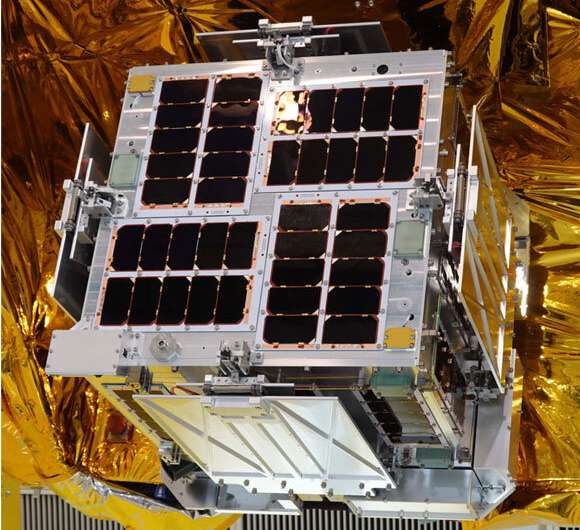
A research team led by Professor Saburo Matunaga of the Department of Mechanical Engineering, School of Engineering, Tokyo Institute of Technology (Tokyo Tech), developed a 50-kg-class technology demonstration microsatellite called HIBARI that denotes "skylark" in English. The purpose of this satellite is the on-orbit demonstration of Variable Shape Attitude Control (VSAC) technology where attitude and orbit are controlled using a variable structure, and the satellite adjusts the attitude via the recoil from the movement of the four movable solar cell paddles. By deploying and retracting the paddles, atmospheric drag can be adjusted and used for orbit control.
HIBARI was selected as a demonstration theme for Japan Aerospace Exploration Agency (JAXA)'s Innovative Satellite Technology Demonstration (ISTD), and it will be launched on Epsilon-5 sometime after November 2021 from the Uchinoura Space Center. The satellite will be launched into a sun-synchronous orbit at 9:30 Local Sun time at Descending Node with a perigee altitude of 547 km and apogee altitude of 565 km for demonstrating VSAC technology in space.
Week in images: 01 - 05 November 2021
Week in images: 01 - 05 November 2021
Discover our week through the lens
Webb unboxed in cleanroom at Europe’s Spaceport
 Video:
00:01:19
Video:
00:01:19
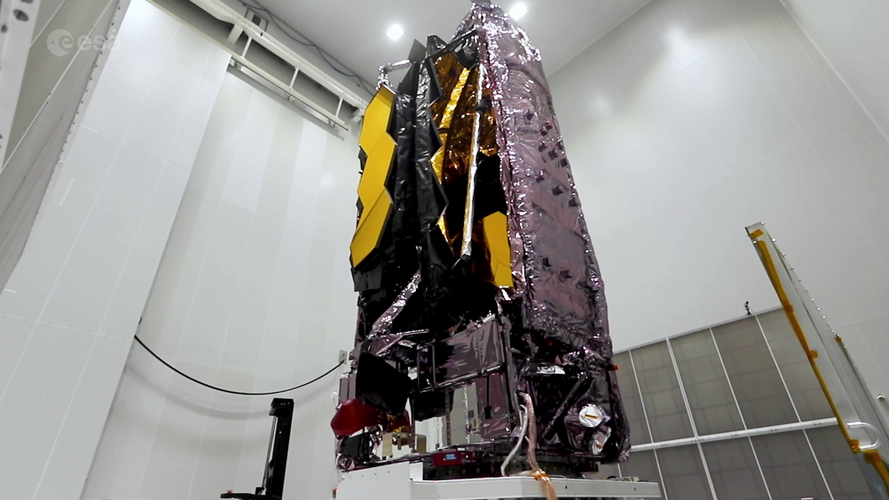
After its arrival at Pariacabo harbour in French Guiana on 12 October 2021, the James Webb Space Telescope was transported to Europe’s Spaceport and unboxed in the cleanroom. It is now being prepared for its launch on an Ariane 5 rocket in December.
Though the telescope weighs only six tonnes, it is more than 10.5 m high and almost 4.5 m wide when folded. It was shipped in its folded position in a 30 m long container which, with auxiliary equipment, weighed more than 70 tonnes.
After arriving in the harbour, the telescope inside its container
Last call: fly your payload on first Ariane 6 launch
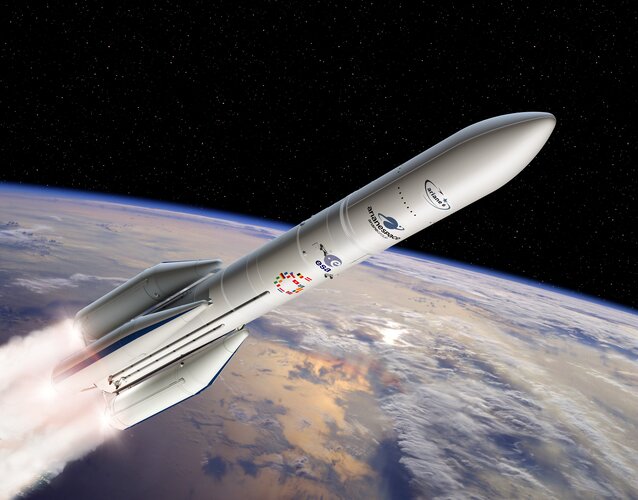
ESA offers an opportunity for payloads and experiments to ride on board the first flight of Ariane 6 planned in 2022. Notice of interest should reach ESA by 15 November.
Virgin Orbit, Japanese airline team up for air-launch system
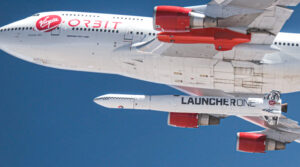
Virgin Orbit has entered an agreement with the owner of Japan's All Nippon Airways for the procurement of 20 flights of Virgin Orbit's LauncherOne rocket from an airport in Japan.
An object is now orbiting alongside China’s Shijian-21 debris mitigation satellite
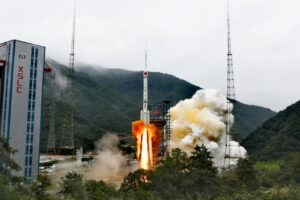
U.S. space tracking has detected a new object for unknown purposes orbiting along with China’s recently launched Shijian-21 space debris mitigation technology satellite.
To find life on other planets, NASA rocket team looks to the stars
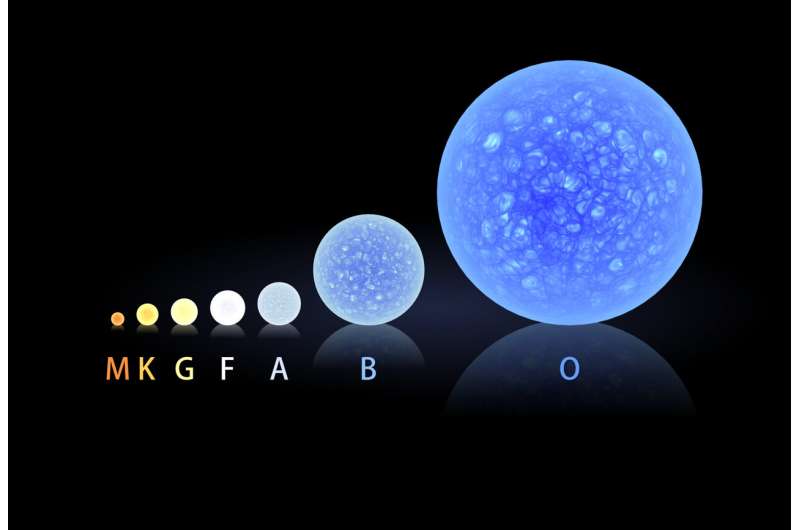
A NASA sounding rocket will observe a nearby star to learn how starlight affects the atmospheres of exoplanets—key information in the hunt for life outside our solar system.