NASA awards Sun-Sky Scanning Sun Photometers for the AERONET Project
 NASA has awarded a contract for Sun-Sky Scanning Sun Photometers to CIMEL Electronique of Paris, France to support the AErosol RObotic NETwork (AERONET).
This is a firm-fixed-price, indefinite delivery/indefinite quantity contract with an estimated total ordering value of $10M. The five-year period of performance begins on September 28 and includes one six-month option. The work will be pe
NASA has awarded a contract for Sun-Sky Scanning Sun Photometers to CIMEL Electronique of Paris, France to support the AErosol RObotic NETwork (AERONET).
This is a firm-fixed-price, indefinite delivery/indefinite quantity contract with an estimated total ordering value of $10M. The five-year period of performance begins on September 28 and includes one six-month option. The work will be pe Extending LIGO's reach into the cosmos
 Since LIGO's groundbreaking detection, in 2015, of gravitational waves produced by a pair of colliding black holes, the observatory, together with its European partner facility Virgo, has detected dozens of similar cosmic rumblings that send ripples through space and time.
In the future, as more and more upgrades are made to the National Science Foundation-funded LIGO observatories-one in
Since LIGO's groundbreaking detection, in 2015, of gravitational waves produced by a pair of colliding black holes, the observatory, together with its European partner facility Virgo, has detected dozens of similar cosmic rumblings that send ripples through space and time.
In the future, as more and more upgrades are made to the National Science Foundation-funded LIGO observatories-one in Space Force intelligence organization established at Wright Patterson Air Force Base
The Space Force Intelligence Activity was stood up Sept. 24 as an interim organization until the National Space Intelligence Center is established.
Video: We asked a NASA technologist – is there oxygen on Mars?
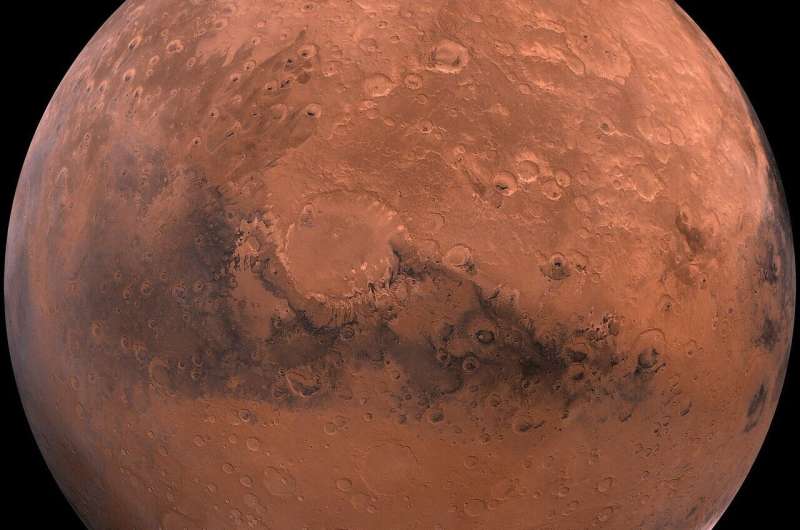
Is there oxygen on Mars? Technically yes, but it's nothing like the amount we have on Earth. So breathing is out of the question. However, there is a lot of carbon dioxide (CO2) on Mars.
Now, a new technology—MOXIE—has proven that we can convert Martian CO2 into oxygen for use by future explorers. NASA engineer Asad Aboobaker tells us more.
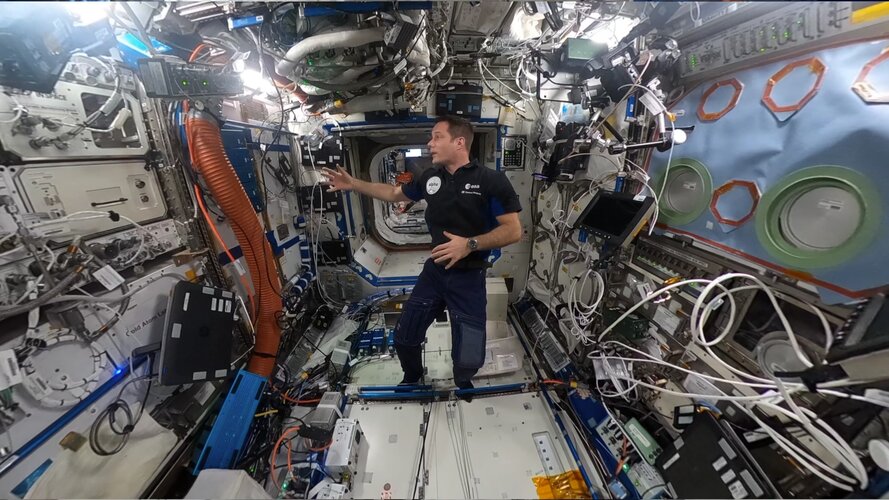
Destiny | Space Station 360 (in French with English subtitles available)
 Video:
00:02:06
Video:
00:02:06
ESA astronaut Thomas Pesquet takes you on a tour of the International Space Station like no other. Filmed with a 360 camera, the Space Station 360 series lets you explore for yourself alongside Thomas’s explanation – episode seven is NASA’s Destiny laboratory.
The International Space Station’s fourth module, Destiny, was waunched on 7 February 2001 on Space Shuttle Atlantis. The American module is the heart of the non-Russian part of the Station and allows experiments to be performed in many disciplines, from biology to physics, including a rack for burning liquids in weightlessness and the European Microgravity Science
First Copernicus satellite exceeds design working life
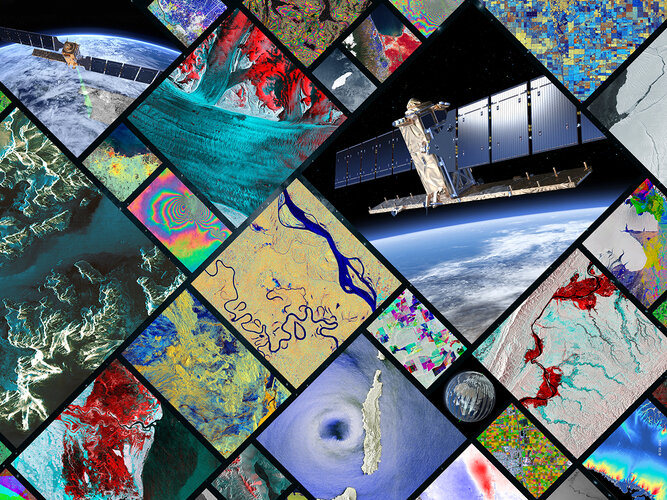
This week marks seven years since the very first satellite that ESA built for the European Union’s Copernicus programme started delivering data to monitor the environment. The Sentinel-1A satellite has shed new light on our changing world and has been key to supplying a wealth of radar imagery to aid disaster response. While this remarkable satellite may have been designed for an operational life of seven years, it is still going strong and fully expected to be in service for several years to come.
Meeting Mercury
 Video:
00:01:01
Video:
00:01:01
A beautiful sequence of 53 images taken by the monitoring cameras on board the ESA/JAXA BepiColombo mission as the spacecraft made its first close flyby of its destination planet Mercury on 1 October 2021.
The compilation includes images from two of the three Monitoring Cameras (MCAM) onboard the Mercury Transfer Module, which provides black-and-white snapshots at 1024 x 1024 pixel resolution. It is not possible to image with the high-resolution camera suite during the cruise phase. The MCAMs also capture parts of the spacecraft: MCAM-2 sees the medium-gain antenna and magnetometer boom, while the high-gain
Space physician training course: call for applications
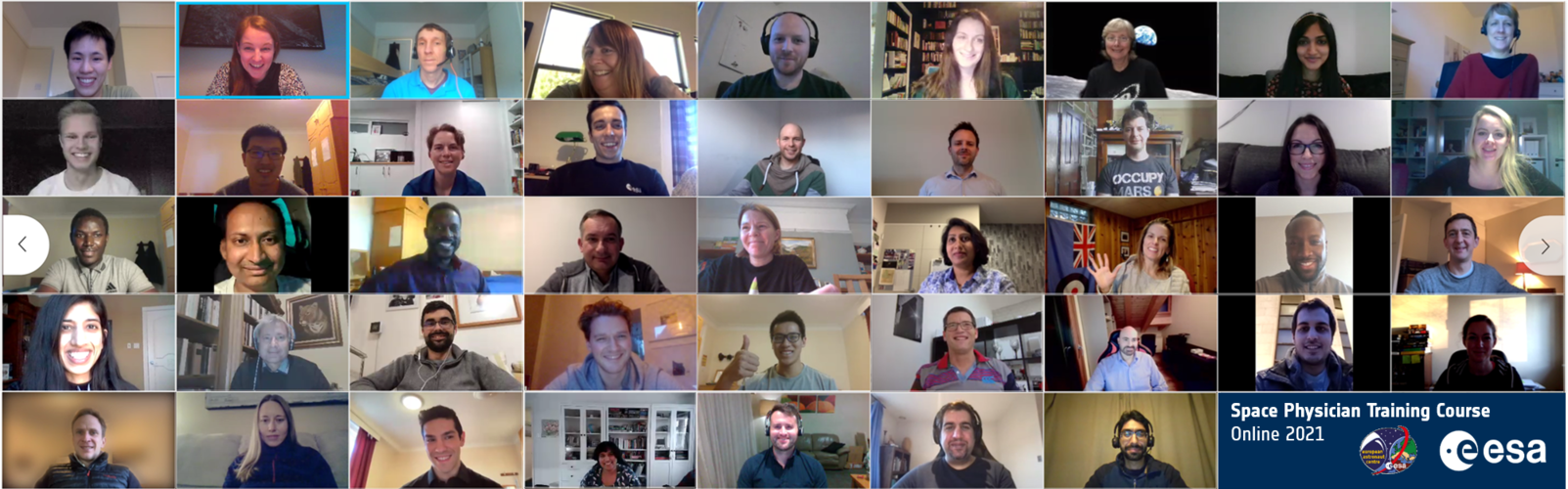
Are you a qualified physician? Would you like to gain insight into the field of space medicine? ESA is once again seeking medical doctors for its out-of-this-world training course and this is your chance to apply.
Enhanced Proton M Launch System – New Features
In 2021 the enhanced Proton M launch system celebrates the 20th anniversary since the start of its operation. Since then, 100+ missions have been completed with the last 21 launches being successful (no issues reported by customers).
South Korea’s air force opens space ops center
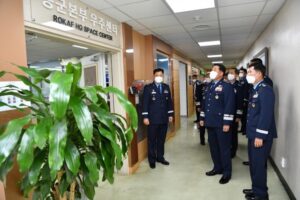
South Korea’s air force has launched a space center that will play a central role in drawing space policies for the nation’s armed forces as well as enhancing cooperation with domestic and international partners, including U.S. Space Force