Russian crew docks at ISS to film first movie in space (Update)
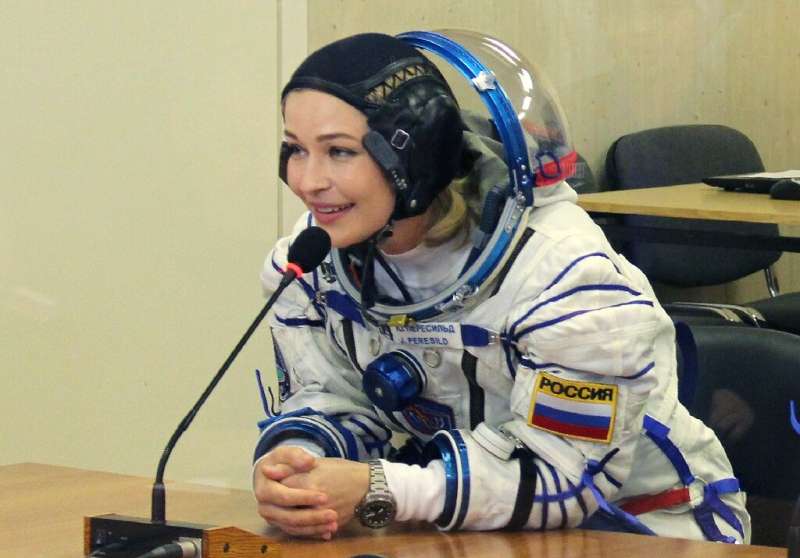
A Russian actress and director blasted off to the International Space Station on Tuesday in a historic bid to best the United States to film the first movie in orbit.
The Russian crew is set to beat a Hollywood project that was announced last year by "Mission Impossible" star Tom Cruise together with NASA and Elon Musk's SpaceX.
Actress Yulia Peresild, 37, and film director Klim Shipenko, 38, took off from the Russia-leased Baikonur Cosmodrome in ex-Soviet Kazakhstan at the expected time of 0855 GMT, with docking scheduled for 1212 GMT.
"Launch as planned," the head of the Roscosmos space agency, Dmitry Rogozin, said on Twitter.
Led by veteran cosmonaut Anton Shkaplerov, the film crew will travel in a Soyuz MS-19 spaceship for a 12-day mission at the ISS to film scenes for "The Challenge".
A live broadcast on Russian TV showed the Soyuz spacecraft ascending into a cloudless sky.
Thomas becomes Space Station commander
 Video:
00:08:46
Video:
00:08:46
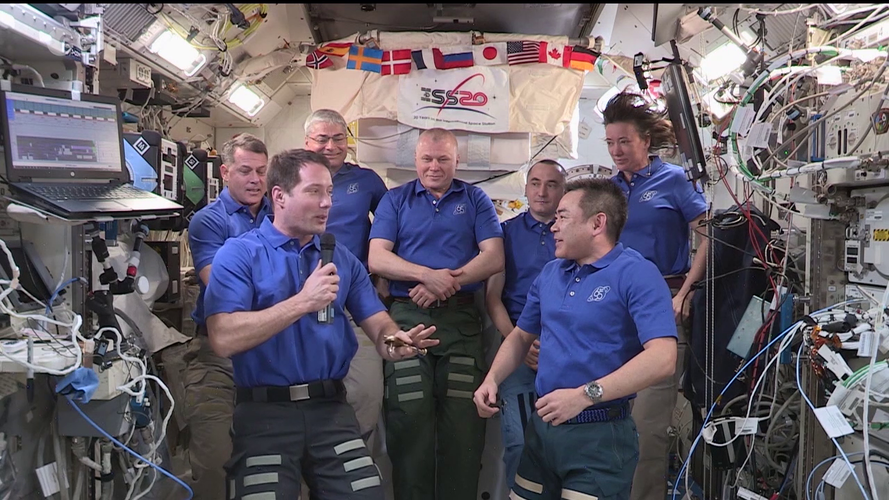
On 4 October 2021 ESA astronaut Thomas Pesquet became commander of the International Space Station, taking over from Japanese Aerospace Exploration Agency astronaut and fellow Crew-2 member Akihiko Hoshide. Thomas will hold this role until shortly before Crew-2 return to Earth in November. Thomas officially accepted his new position during a traditional ceremony, broadcast live from the International Space Station, where a symbolic handover of a key from Aki to Thomas denoted the change of command. The full title of this role is International Space Station crew commander. While overall command of the Station lies with ground-based
ODNI to share unclassified science and technology priorities

The Office of the Director of National Intelligence (ODNI) is preparing unclassified documents to share its science and technology priorities with industry and academia, John Beieler, ODNI science and technology director.
Space data used to detect sources of GPS disruptions
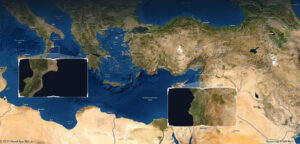
Radio-frequency data collected by HawkEye 360 satellites can be used to locate GPS interference hotspots
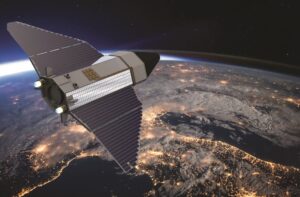
How low can satellites go? VLEO entrepreneurs plan to find out
NRO’s strategy to buy satellite imagery shaped by thriving commercial market
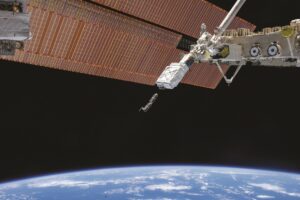
The U.S. satellite imagery industry will soon see the details of a highly anticipated procurement by the National Reconnaissance Office.
Late-time small-body asteroid disruptions can protect the Earth
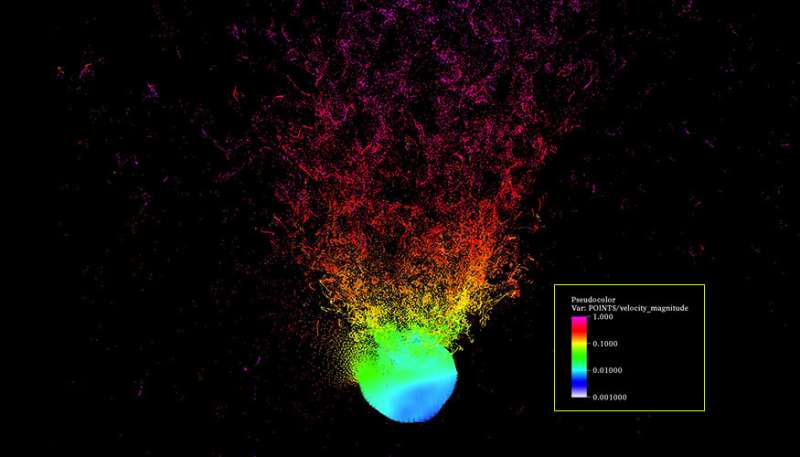
If an asteroid is determined to be on an Earth-impacting trajectory, scientists typically want to stage a deflection, where the asteroid is gently nudged by a relatively small change in velocity, while keeping the bulk of the asteroid together.
A kinetic impactor or a standoff nuclear explosion can achieve a deflection.
Working overtime: NASA's deep space atomic clock completes mission
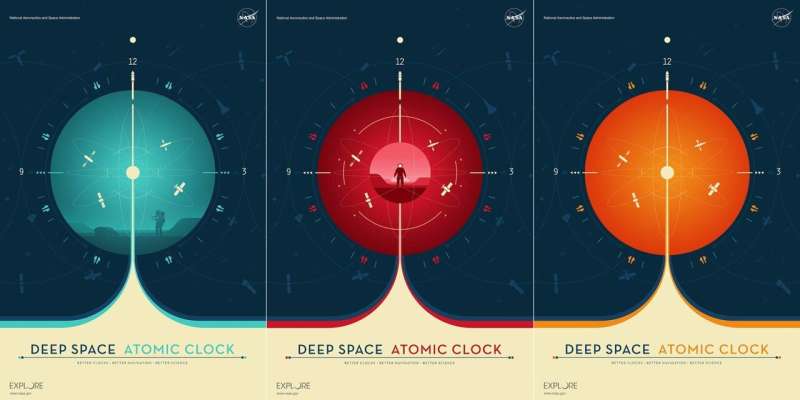
For more than two years, NASA's Deep Space Atomic Clock has been pushing the timekeeping frontiers in space. On Sept. 18, 2021, its mission came to a successful end.
The instrument is hosted on General Atomics' Orbital Test Bed spacecraft that was launched aboard the Department of Defense Space Test Program 2 mission June 25, 2019. Its goal: to test the feasibility of using an onboard atomic clock to improve spacecraft navigation in deep space.
Currently, spacecraft rely on ground-based atomic clocks. To measure a spacecraft's trajectory as it travels beyond the Moon, navigators use these timekeepers to precisely track when those signals are sent and received. Because navigators know that radio signals travel at the speed of light (about 186,000 miles per second, or 300,000 kilometers per second), they can use these time measurements to calculate the spacecraft's exact distance, speed, and direction of travel.
Russian crew arrives at space station to film first movie in orbit
A Russian actress and director blasted off to the International Space Station on Tuesday in a historic bid to best the United States to film the first movie in orbit.
The Russian crew is set to beat a Hollywood project that was announced last year by "Mission Impossible" star Tom Cruise together with NASA and Elon Musk's SpaceX.
Actress Yulia Peresild, 37, and film director Klim Shipenko, 38, took off from the Russia-leased Baikonur Cosmodrome in ex-Soviet Kazakhstan at the expected time of 0855 GMT, with docking scheduled for 1212 GMT.
"Launch as planned," the head of the Roscosmos space agency, Dmitry Rogozin, said on Twitter.
Led by veteran cosmonaut Anton Shkaplerov, the film crew will travel in a Soyuz MS-19 spaceship for a 12-day mission at the ISS to film scenes for "The Challenge".
A live broadcast on Russian TV showed the Soyuz spacecraft ascending into a cloudless sky.
Spire Global data to feed maritime-traffic algorithms

LatConnect 60 will feed Spire Global Automatic Identification System (AIS) vessel-tracking data into algorithms the Australian Earth-observation startup is developing with Curtin University to prevent maritime collisions.