

AFRL promotes 'one lab, two services' at Space Symposium
 Air Force Research Laboratory Commander Maj. Gen. Heather Pringle and other AFRL subject matter experts gathered to connect with the space community at the Space Foundation's 36th National Space Symposium in Colorado Springs August 23-27.
Space Foundation Chief Executive Officer, retired U.S. Navy Rear Admiral Thomas E. Zelibor opened the annual symposium, which was last hosted in April 20
Air Force Research Laboratory Commander Maj. Gen. Heather Pringle and other AFRL subject matter experts gathered to connect with the space community at the Space Foundation's 36th National Space Symposium in Colorado Springs August 23-27.
Space Foundation Chief Executive Officer, retired U.S. Navy Rear Admiral Thomas E. Zelibor opened the annual symposium, which was last hosted in April 20 SPY-7 Hybrid Defense program with Japan completes additional capability tests
 On August 26, the Missile Defense Agency (MDA) and U.S. Navy Aegis Technical Representative (TECHREP) witnessed a successful Mid-Release 2 Demonstration of the software release for the Japanese J7.B Aegis Weapon System equipped with SPY-7 radar, in Moorestown, New Jersey. Japan will field J7.B onboard an afloat Aegis System-Equipped Vessel (ASEV) to provide ballistic missile defense (BMD).
 SpaceX launches Starlink satellites into orbit from West Coast
 Elon Musk's SpaceX successfully launched a stack of Starlink satellites into space Monday night, the first such launch since May.
The Falcon 9 rocket lifted off through a cloud of fog on schedule at 8:55 p.m. PDT from Space Launch Complex 4E at the Vandenberg Space Force Base in California, carrying 51 Starlink satellites into space, which were deployed about 30 minutes later.
SpaceX
Elon Musk's SpaceX successfully launched a stack of Starlink satellites into space Monday night, the first such launch since May.
The Falcon 9 rocket lifted off through a cloud of fog on schedule at 8:55 p.m. PDT from Space Launch Complex 4E at the Vandenberg Space Force Base in California, carrying 51 Starlink satellites into space, which were deployed about 30 minutes later.
SpaceX Virtual ESA Open Day registration now open

Registration for this year's virtual ESA Open Day is now open. This tenth annual ESA Open Day will take place on Sunday 3 October.
DARPA seeking satellite laser terminals that can talk to any space network
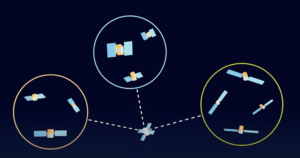
DARPA is asking for ideas on how to make optical inter-satellite links that can connect government and commercial space communications systems in low Earth orbit.
South Korea seeks $553 million space budget for 2022
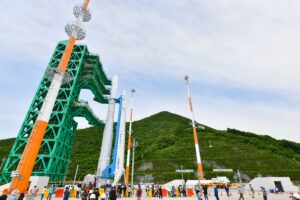
In a bid to nurture its nascent domestic space sector, South Korea is seeking a 640 billion won ($553 million) annual space budget for 2022. If granted in full, it would amount to a 4 percent increase from this year’s 615 billion won.
Planet provides data to federal civilian agencies under NASA contract

Researchers delving into climate change, biodiversity loss and other topics through work funded by U.S. federal civilian agencies and the National Science Foundation will have access to Planet Earth-observation data through September 2022, under a NASA contract announced Sept.
Image: Energy Department mission launched from Wallops
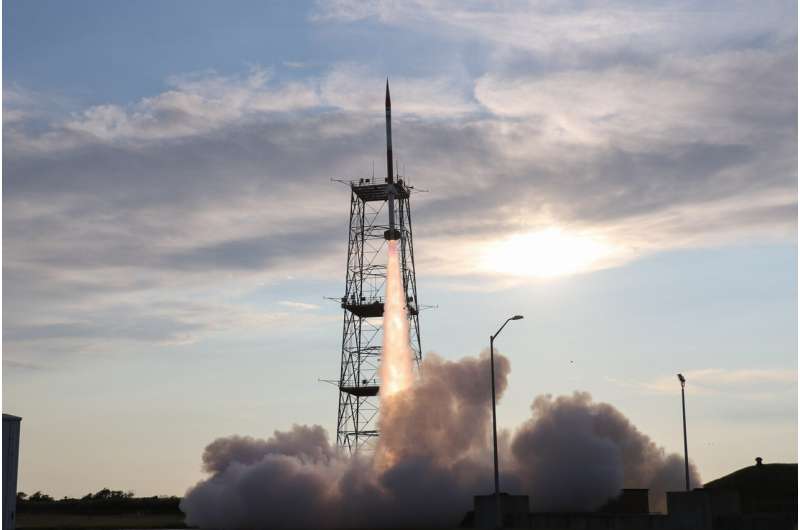
A two-stage suborbital sounding rocket launched at 6:07 p.m. EDT for the Department of Energy's National Nuclear Security Administration from NASA's launch range at Wallops Flight Facility on the Eastern Shore of Virginia.
The Terrier-Improved Malemute rocket flew the payload to an altitude of 99 miles. The payload descended by parachute and landed in the Atlantic Ocean, 59 miles from Wallops Island. The payload was recovered and preliminary indications are that good data was received.
The flight is part of the HOTShot program, short for High Operational Tempo, which collects scientific data that benefits aerospace research and informs future weapon designs for the U.S. nuclear enterprise. Its non-nuclear scientific experiments evaluate prototypes and help develop high-fidelity computer models and mechanical flight simulators.
The next rocket launch from Wallops is targeted for no earlier than October 2021.
Explore further
NASA astronaut to stay on ISS for nearly a year
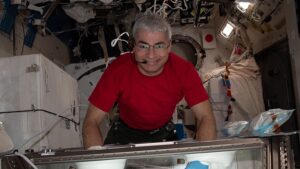
NASA confirmed Sept. 14 that one its astronauts, Mark Vande Hei, will remain on the International Space Station until next March, setting an American spaceflight duration record in the process.
Raytheon to acquire space electronics supplier SEAKR Engineering

Raytheon Technologies announced Sept. 14 it intends to acquire SEAKR Engineering, a privately owned supplier of space electronics based in Centennial, Colorado.


