

Companies compete for payload to make air from moondust
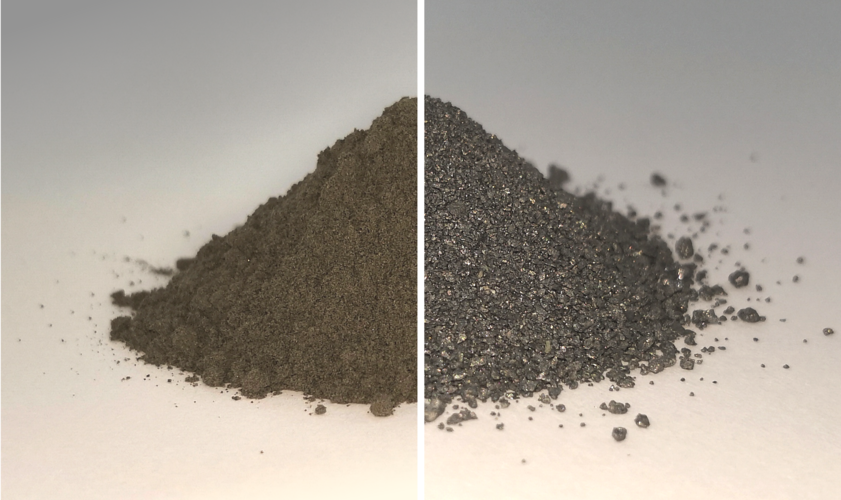
ESA is challenging companies in its Member States to design a compact plant to demonstrate the manufacture of oxygen on the Moon. Industrial teams are competing this summer to propose and prove designs through testing, with the winner set to be declared in September. This small piece of technology will evaluate the prospect of building larger plants to produce propellant for spacecraft, air for astronauts and metallic raw materials for equipment.
Companies compete on payload to make air from moondust
ESA is challenging companies in its Member States to design a compact plant to demonstrate the manufacture of oxygen on the Moon. Industrial teams are competing this summer to propose and prove designs through testing, with the winner set to be declared in September. This small piece of technology will evaluate the prospect of building larger plants to produce propellant for spacecraft, air for astronauts and metallic raw materials for equipment.
Op-ed | The costs of extreme weather and climate are soaring. Commercial space data should be a bigger part of the solution
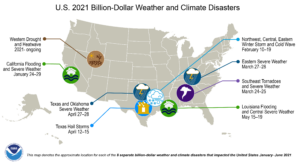
Weather forecasting has made steady progress during the past several decades, yet the financial costs of extreme weather are staggering and getting worse. Part of the problem is that forecast improvements for the most impactful types of weather, including hurricanes, tornadoes, flooding and winter storms, have been slower to materialize, often resulting in fluctuating forecasts and large uncertainties even at short lead times.
GeoOptics to launch next-generation Earth science constellation
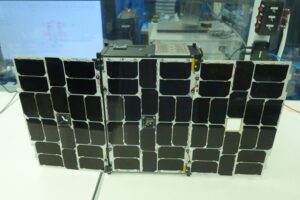
WASHINGTON — GeoOptics is planning to deploy of constellation of dozens of smallsats over the next five years to collect weather and other Earth science data for government and commercial customers.
The Pasadena, California-based company announced July 29 that it will start launching next year a line of satellites called CICERO-2 that are upgraded versions of the CICERO satellites it has previously launched to collect global navigation satellite system (GNSS) radio occultation data used in weather forecasting.
NASA performs field test of 3D imaging system for descent and landing
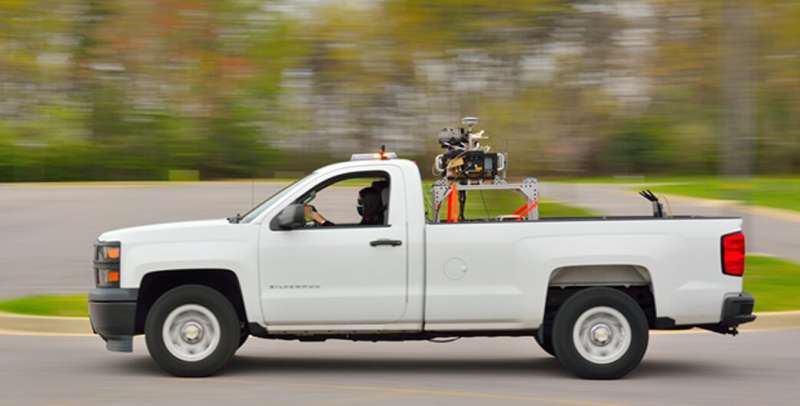
Producing rapid and accurate images on missions to the Moon, Mars and other terrestrial destinations is crucial for a safe descent and landing. A NASA project called Safe and Precise Landing—Integrated Capabilities Evolution, or SPLICE, includes a key element that will help ensure a clearer touchdown site.
The SPLICE team recently performed a dynamic test of the hazard detection lidar (HDL) engineering development unit, a prototype specifically built for testing, at NASA's Goddard Space Flight Center in Greenbelt, Maryland. HDL—an element of SPLICE—is a laser-based 3D imaging system that can quickly and accurately scan a planetary surface to create a map of the landing field. It's designed to help a mission avoid hazardous obstacles and land in a safe area.
NASA rocket carrying solar X-ray scanner set to launch
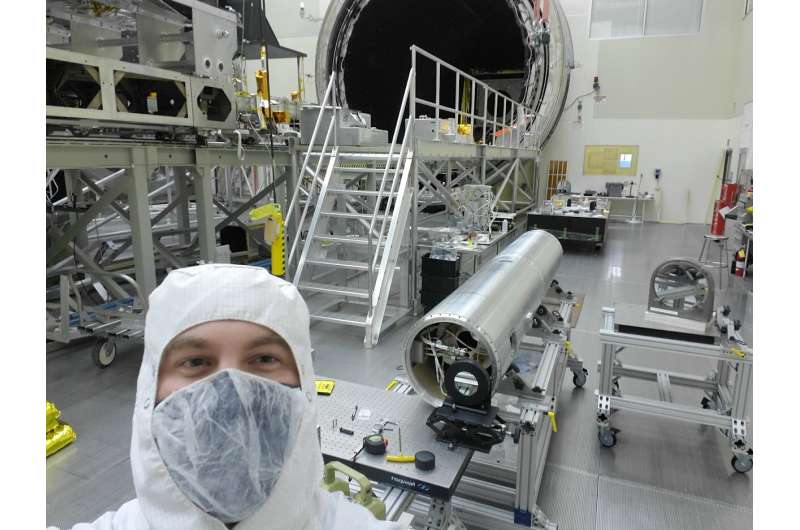
The Marshall Grazing Incidence X-ray Spectrometer, or MaGIXS, mission is about to take flight. The launch window opens at the White Sands Missile Range in New Mexico on July 30.
Led by Dr. Amy Winebarger at NASA's Marshall Space Flight Center in Huntsville, Alabama, MaGIXS will fly aboard a sounding rocket, a launch vehicle that lifts scientific instruments above Earth's atmosphere for a few minutes in space before falling back to Earth for recovery.
Russian lab module docks with space station after 8-day trip
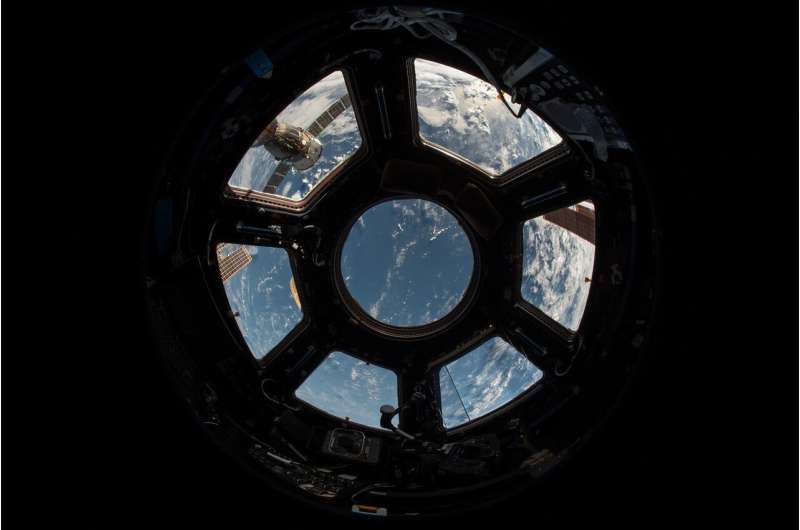
Russia's long-delayed lab module successfully docked with the International Space Station on Thursday, eight days after it was launched from the Russian space launch facility in Baikonur, Kazakhstan.
The 20-metric-ton (22-ton) Nauka module, also called the Multipurpose Laboratory Module, docked with the orbiting outpost after a long journey and a series of maneuvers.
The launch of Nauka, which is intended to provide more room for scientific experiments and space for the crew, had been repeatedly delayed because of technical problems. It was initially scheduled to go up in 2007.
In 2013, experts found contamination in its fuel system, resulting in a long and costly replacement. Other Nauka systems also underwent modernization or repairs.
Explore further
© 2021 The Associated Press. All rights reserved. This material may not be published, broadcast, rewritten or redistributed without permission.
How the Galileo Project will search the skies for alien technology
Can we find alien technology? That is the ambitious goal of the Galileo Project, launched this week by Harvard astrophysicist Avi Loeb with substantial private financial backing.
The project is far from the first attempt to detect signs of civilisations beyond Earth. Loeb has been criticized in the past for his dismissive approach to previous efforts to find extraterrestrial life and his argument that an alien artifact passed through our solar system in 2017.
So why do Loeb and his collaborators think they have a chance of finding something where others have failed? There are three triggers that suggest they might.
Exoplanets, "Oumuamua, and UFOs
First, years of painstaking observations have shown that many stars host Earth-like planets. There is a real chance these "exoplanets" might be home to alien civilisations.
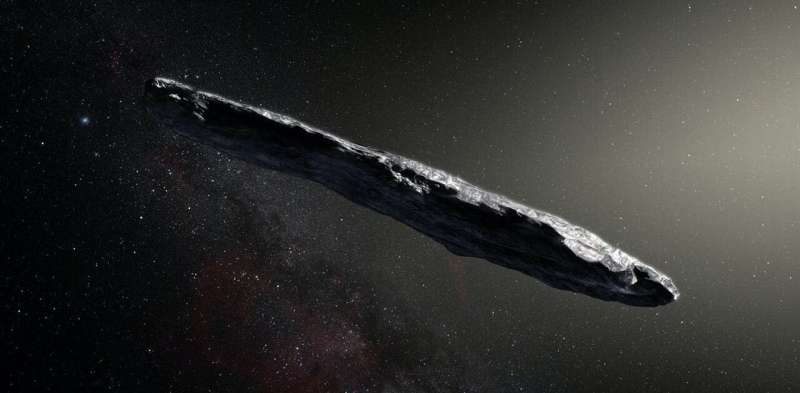
Second, five years ago, an interstellar visitor, dubbed "Oumuamua, tumbled though our solar system. It was a skinny object about 400 meters long, and we know from its speed and trajectory that it arrived from outside our solar system. It was the first time we had ever seen an interstellar object enter our neighborhood.
Competing companies developing payload to make air from moondust
ESA is challenging companies in its Member States to design a compact plant to demonstrate the manufacture of oxygen on the Moon. Industrial teams are competing this summer to propose and prove designs through testing, with the winner set to be declared in September. This small piece of technology will evaluate the prospect of building larger plants to produce propellant for spacecraft, air for astronauts and metallic raw materials for equipment.
Biden taps Aerospace Corp.’s John Plumb to run DoD space policy

President Biden has nominated John Plumb to be assistant secretary of defense for space policy, the White House announced July 29.


