



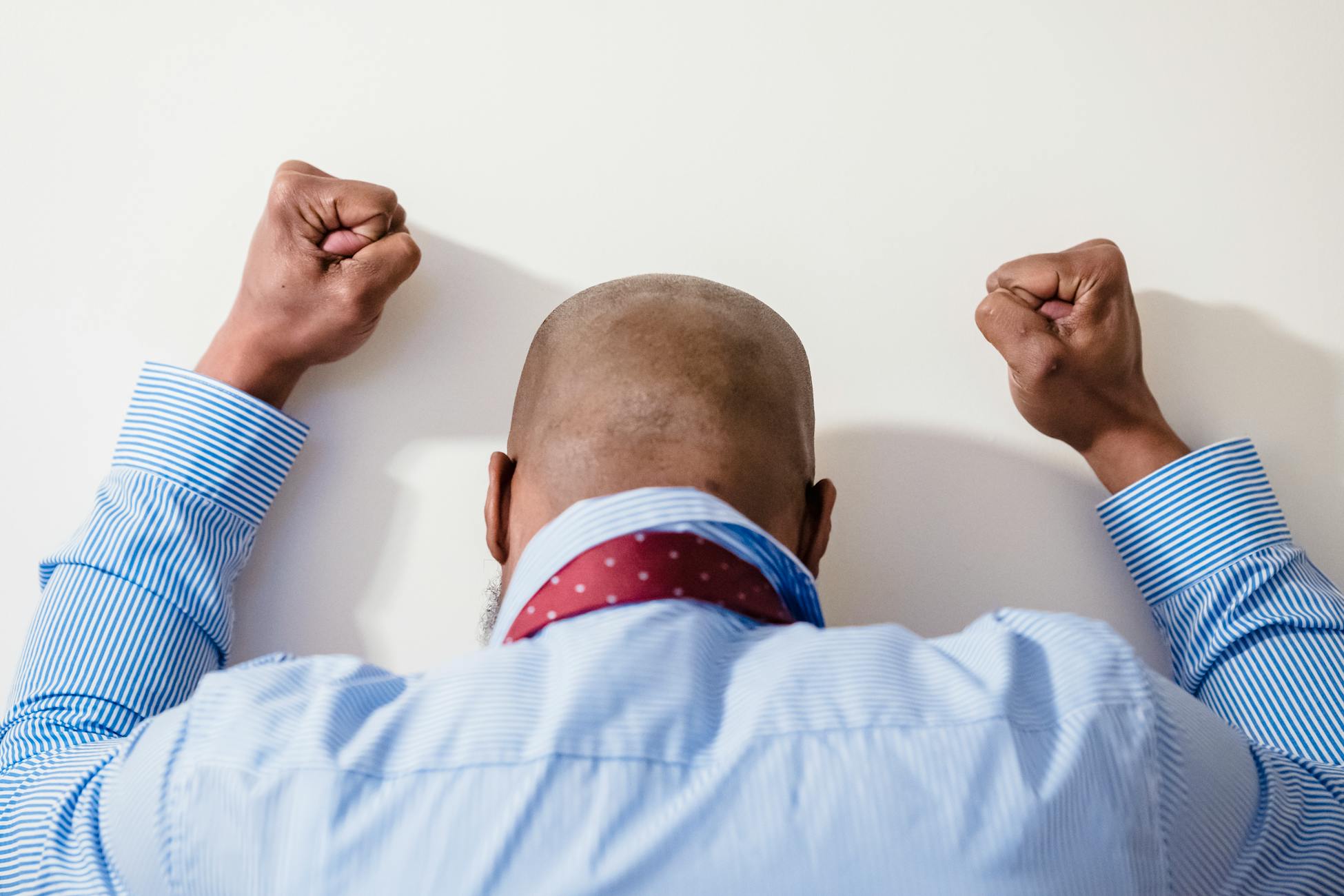
The myth about patient people is that they were born with a quieter nervous system. They weren’t. What research in developmental psychology increasingly shows is that many of the adults we describe as endlessly patient aren’t expressing an innate temperament — they’re running an emotional program written in childhood, when they learned that expressing frustration carried a higher price than suppressing it. The patience is real, but its origins are strategic, not serene. Most of them learned, somewhere before they had the vocabulary to describe it, that their anger made other people’s anger worse. So they stopped.
My wife works in immigration law, which means she spends her days sitting across from people who have been told no by governments, landlords, employers, and sometimes their own families. She has a particular way of nodding when a client starts to cry. I asked her once if she ever wanted to react — really react, the way a reasonable person might react when the system is openly absurd. She said she used to. She said she learned by about age nine that it didn’t help.
That phrase has stayed with me. It didn’t help. Not that it wasn’t allowed. Not that it was wrong. That it didn’t help — a cost-benefit calculation made by a child, stored somewhere in the body, still running decades later as a kind of operating system.
The popular framing treats patience as a virtue, or a temperament, or the mature result of years of meditation practice. The research tells a more uncomfortable story. A lot of what we call endless patience is actually the residue of early emotional negotiation — a child figuring out that a flat voice kept them safer than a raised one, and then forgetting they ever made that trade.
The trait we mistake for calm
Psychologists have spent decades trying to untangle what’s inherited from what’s absorbed. One of the more interesting findings, which Scientific American summarized in its reporting on trait variability, is that the personality traits we treat as stable — extroversion, neuroticism, even how anxious someone seems — fluctuate significantly within a single person across hours and contexts. What looks like a fixed temperament is often a pattern of context-dependent responses that have calcified through repetition.
Which means the person who never seems to lose their temper may not have a congenitally mild nervous system. They may have a nervous system that learned, very early, that losing their temper produced a worse outcome than absorbing whatever triggered it. Over enough repetitions, the absorption stops feeling like a choice. It feels like who they are.
This is the part that gets lost in the compliments. When someone says you’re so patient, they’re often complimenting an adaptation the person can no longer feel the edges of. The patience isn’t a gift being given in the moment. It’s a muscle that learned to hold tension before the person knew tension had other options.
Where the pattern actually starts
Developmental psychologists have mapped how children learn to regulate emotion, and the finding that keeps recurring is that kids don’t develop emotional regulation in isolation — they develop it in response to the regulation capacity of the adults around them. Writing in Psychology Today on emotional development milestones, researchers describe how a child’s frustration, when met with a parent’s calm presence, slowly internalizes as the child’s own capacity for self-soothing. This aligns with a broader body of work on co-regulation — most notably the research of Ruth Feldman, whose studies on bio-behavioral synchrony have demonstrated that a child’s physiological stress responses are literally shaped by the regulatory patterns of their caregivers, beginning in infancy.
What happens when it goes the other way? When a child’s frustration is met with a parent’s larger frustration, or with withdrawal, or with punishment, or with the sudden cold fact that the household will become unpleasant for everyone until the child stops? The child still learns regulation. The regulation just serves a different function. It’s no longer a tool for processing feeling. It’s a tool for managing other people. Research by Nancy Eisenberg and colleagues, published in Development and Psychopathology, has shown that children in households with high parental negativity develop emotion regulation strategies oriented toward minimizing interpersonal conflict rather than processing their own internal states — a distinction that tracks into adulthood.
This distinction matters. There’s a version of patience that comes from a settled interior — the person genuinely isn’t that bothered. There’s another version that comes from a physiological calculation the body made a long time ago, where expressing frustration triggers a threat response that has nothing to do with the current situation and everything to do with a much older one. The outside looks identical. The inside is nothing alike.
The cost that got swallowed
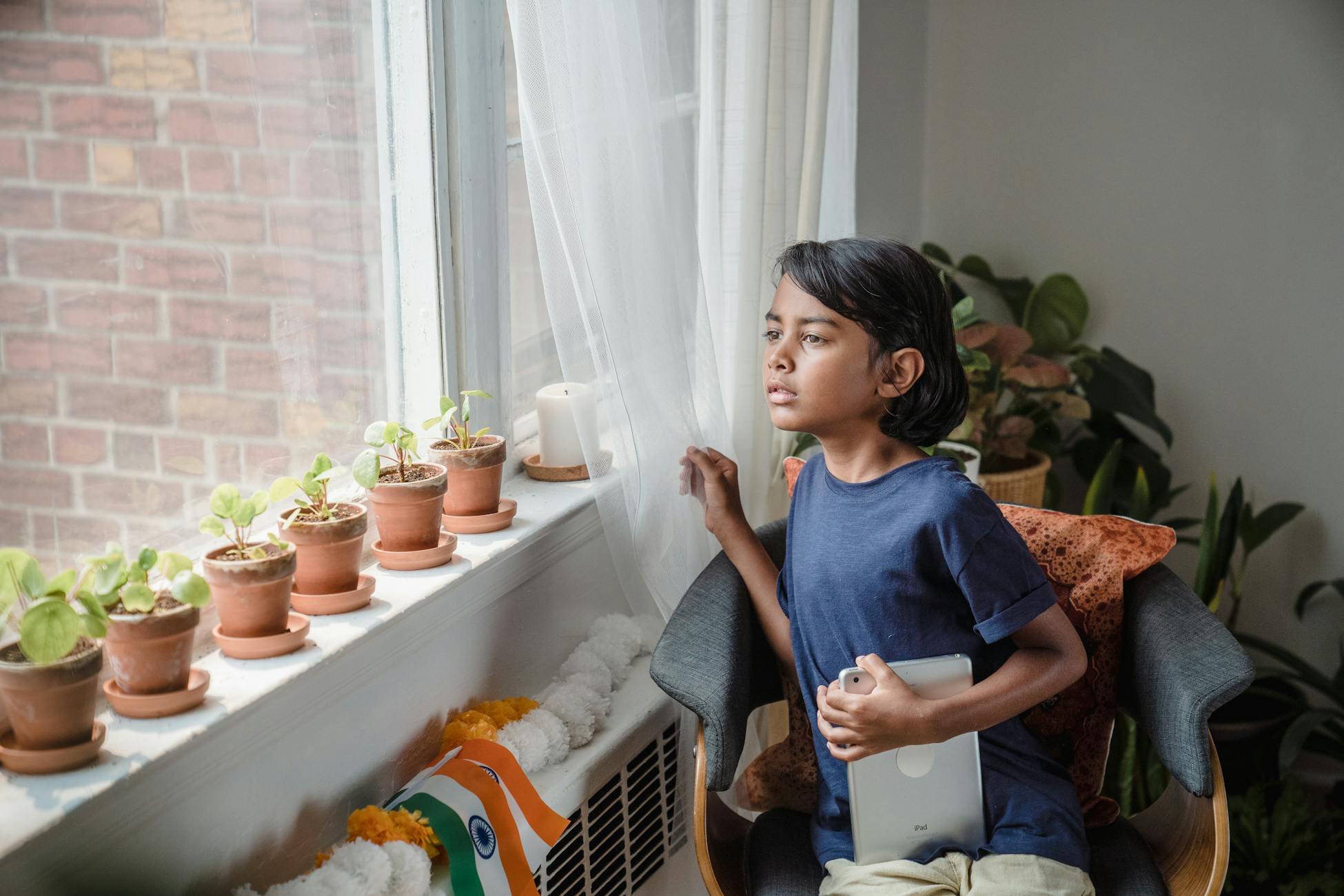
Ask someone who grew up as the reliable child in a volatile household what they remember about their own anger, and you’ll often get a strange answer. They’ll say they don’t remember being angry. Or they’ll say they were angry constantly but never let it show. Or they’ll describe a specific incident from when they were seven or eleven where they lost it and something bad happened — a parent’s face changed, a door slammed, a family dinner froze — and they decided, in that moment, that it wasn’t worth it.
That decision is the whole story. Not the event. The decision. A child doing math about the relative costs of expression versus suppression and concluding that suppression was cheaper. The math was probably correct at the time. The problem is that the math keeps running long after the original household is gone. These are the people who, as adults, become the ones everyone describes as unflappable — the colleagues who don’t react when the project implodes, the partners who stay level during the argument, the friends who listen to an hour of crisis without ever interrupting to say that they, too, are having a hard week. Their patience is real. It’s also expensive. It’s being paid for by a self that learned not to make requests.
Why the body remembers what the mind forgets
The piece that surprises people, when they first encounter it, is that suppressed frustration doesn’t simply evaporate. It goes somewhere. Research on emotional regulation has consistently found that the physiological cost of suppression is measurable — elevated stress markers, disrupted sleep, cardiovascular strain. A landmark study by James Gross and Robert Levenson, published in the Journal of Personality and Social Psychology, demonstrated that expressive suppression — the deliberate inhibition of emotional expression — actually increases sympathetic nervous system activation rather than reducing it. The body works harder, not less, when the face stays still. A Penn State study on childhood bedtime consistency found that predictable emotional environments are linked with better emotion and behavior regulation in children, which cuts both directions — stability builds capacity, and chronic unpredictability builds something else.
The adults who seem to have endless patience often have bodies that tell a different story. They get migraines. They grind their teeth. They have a specific tightness in the jaw or shoulders that their massage therapist has been trying to dislodge for years. They sleep poorly for reasons they can’t articulate. The frustration they never expressed didn’t disappear. It moved.
This is what some have called the loneliness of competence — the particular exhaustion of being the person who holds it together, whose held-together-ness has become so legible to others that nobody thinks to ask whether it costs them anything. The cost is there. It’s just been routed into tissue instead of voice.
The rewards that keep the pattern running
One of the reasons this pattern is so durable is that it gets rewarded, constantly, by the world around it. Patient people are promoted. They’re trusted with delicate situations. They’re the ones friends confide in, the ones families rely on, the ones colleagues bring their worst moments to because they know the response will be measured.
Every one of those rewards reinforces the original trade. See? It worked. The swallowing paid off. The person becomes known for a quality that is, at its root, a survival strategy that got mistaken for a personality trait. And because they’re now known for it, expressing frustration costs them even more than it used to — now it doesn’t just disturb the room, it disturbs their identity, the thing other people count on them to be.
This is how the loop closes. The more patient you appear, the more dangerous it becomes to stop being patient. The people around you have organized themselves around your capacity to absorb. Your frustration, if it ever surfaced, wouldn’t just be an inconvenience. It would be a betrayal of the role that has made you useful.

What therapy rooms actually hear
Those working with high-functioning adults often observe a recurring pattern — the client who comes in saying they don’t really have a problem, exactly, they just feel numb, or tired, or inexplicably resentful about small things. These clients rarely present as angry. They present as fine. The word comes up so often it becomes diagnostic.
A piece on emotional habits carried out of childhood described this as inheriting invisible scripts — scripts about what emotions are permissible, which ones must be hidden, and what happens to a person who breaks the rules. The client who appears endlessly patient is usually running a script that says: frustration is what other people get to have. My job is to be the container.
The work, when these clients eventually do it, is not about learning to be less patient. It’s about recovering access to the signal that patience has been overriding. The frustration was always there. It was just filed under a different category — fatigue, maybe, or generalized dread, or the specific kind of resentment that surfaces at 11 p.m. when the house is finally quiet and there’s nobody left to perform calmness for.
What this isn’t
Genuine equanimity exists. Some people really are less reactive. Some have done the slow work of building a settled interior through practice or meditation or therapy or age. That patience is different, and it doesn’t leave the same residue. You can usually tell by asking the person what they’re feeling. The genuinely calm person can answer. The patient-as-strategy person often can’t — not because they’re hiding it, but because the signal was rerouted so long ago they’ve lost the map.
The harder truth, which I think about often when I watch my wife absorb another absurd ruling on behalf of a client who has run out of options, is that this adaptation is frequently the right one for the circumstance. A child in a volatile home who learns to go flat is not making a mistake. They’re surviving. A lawyer who learns not to react in front of a judge is not suppressing her humanity. She’s doing her job. The problem isn’t the strategy. The problem is that the strategy runs itself long after the original context has ended, and the person paying for it forgets they’re still paying.
If you are one of these people — and a surprising number of the adults around you are — the useful question isn’t whether your patience is real. It’s real. The useful question is what it costs, where that cost lives in your body and your relationships, and whether the original trade is still a trade you’d make today, with everything you now know, if anyone bothered to ask you.
Most people never ask. That, too, is part of the pattern. The people who seem never to need anything are the people nobody thinks to offer anything to. The calm is so complete it becomes its own kind of camouflage, and the person inside it becomes harder and harder to find — even, sometimes, to themselves.