

InSight mission: Mars unveiled
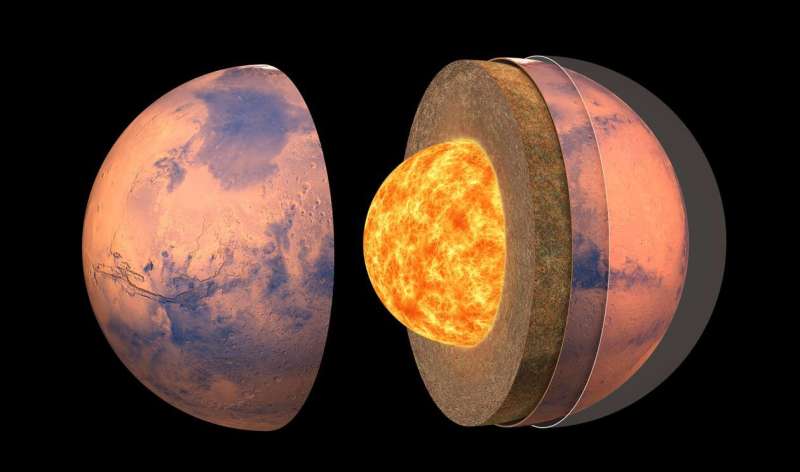
Using information obtained from around a dozen earthquakes detected on Mars by the Very Broad Band SEIS seismometer, developed in France, the international team of NASA's InSight mission has unveiled the internal structure of Mars. The three papers published on July 23, 2021 in the journal Science, involving numerous co-authors from French institutions and laboratories, including the CNRS, the Institut de Physique du Globe de Paris, and Université de Paris, and supported in particular by the French space agency CNES and the French National Research Agency ANR, provide, for the first time, an estimate of the size of the planet's core, the thickness of its crust and the structure of its mantle, based on the analysis of seismic waves reflected and modified by interfaces in its interior. It makes this the first ever seismic exploration of the internal structure of a terrestrial planet other than Earth, and an important step towards understanding the formation and thermal evolution of Mars.
Scientists determine Mars crustal thickness
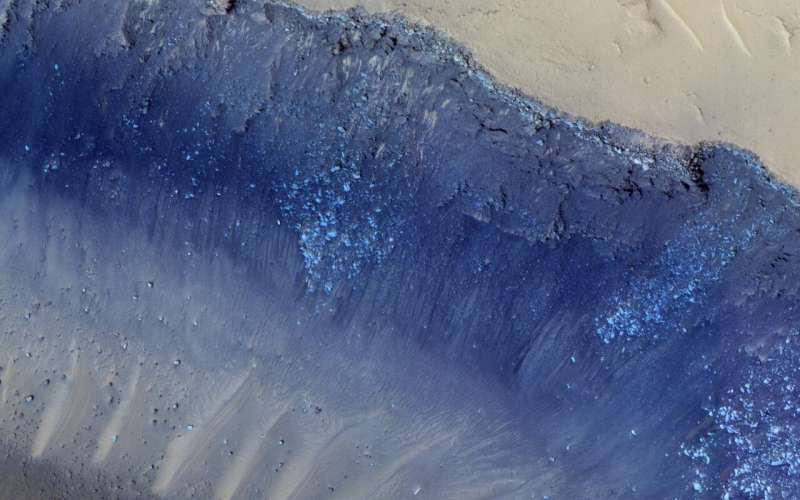
Based on the analysis of marsquakes recorded by NASA's InSight mission, the structure of Mars's crust has now been determined in absolute numbers for the first time. Beneath the InSight landing site, the crust is either approximately 20 or 39 kilometers thick. That is the result of an international research team led by geophysicist Dr.
Space Force extends Parsons’ contract for satellite ground services
WASHINGTON — Braxton Technologies, a company recently acquired by Parsons Corp., received a $139.4 million contract to continue development and prototyping of the U.S. Space Force’s next-generation ground system for satellite operations.
United Kingdom a potential site for future U.S. space surveillance radar

WASHINGTON — U.S. Space Force officials have begun discussions with the U.K. government about the possibility of building a deep-space radar site in the United Kingdom, a spokesman confirmed July 22.
The Space Force plans to develop a network of sensors known as the Deep Space Advanced Radar Concept (DARC) to track active satellites and debris beyond geostationary orbit 35,786 kilometers above the Earth.
Better understanding of Earth’s atmospheric chemistry from studying Mars?

Long-term studies of ozone and water vapour in the atmosphere of Mars could lead to better understanding of atmospheric chemistry for the Earth. A new analysis of data from ESA's Mars Express mission has revealed that our knowledge of the way these atmospheric gases interact with each other is incomplete.
Earth from Space: Tarso Toussidé, Chad
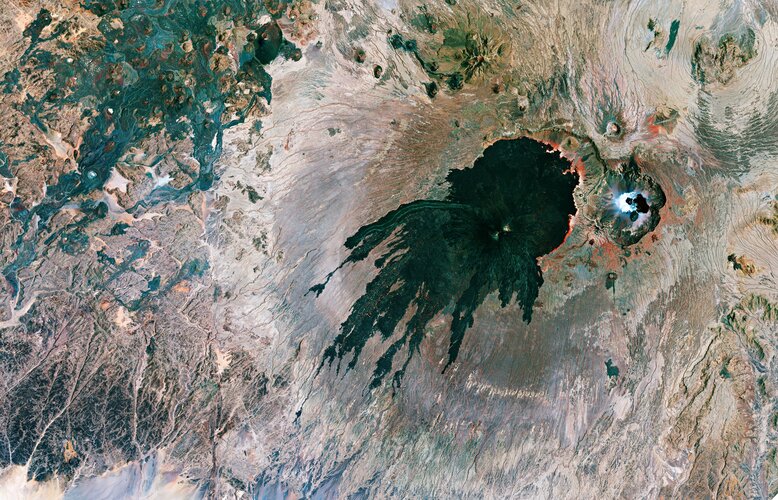
The Tarso Toussidé volcanic massif is featured in this false-colour composite image captured by the Copernicus Sentinel-2 mission.
Senators push for action on space traffic management
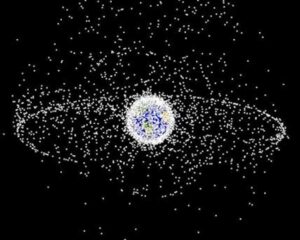
WASHINGTON — Members of a Senate space subcommittee argued that the Commerce Department was not doing enough to implement policies on space traffic management (STM) or staffing the office responsible for it.
At the July 22 hearing of the Senate Commerce Committee’s space subcommittee, senators said they were worried that slow action by the Commerce Department to set up a civil STM system as outlined in Space Policy Directive (SPD) 3 in 2018 threatened U.S.
Starliner cleared for second uncrewed test flight
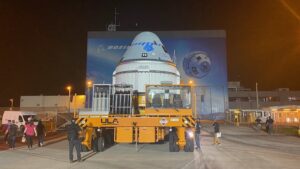
WASHINGTON — NASA approved plans July 22 for the launch of Boeing’s CST-100 Starliner spacecraft on a second uncrewed test flight that seeks to demonstrate that the company has corrected the problems seen on the first.
At the conclusion of the flight readiness review, NASA gave the go-ahead for a July 30 launch of Starliner on the Orbital Flight Test (OFT) 2 mission.
Duneside view of ESA's technical heart
 Image:
Duneside view of ESA's technical heart
Image:
Duneside view of ESA's technical heart Week in images: 19 - 23 July 2021
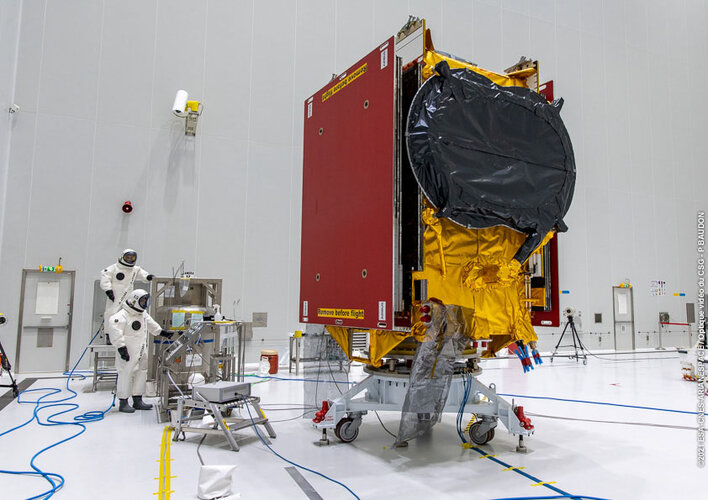
Week in images: 19 - 23 July 2021
Discover our week through the lens


