

Roscosmos says US greenlit import of Russia's RD-181M rocket engines
 The United States has approved the purchase of a new batch of the Russian-made RD-181M space rocket engines, a spokesman for the Russian space agency Roscosmos, Vladimir Ustimenko, said on Tuesday.
"The US government has approved the contract between NPO Energomash [Roscosmos subsidiary] and US Orbital Sciences LLC company. This means that there will be new supplies of engines and new laun
The United States has approved the purchase of a new batch of the Russian-made RD-181M space rocket engines, a spokesman for the Russian space agency Roscosmos, Vladimir Ustimenko, said on Tuesday.
"The US government has approved the contract between NPO Energomash [Roscosmos subsidiary] and US Orbital Sciences LLC company. This means that there will be new supplies of engines and new laun AFRL conducts 1,300 experiments on record-breaking satellite
 The Air Force Research Laboratory is celebrating the completion of the Demonstration and Science Experiments (DSX) satellite mission, and processing a treasure trove of valuable data that will be studied by scientists for many years to come.
The spacecraft was launched June 25, 2019 from Cape Canaveral Space Force Station after 16 years of development, integration, and testing.
"Most
The Air Force Research Laboratory is celebrating the completion of the Demonstration and Science Experiments (DSX) satellite mission, and processing a treasure trove of valuable data that will be studied by scientists for many years to come.
The spacecraft was launched June 25, 2019 from Cape Canaveral Space Force Station after 16 years of development, integration, and testing.
"Most Cool flames created during a first for ISS research
 Cool flames, flames that burn at extremely low temperatures, are nearly impossible to create in Earth's gravity. However, they are easily produced in the microgravity environment of the International Space Station.
Non-premixed cool flames, created when fuel and oxidizer are not mixed before reacting, were discovered in 2012 aboard the space station during the Flame Extinguishment (FLEX) s
Cool flames, flames that burn at extremely low temperatures, are nearly impossible to create in Earth's gravity. However, they are easily produced in the microgravity environment of the International Space Station.
Non-premixed cool flames, created when fuel and oxidizer are not mixed before reacting, were discovered in 2012 aboard the space station during the Flame Extinguishment (FLEX) s ESA advances Vega rocket evolution beyond 2025
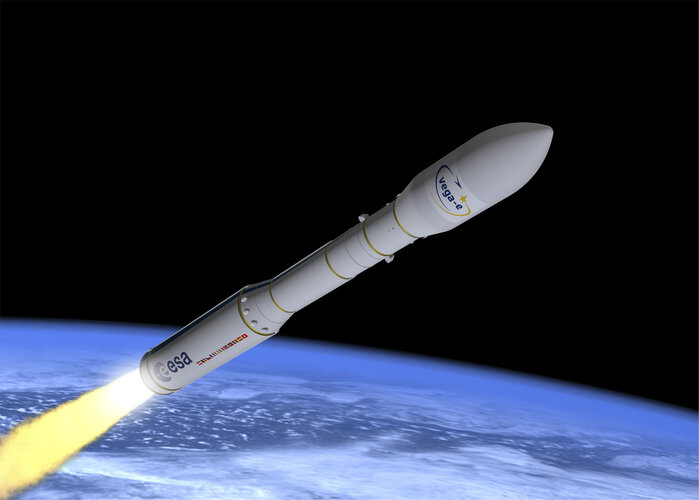
ESA will further increase the competitiveness and environmental sustainability of Europe’s Vega launch system beyond 2025 through a contract signed with Avio in Italy.
European Robotic Arm is launched into space
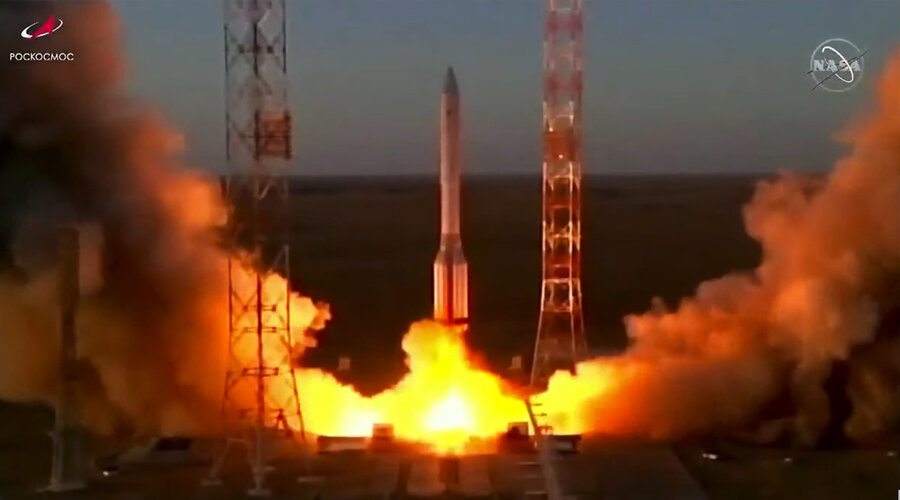
The European Robotic Arm (ERA) is on its way to the International Space Station after being launched on a Proton rocket from the Baikonur Cosmodrome, in Kazakhstan, at 16:58 CEST today.
Peterson, Schriever, Cheyenne Mountain to become Space Force bases

WASHINGTON — Peterson Air Force Base, Schriever Air Force Base and Cheyenne Mountain Air Force Station will officially become U.S. Space Force bases.
These Colorado-based installations are home to the largest concentration of Space Force personnel.
Accion Systems gets new owner to scale up propulsion system
TAMPA, Fla. — Tracker Capital, a venture capital firm linked to the group that bought hypersonic vehicle maker Stratolaunch, has taken a majority stake in space propulsion startup Accion Systems.
New York-based Tracker Capital acquired 51% of Accion Systems after leading its $42 million funding round, supporting plans to scale up its Tiled Ionic Liquid Electrospray (TILE) thrusters for larger satellites.
Op-ed | Commerce Department, NOAA ensuring U.S. remains a world leader in space commerce

The United States has long been a leader in space and will continue to do so. This is why in his first 100 days in office, President Biden renewed the National Space Council, which is led by Vice President Harris, to synchronize the nation’s civil commercial and national security space activities.
Space-based infrared imaging reveals the nighttime weather on Venus
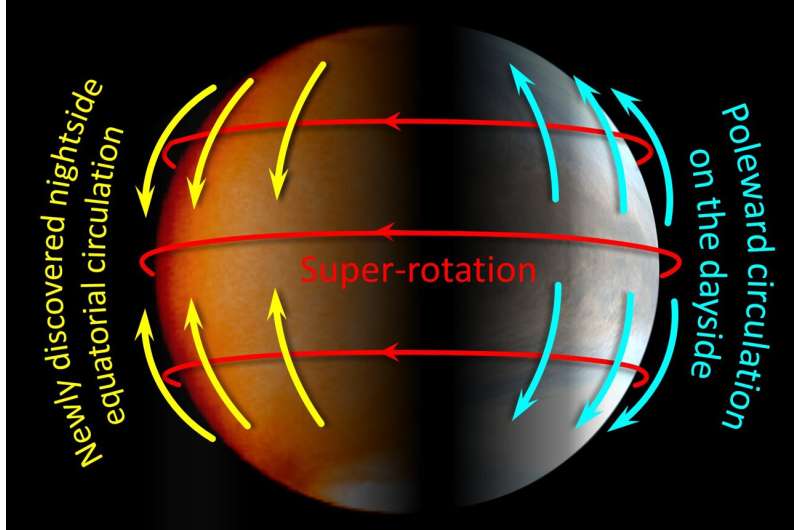
Little is known about Venus weather at night, as the absence of sunlight makes imaging difficult. Now, researchers have devised a way to use infrared sensors on board the Venus orbiter Akatsuki to reveal the first details of the nighttime weather of our nearest neighbor. Their analytical methods could be used to study other planets including Mars and gas giants as well. Furthermore, the study of Venusian weather granted by their methods could allow researchers to learn more about the mechanisms underpinning Earth's weather systems.
Astrophysicist outlines plans for a gravitational wave observatory on the moon
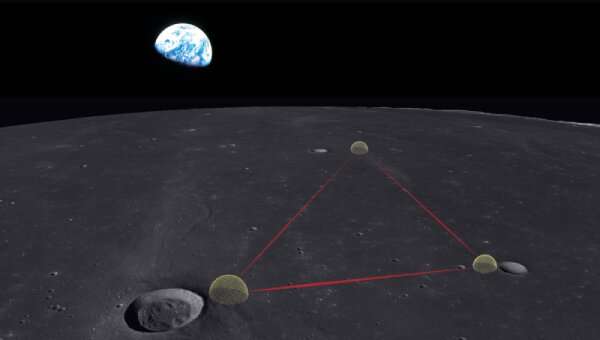
Vanderbilt astrophysicist Karan Jani has led a series of studies that make the first case for a gravitational wave infrastructure on the surface of the moon. The experiment, dubbed Gravitational-Wave Lunar Observatory for Cosmology, uses the moon's environment and geocentric orbit to analyze mergers of black holes, neuron stars and dark matter candidates within almost 70 percent of the entire observable volume of the universe, he said.
"By tapping into the natural conditions on the moon, we showed that one of the most challenging spectrum of gravitational waves can be measured better from the lunar surface, which so far seems impossible from Earth or space," Jani said.
"The moon offers an ideal backdrop for the ultimate gravitational wave observatory, since it lacks an atmosphere and noticeable seismic noise, which we must mitigate at great cost for laser interferometers on Earth," said Avi Loeb, professor of science at Harvard University and bestselling author of books about black holes, the first stars, the search for extraterrestrial life and the future of the universe.


