

Forest degradation primary driver of carbon loss in the Brazilian Amazon
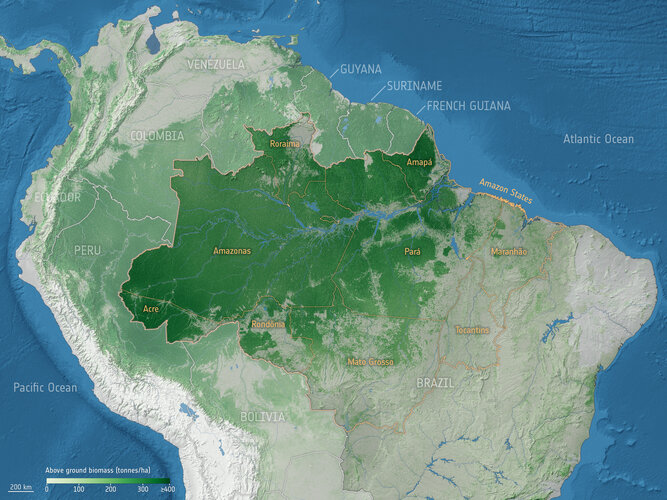
Forest degradation has become the largest process driving carbon loss in the Brazilian Amazon, according to a recent study using ESA satellite data.
ESA selects revolutionary Venus mission EnVision

EnVision will be ESA’s next Venus orbiter, providing a holistic view of the planet from its inner core to upper atmosphere to determine how and why Venus and Earth evolved so differently.
Russian co-founders out of Momentus
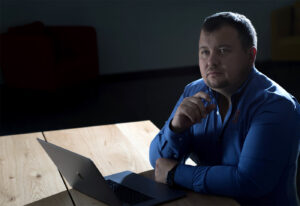
WASHINGTON — In-space transportation company Momentus says its Russian co-founders are now “completely divested” from the company as it reaches a national security agreement with federal agencies.
In a June 9 statement, Momentus said it had signed a national security agreement (NSA) with the Defense and Treasury Departments, which outlines the steps the company will take to address security concerns that held up the first launches of its space tugs.
China set to launch first astronauts to space station with Shenzhou-12
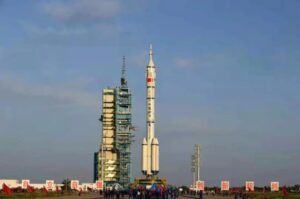
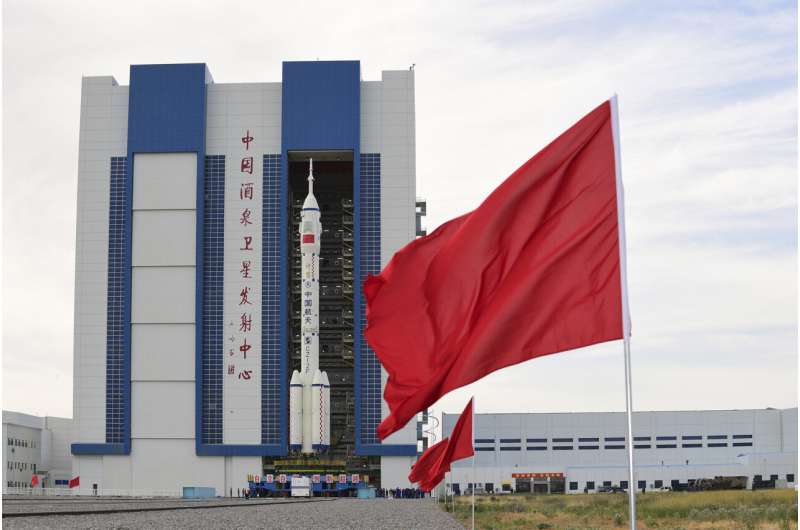
HELSINKI — China rolled out a Long March 2F rocket Wednesday in preparation to send the Shenzhou-12 spacecraft and three astronauts to an orbiting space station module.
Partial eclipse to sweep over northern hemisphere
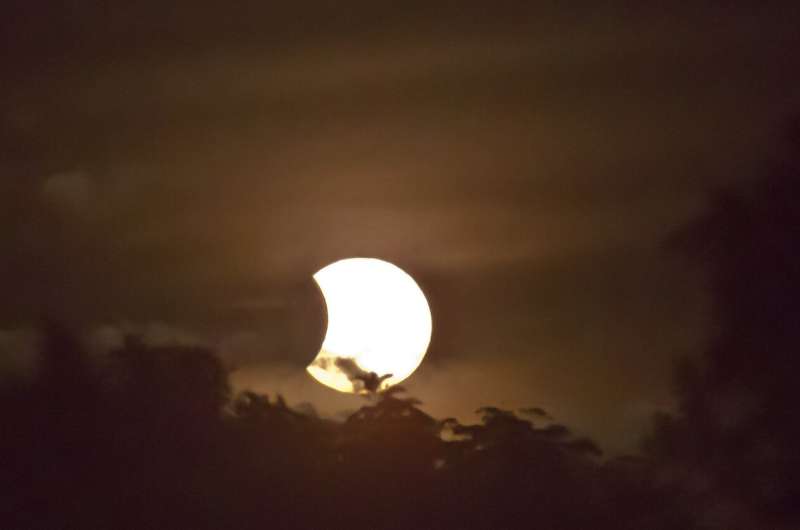
A solar eclipse will be visible over the Earth's northern hemisphere on Thursday with parts of Canada and Siberia privy to the best view of the celestial event.
The eclipse will be partial, which means the people in its shadow won't be plunged into daytime darkness.
Instead, people with the maximum visibility—and necessary protective eyewear—will have a few minutes to glimpse the moon's silhouette ringed by the sun.
In northwest Canada, northern Russia, northwest Greenland and the North Pole, the sun will be 88 percent obscured by the moon.
The eclipse will be partly visible to observers in northwest North America, parts of Europe including France and the UK, and some of northern Asia.
If skies are clear, Londoners will be able to see the moon cover 20 percent of the sun at its maximum, at 11.13am local time (10:13 GMT).
"The farther southeast people are, the less the sun will be obscured," Florent Delefie of the Paris Observatory told AFP.
He stressed that people must never look directly at the sun—even with sunglasses or from behind a cloud—warning "retinal burns can be irreversible".
Rocket on pad, China ready to send 1st crew to space station
ESA flying payloads on wooden satellite

The world’s first wooden satellite is on the way, in the shape of the Finnish WISA Woodsat. ESA materials experts are contributing a suite of experimental sensors to the mission as well as helping with pre-flight testing.
Space startups selected for Amazon Web Services accelerator
WASHINGTON — Amazon Web Services announced June 10 it selected 10 U.S. and European space startups for a four-week accelerator program where companies learn how they can grow their business using cloud computing and analytics technologies.
The companies selected are Cognitive Space, D-Orbit, Descartes Labs, Edgybees, Hawkeye360, LeoLabs, Lunar Outpost, Orbital Sidekick, Satellite VU and Ursa Space.
Health care exec to lead UK Space Agency
TAMPA, Fla. — The UK Space Agency has picked health care veteran Paul Bate to be its next CEO starting Sept. 6.
Bate is currently vice president of commercial at Babylon Health, responsible for sales around the world for the U.K.
ESA adds Iceye data to Third Party Mission portfolio
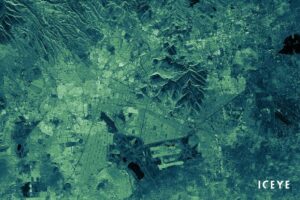
SAN FRANCISCO – The European Space Agency plans to offer researchers free access to Iceye’s synthetic aperture radar imagery (SAR) including the ability to task Iceye satellites.
Iceye announced June 10 that it had been approved for inclusion in ESA’s Earthnet Program Third Party Missions (TPM) data portfolio.


