

GAO’s annual review of DoD programs raises concerns on space launch, missile warning satellites
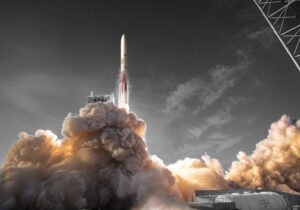
WASHINGTON — Technical challenges in the development of United Launch Alliance’s new Vulcan rocket could prevent the Defense Department from ending its reliance on the Russian-made RD-180 rocket engine by 2022 as required by Congress, the Government Accountability Office said in a report published June 8.
Skylo launches connected device services in India on Inmarsat network
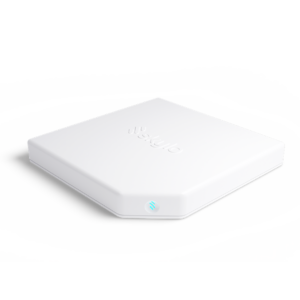
TAMPA, Fla. — Silicon Valley startup Skylo has started connecting machines and sensors in India to its Internet of Things (IoT) network, using British operator Inmarsat’s satellites.
NASA astrophysics director to step down
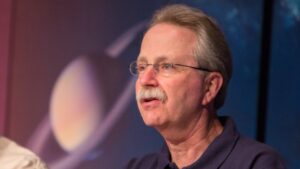
WASHINGTON — Paul Hertz, who has led NASA’s astrophysics programs for nearly a decade, will step down by the end of the year to pursue his “next challenge” at the space agency.
During a town hall session of the 238th Meeting of the American Astronomical Society (AAS) June 7, Hertz took attendees by surprise when he said it was time for someone new to serve as director of the astrophysics division of NASA’s Science Mission Directorate.
10 firms join Techstars 2021 Space Accelerator class
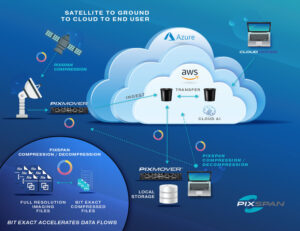
SAN FRANCISCO –Techstars Space Accelerator launched its 2021 class June 7 with nine U.S. and one Australian company.
While some of the firms are squarely focused on the space sector, others are newcomers after discovering space applications for related technologies like quantum security, photonics, autonomy and communications.
Dust: An Out-of-This World Problem
 Dust is a nuisance on Earth. Thankfully, we can simply pull out a vacuum or grab a rag to rid ourselves of the concoction of dust mites, fibers, soil, pollen, and other tiny bits.
Beyond Earth's atmosphere, dust is insidious. On the Moon, it's made of crushed rock and is damaging to everything from lunar landers to spacesuits and human lungs if inhaled. As NASA readies to return to the Moo
Dust is a nuisance on Earth. Thankfully, we can simply pull out a vacuum or grab a rag to rid ourselves of the concoction of dust mites, fibers, soil, pollen, and other tiny bits.
Beyond Earth's atmosphere, dust is insidious. On the Moon, it's made of crushed rock and is damaging to everything from lunar landers to spacesuits and human lungs if inhaled. As NASA readies to return to the Moo SpaceX Cargo Dragon truck docks at Space Station
 While the International Space Station was traveling more than 250 miles over the South Pacific ocean, a SpaceX Dragon cargo spacecraft autonomously docked to the space-facing side of the orbiting laboratory's Harmony module at 5:09 a.m. EDT, Saturday, June 5. NASA astronauts Shane Kimbrough and Megan McArthur were monitoring docking operations for Dragon.
This 22nd contracted resupply miss
While the International Space Station was traveling more than 250 miles over the South Pacific ocean, a SpaceX Dragon cargo spacecraft autonomously docked to the space-facing side of the orbiting laboratory's Harmony module at 5:09 a.m. EDT, Saturday, June 5. NASA astronauts Shane Kimbrough and Megan McArthur were monitoring docking operations for Dragon.
This 22nd contracted resupply miss Earth's meteorite impacts over past 500 million years tracked
 For the first time, a unique study conducted at Lund University in Sweden has tracked the meteorite flux to Earth over the past 500 million years. Contrary to current theories, researchers have determined that major collisions in the asteroid belt have not generally affected the number of impacts with Earth to any great extent.
Researchers have been studying geological series since the 19t
For the first time, a unique study conducted at Lund University in Sweden has tracked the meteorite flux to Earth over the past 500 million years. Contrary to current theories, researchers have determined that major collisions in the asteroid belt have not generally affected the number of impacts with Earth to any great extent.
Researchers have been studying geological series since the 19t First images of Ganymede as Juno sailed by
 The first two images from NASA Juno's June 7, 2021, flyby of Jupiter's giant moon Ganymede have been received on Earth. The photos - one from the Jupiter orbiter's JunoCam imager and the other from its Stellar Reference Unit star camera - show the surface in remarkable detail, including craters, clearly distinct dark and bright terrain, and long structural features possibly linked to tectonic fa
 Finding quasars: Rare extragalactic objects are now easier to spot
 Astrophysicists from the University of Bath have developed a new method for pinpointing the whereabouts of extremely rare extragalactic objects. They hope their technique for finding 'changing-look quasars' will take scientists one step closer to unravelling one of greatest mysteries of the universe - how supermassive black holes grow. Quasars are believed to be responsible for regulating the gr
 From burglar alarms to black hole detectors
 Last year, Anupam Mazumdar, a physicist from the University of Groningen, jointly proposed an experiment together with colleagues from the UK that could conclusively prove whether gravity is a quantum phenomenon. This experiment would focus on observing two relatively large, entangled quantum systems in free fall.
In a new article, published on 4 June in Physical Review Research, the scien
Last year, Anupam Mazumdar, a physicist from the University of Groningen, jointly proposed an experiment together with colleagues from the UK that could conclusively prove whether gravity is a quantum phenomenon. This experiment would focus on observing two relatively large, entangled quantum systems in free fall.
In a new article, published on 4 June in Physical Review Research, the scien 


