

Liftoff! Pioneers of space
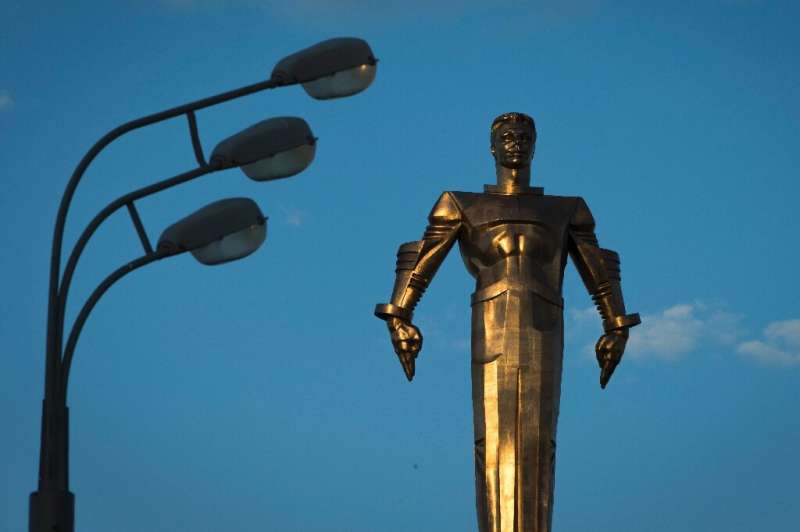
Soviet cosmonaut Yuri Gagarin became the first man in space 60 years ago next week.
He was one of several stars of the Cold War space race between the Soviet Union and the United States who would became heroes to millions.
But the technology that sent them into orbit had less glorious origins in the dying days of Nazi Germany.
The Germans
Many of the key rocket scientists behind both the American and Soviet space programmes were Germans, who had worked on Adolf Hitler's "secret weapons", the V-1 and V-2 rockets.
Some 1,600 German rocket experts were secretly taken to the US in the dying days of World War II, while the Russians rounded up about 2,000 in one night at gunpoint and sent them to work in the Soviet Union.
Wernher von Braun
The inventor of Hitler's V-2 rocket—the world's first guided ballistic missile—was the architect of the US Apollo programme that would put a man on the Moon.
Brought across the Atlantic with his brother Magnus, he came up with the Saturn V rocket that powered the American lunar missions.
Three-man Soyuz flight honouring Gagarin blasts off for ISS
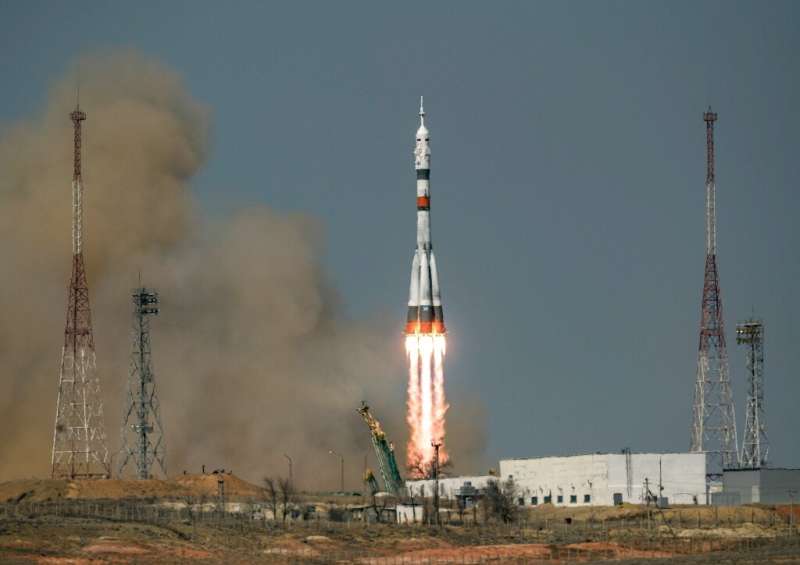
A three-man crew blasted off to the International Space Station Friday in a capsule honouring the 60th anniversary of Soviet cosmonaut Yuri Gagarin becoming the first person in space.
Roscosmos cosmonauts Oleg Novitsky and Pyotr Dubrov and NASA astronaut Mark Vande Hei lifted off from Russia's Baikonur cosmodrome in Kazakhstan at the expected time of 0742 GMT, footage broadcast by NASA TV showed, with docking expected at 1107 GMT.
A NASA commentator citing Russian Mission Control reports confirmed that the Soyuz capsule had entered orbit, with all stages of the flight proceeding as expected.
"Hey, Expedition 64 –- set the dinner table... Can't wait to join you on @Space_Station in a few hours!" Vande Hei tweeted to the crew on board the ISS before blast-off.
The launch came just ahead of Monday's anniversary of Gagarin's historic flight on April 12, 1961.
Week in images: 05 - 09 April 2021

Week in images: 05 - 09 April 2021
Discover our week through the lens
Biden administration proposes $24.5 billion budget for NASA in 2022
WASHINGTON — The White House released a first look at its budget proposal for fiscal year 2022 that includes an increase in funding for NASA, particularly Earth science and space technology programs.
The 58-page budget document, released April 9, outlines the Biden administration discretionary spending priorities.
Nikon snaps up Boeing-backed supplier of 3D-printed satellite parts
SEOUL, South Korea — Japanese camera maker Nikon has acquired a controlling stake in U.S. startup Morf3D, an aerospace supplier that has produced 3D-printed metallic flight hardware for Boeing satellites and helicopters. The deal gives Tokyo-based Nikon a foothold in the flourishing satellite industry.
American, Russians dock at International Space Station
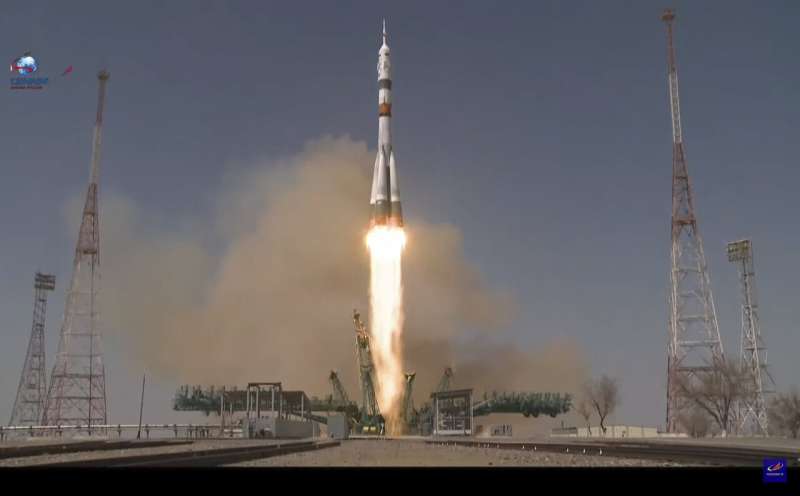
Three-man crew docks at ISS after flight honouring Gagarin (Update)
A three-man crew blasted off to the International Space Station Friday in a capsule honouring the 60th anniversary of Soviet cosmonaut Yuri Gagarin becoming the first person in space.
Roscosmos cosmonauts Oleg Novitsky and Pyotr Dubrov and NASA astronaut Mark Vande Hei lifted off from Russia's Baikonur cosmodrome in Kazakhstan at the expected time of 0742 GMT, footage broadcast by NASA TV showed, with docking expected at 1107 GMT.
A NASA commentator citing Russian Mission Control reports confirmed that the Soyuz capsule had entered orbit, with all stages of the flight proceeding as expected.
"Hey, Expedition 64 –- set the dinner table... Can't wait to join you on @Space_Station in a few hours!" Vande Hei tweeted to the crew on board the ISS before blast-off.
The launch came just ahead of Monday's anniversary of Gagarin's historic flight on April 12, 1961.
CAES and Swissto12 partnership brings 3D-printed RF solutions to the U.S.
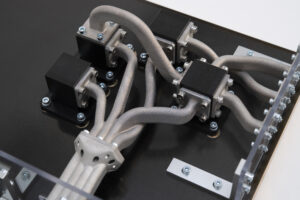
TAMPA, Fla. — CAES, the former electronics unit of British defense and aerospace contractor Cobham, has forged an alliance to bring Swiss 3D-printed satellite RF technology to the U.S. market.
New research reveals secret to Jupiter's curious aurora activity
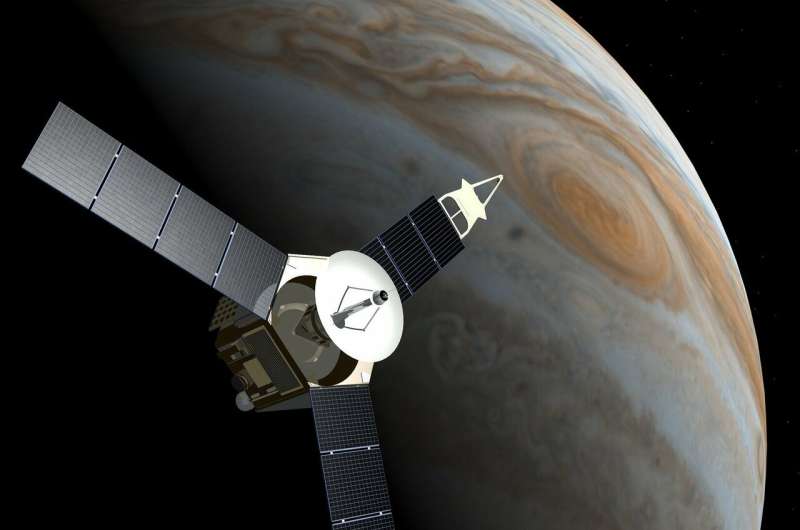
Auroral displays continue to intrigue scientists, whether the bright lights shine over Earth or over another planet. The lights hold clues to the makeup of a planet's magnetic field and how that field operates.
New research about Jupiter proves that point—and adds to the intrigue.
Peter Delamere, a professor of space physics at the University of Alaska Fairbanks Geophysical Institute, is among an international team of 13 researchers who have made a key discovery related to the aurora of our solar system's largest planet.
The team's work was published April 9, 2021, in the journal Science Advances. The research paper, titled "How Jupiter's unusual magnetospheric topology structures its aurora," was written by Binzheng Zhang of the Department of Earth Sciences at the University of Hong Kong; Delamere is the primary co-author.
Research done with a newly developed global magnetohydrodynamic model of Jupiter's magnetosphere provides evidence in support of a previously controversial and criticized idea that Delamere and researcher Fran Bagenal of the University of Colorado at Boulder put forward in a 2010 paper—that Jupiter's polar cap is threaded in part with closed magnetic field lines rather than entirely with open magnetic field lines, as is the case with most other planets in our solar system.
NASA's Mars Helicopter to make first flight attempt Sunday
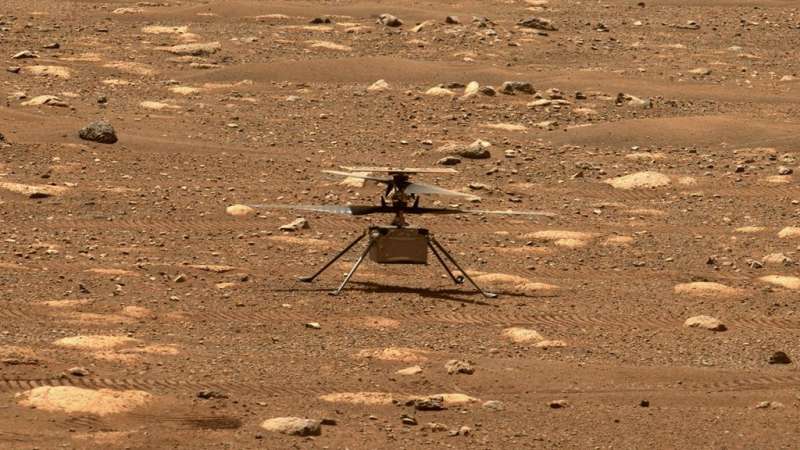
NASA's Ingenuity Mars Helicopter is two days away from making humanity's first attempt at powered, controlled flight of an aircraft on another planet. If all proceeds as planned, the 4-pound (1.8-kg) rotorcraft is expected to take off from Mars' Jezero Crater Sunday, April 11, at 12:30 p.m. local Mars solar time (10:54 p.m.


