

NASA will attempt first off-world flight in early April
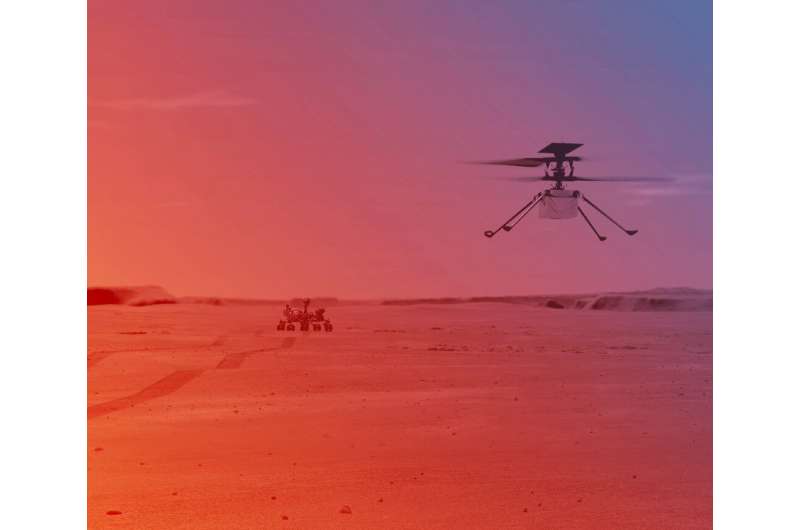
NASA is targeting early April for the Ingenuity Mars Helicopter to make the first attempt at powered, controlled flight on another planet, the space agency said Tuesday.
Right now, the ultra-light aircraft remains fixed to the belly of the Perseverance rover, which touched down on the Red Planet on February 18.
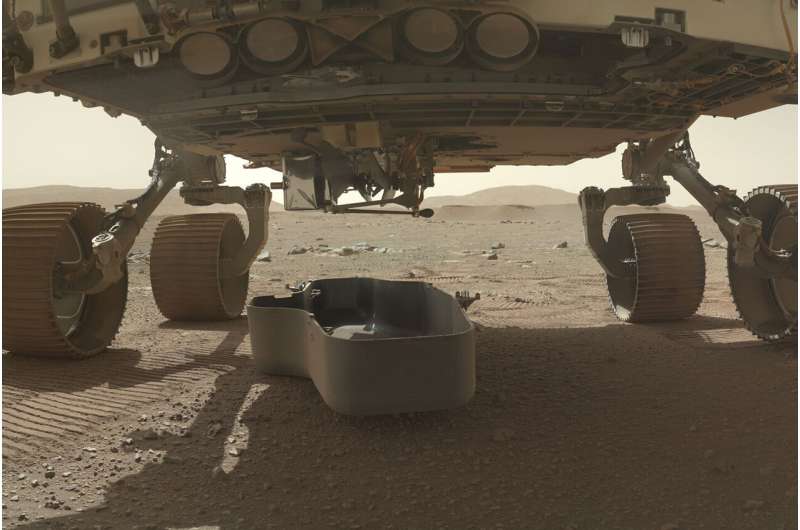
On Sunday, Perseverance dropped the debris shield that had protected Ingenuity during landing, and is currently making its way to the "airfield" where Ingenuity will attempt its flights.
Once there, it will have 30 Martian sols—equal to 31 Earth days—to carry out its mission.
"The best guess we have right now is April 8," for the first flight, said Bob Balaram, Mars Helicopter chief engineer at the Jet Propulsion Laboratory, though he added it could be sooner or later by a few days.
Balaram revealed for the first time that Ingenuity is carrying a small piece of cloth that covered one of the wings of the Wright brothers' first aircraft that achieved the first powered flight on Earth at Kitty Hawk in 1903, to pay tribute to the milestone.
Part of Wright brothers' 1st airplane on NASA's Mars chopper
A piece of the Wright brothers' first airplane is on Mars.
NASA's experimental Martian helicopter holds a small swatch of fabric from the 1903 Wright Flyer, the space agency revealed Tuesday.
Satellites map record floods in Australia
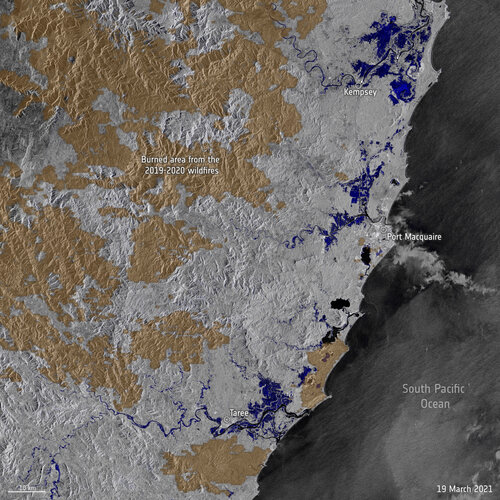 Image:
Stretches of land across New South Wales, Australia, have been hit with torrential rain leading to record-breaking floods. Data from the Copernicus Sentinel-1 mission are being used to map flooded areas to help relief efforts.
Image:
Stretches of land across New South Wales, Australia, have been hit with torrential rain leading to record-breaking floods. Data from the Copernicus Sentinel-1 mission are being used to map flooded areas to help relief efforts. 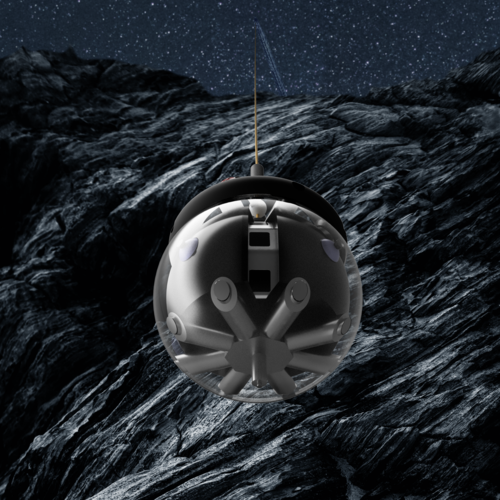 Image:
Lunar cave explorer
Image:
Lunar cave explorer Is there still space for export credit agencies?
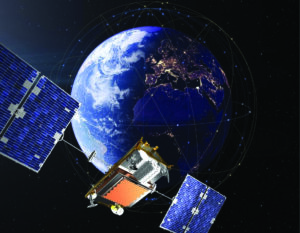
Once a critical pillar for supporting commercial space projects around the world, export credit agencies have faded from the limelight in an industry awash with financing alternatives.
But as an Indonesian satellite secures ECA support and Canada’s Telesat explores the option for its LEO constellation, there is still a role to play for these state-backed institutions.
SpaceX marks anniversary of first launch with Starlink mission
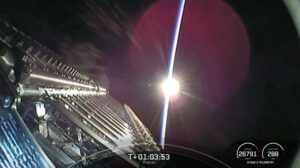
WASHINGTON — A SpaceX Falcon 9 launched another set of Starlink satellites March 24, 15 years to the day after the company’s first, unsuccessful launch.
The Falcon 9 lifted off from Space Launch Complex 40 at Cape Canaveral Space Force Station at 4:24 a.m.
World-leading CubeSat satellites launched
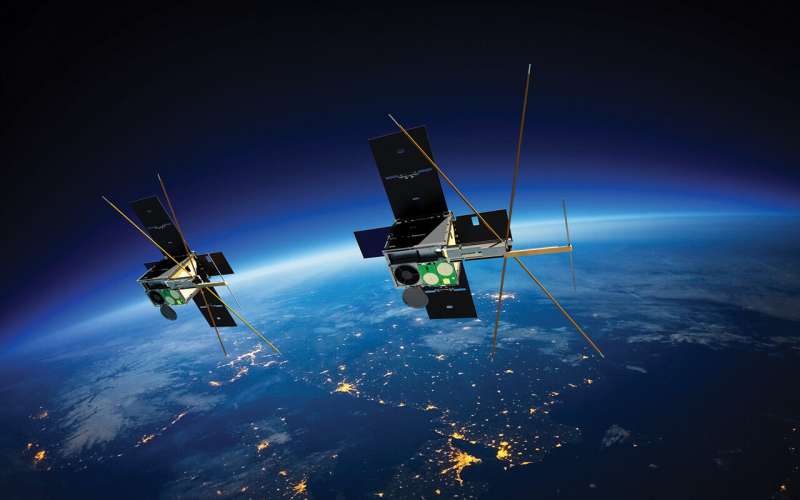
UNSW Canberra Space's M2 CubeSat satellites successfully launched with Rocket Lab's "They Go Up So Fast' mission from New Zealand earlier today, representing a significant step forward in Australia's sovereign space capabilities.
The M2 mission, a collaboration between UNSW Canberra Space and the Royal Australian Air Force (RAAF), brings together emerging technologies that deliver advanced capabilities in Earth observation, maritime surveillance, and satellite communications.
UNSW Canberra Space Director Professor Russell Boyce said M2 will deliver world-leading CubeSat technologies including formation flying, where the craft is able to split into two separate satellites (M2- A and M2-B) and fly in sequence, enabling significant mission flexibility.
Supporting Australia's space situational awareness, the data captured by M2 can inform maritime surveillance, weather observations and low-orbit satellite traffic. This information is processed through advanced in-orbit artificial intelligence, on a platform reconfigurable throughout the mission.
"The M2 mission is one of the most complex CubeSat programs ever attempted. It will enable both UNSW Canberra Space and the RAAF to gain experience and capability in the development and operation of in-orbit space science and technology missions," Professor Boyce said.
Water mission takes on space weather
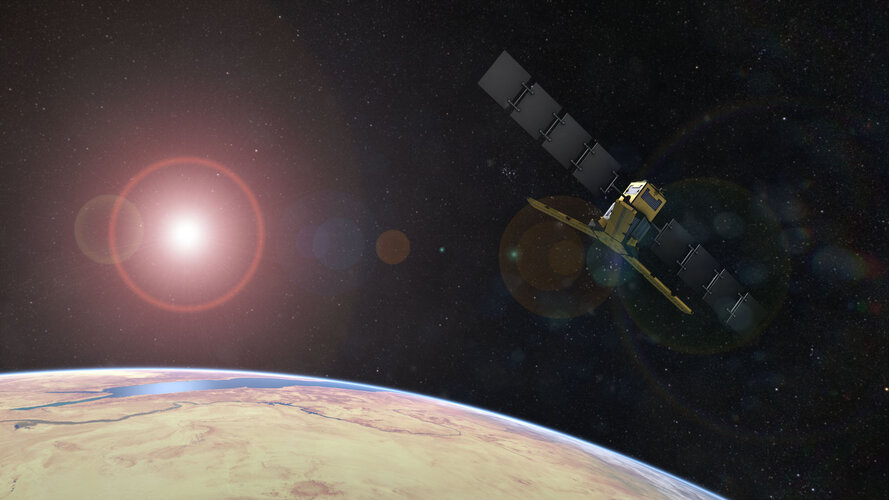
For well over a decade, ESA’s SMOS satellite has been delivering a wealth of data to map moisture in soil and salt in the surface waters of the oceans for a better understanding of the processes driving the water cycle. While addressing key scientific questions, this exceptional Earth Explorer has repeatedly surpassed expectations by returning a wide range of unexpected results, often leading to practical applications that improve everyday life. Adding to SMOS’ list of talents, new findings show that what was considered noise in the mission’s data can actually be used to monitor solar activity and
ESA boost for UK space transportation initiatives
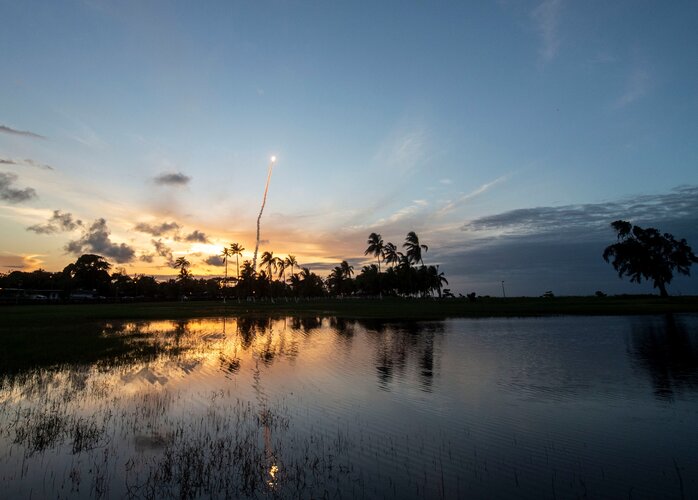
As part of its Boost! programme, ESA has signed two new contracts which support UK-based Orbex and Skyrora in their separate proposals for new commercial launch services for small satellites. These services are set to start in the UK from 2022.
ESA has awarded €7.45 m of co-funding to Orbex and its partners, and €3 m to Skyrora.
Italy’s Leaf Space to establish U.S. office
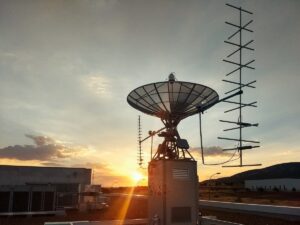
SAN FRANCISCO – Italian ground segment provider Leaf Space announced plans March 24 to establish a U.S. office to serve government and commercial customers.
“There is a clear appetite among U.S. satellite and launch vehicle operators to simplify, outsource and maximize the value from ground services and we believe that need is only going to grow,” Jai Dialani, Leaf Space U.S.


