

Florida company licenses NASA tech that keeps electronics cool
 From shutting down unexpectedly to exploding, electronics can wreak havoc when they overheat. A Florida-based company called Protodromics LLC has licensed a NASA technology that takes advantage of a physical force called electrohydrodynamics (EHD) to pump water or other fluids and cool overheated electronics. Due to the technology's low power consumption, modular nature, and small size, it can b
 Warming drives 'fundamental' changes to ocean, scientists warn
 Climate change has wrought major changes to ocean stability faster than previously thought, according to a study published Wednesday, raising alarms over its role as a global thermostat and the marine life it supports.
The research published in the journal Nature looked at 50 years of data and followed the way in which surface water "decouples" from the deeper ocean.
Climate change has
Climate change has wrought major changes to ocean stability faster than previously thought, according to a study published Wednesday, raising alarms over its role as a global thermostat and the marine life it supports.
The research published in the journal Nature looked at 50 years of data and followed the way in which surface water "decouples" from the deeper ocean.
Climate change has The same sea level for everyone
 Maps generally indicate elevation in meters above sea level. But sea level is not the same everywhere. A group of experts headed by the Technical University of Munich (TUM), has developed an International Height Reference System (IHRS) that will unify geodetic measurements worldwide.
How high is Mount Everest? 8848 meters? 8844 meters? Or 8850 meters? For years, China and Nepal could not a
Maps generally indicate elevation in meters above sea level. But sea level is not the same everywhere. A group of experts headed by the Technical University of Munich (TUM), has developed an International Height Reference System (IHRS) that will unify geodetic measurements worldwide.
How high is Mount Everest? 8848 meters? 8844 meters? Or 8850 meters? For years, China and Nepal could not a ABL Space Systems raises $170 million
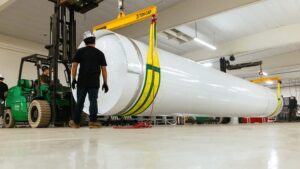
WASHINGTON — Small launch vehicle developer ABL Space Systems announced March 25 it raised $170 million in funding to help it build up infrastructure and launch sites ahead of its first launch.
ABL said its Series B round was led by funds and accounts advised by T.
Op-ed | From spectator to space investor: How a teen from Maine became a Virgin Galactic shareholder

It all started with Mr. V, my middle school teacher famous for the stock market game he ran each year for the eighth graders. As a seventh grader, I convinced Mr. V to let me play.
Arianespace launches 36 more OneWeb satellites
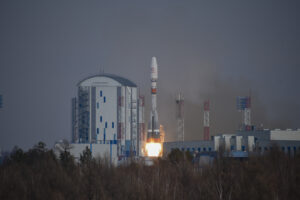
TAMPA, Fla. — Arianespace successfully launched another 36 satellites for low Earth orbit broadband operator OneWeb March 25, bringing its total in-orbit constellation to 146 satellites.
OneWeb has made contact with each satellite after they separated from a Soyuz-2.1b rocket that blasted off 10:47 p.m.
Paraguay's first satellite deployed from the International Space Station
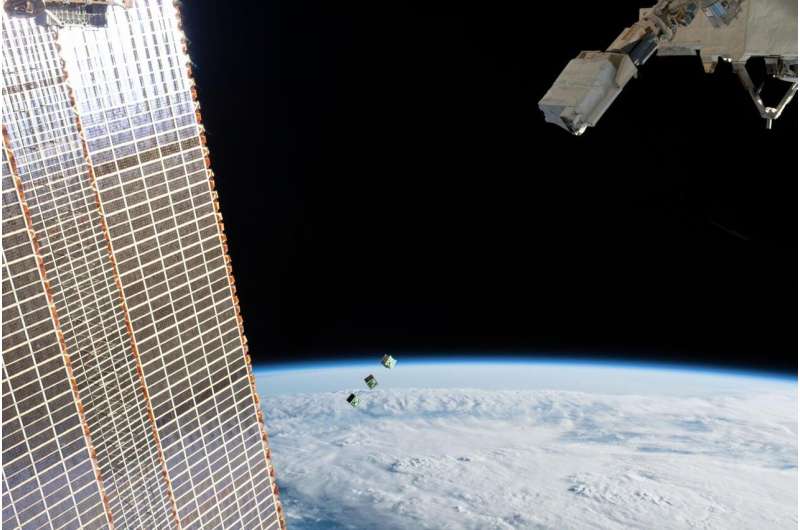
On March 14, the Paraguayan Space Agency (AEP) deployed a satellite from the International Space Station to help track a tiny parasite that causes Chagas disease. The satellite, Guaranisat-1, is the first developed and put into orbit by Paraguay. An estimated 8 million people in Mexico, Central America, and South America have Chagas disease, which if untreated can be life-threatening. Large-scale population movements from rural to urban areas of Latin America and other parts of the world have increased the geographic distribution of the disease.
Guaranisat-1 is part of the Joint Global Multi-Nation Birds Satellite project, or BIRDS, supported by the nation of Japan and the Kyushu Institute of Technology or Kyutech.
Gravitational lenses could allow a galaxy-wide internet
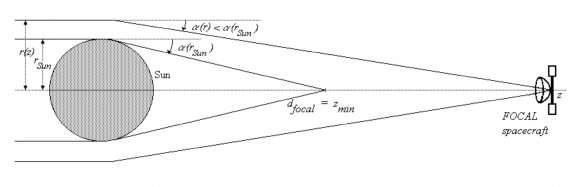
As Carl Sagan once said, "The sky calls to us. If we do not destroy ourselves, we will one day venture to the stars." And our first emissaries to the stars will be robotic probes. These interstellar probes will be largely autonomous, but we will want to communicate with them. At the very least, we will want them to phone home and tell us what they've discovered. The stars are distant, so the probes will need to make a very long-distance call.
Currently, we communicate with space probes throughout the solar system via the Deep Space Network (DSN). This is a collection of antenna stations located around the world. Each station has one large 70-meter dish and several smaller dishes. Such large radio dishes are necessary because the signals from a space probe are rather faint, and they grow fainter with increasing distance.
When we start sending probes to other stars, we're going to need an interstellar communication network.
Sky Perfect JSAT orders first Airbus satellite
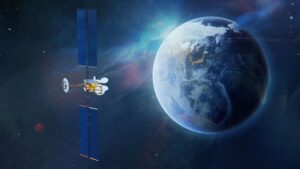
TAMPA, Fla. — Japanese satellite operator Sky Perfect JSAT has ordered a spacecraft from Airbus for the first time, choosing the European aerospace giant to build Superbird-9 for a launch in 2024.
Superbird-9 will be based on Airbus’ reconfigurable payload platform OneSat, which can steer and reassign beams for different customers and services.
Space Force to launch fifth SBIRS satellite in May
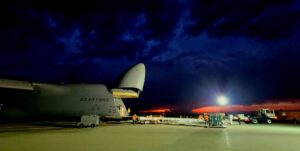
WASHINGTON — A $1.6 billion Space Based Infrared System satellite arrived last week at Canaveral Space Force Station, Florida. The satellite, made by Lockheed Martin, is scheduled to launch May 17 on a United Launch Alliance Atlas 5 rocket, the U.S.


