Large asteroid to pass by Earth on March 21: NASA
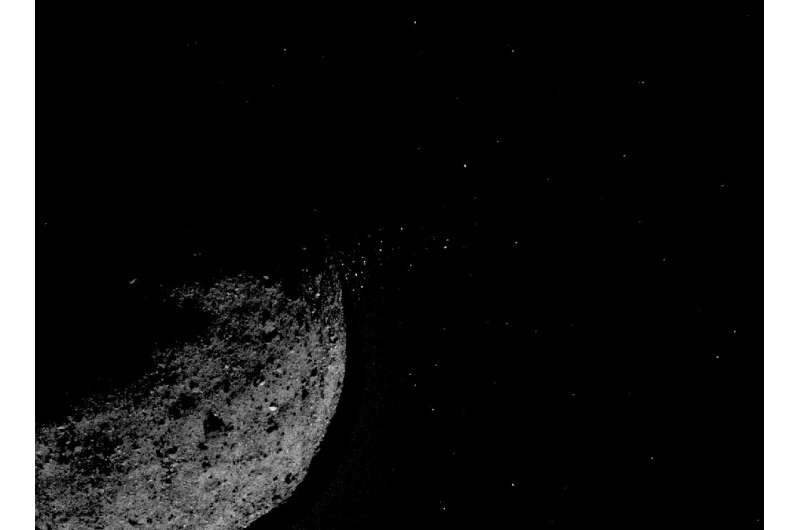
The largest asteroid to pass by Earth this year will approach within some 1.25 million miles (two million kilometers) of our planet on March 21, NASA said Thursday.
The US space agency said it will allow astronomers to get a rare close look at an asteroid.
The asteroid, 2001 FO32, is estimated to be about 3,000 feet in diameter and was discovered 20 years ago, NASA said.
"We know the orbital path of 2001 FO32 around the Sun very accurately," said Paul Chodas, director of the Center for Near Earth Object Studies. "There is no chance the asteroid will get any closer to Earth than 1.25 million miles."
That is roughly 5.25 times the distance of the Earth from the Moon but still close enough for 2001 FO32 to be classified as a "potentially hazardous asteroid."
NASA said 2001 FO32 will pass by at about 77,000 miles per hour faster than the speed at which most asteroids encounter Earth.
"Currently, little is known about this object, so the very close encounter provides an outstanding opportunity to learn a great deal about this asteroid," said Lance Benner, principal scientist at NASA's Jet Propulsion Laboratory.
Thomas Pesquet’s Alpha mission
 Video:
00:03:45
Video:
00:03:45
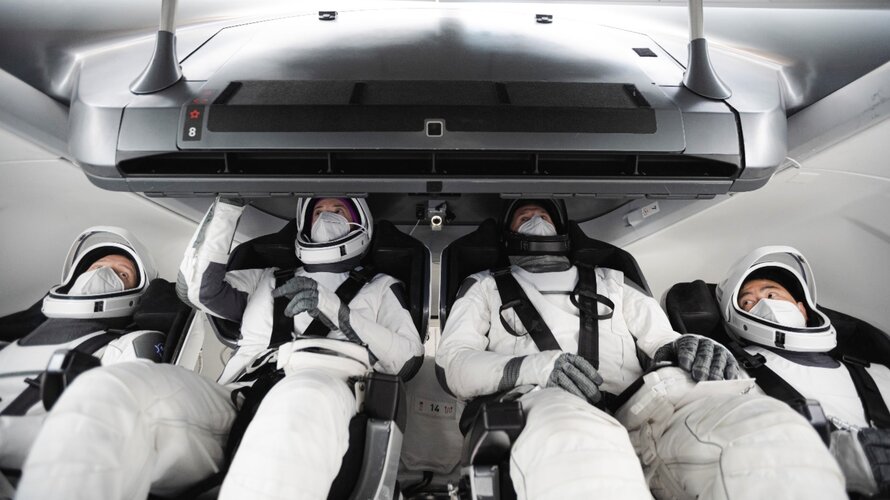
French ESA astronaut Thomas Pesquet will soon begin his second mission to the International Space Station. Called Alpha, the mission will begin with the second operational flight of the SpaceX Crew Dragon, launched from Cape Canaveral in Florida, USA. Thomas will be the first ESA astronaut to fly in this spacecraft, which will remain docked to the Space Station for around six months before returning the crew to Earth.
This A&B Roll gives an overview of Thomas Pesquet’s Alpha mission with soundbites in English and French.
France runs satellite war game in European first
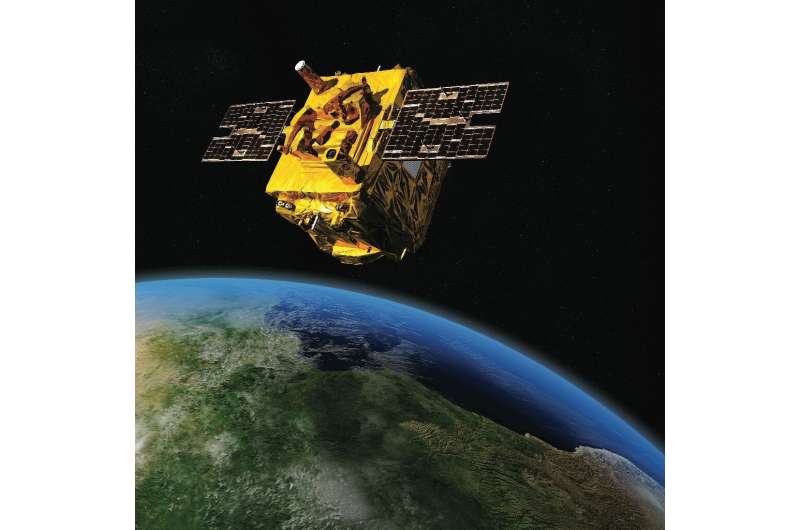
France on Friday prepared to simulate an attack by a hostile power on one of its satellites in a war game scenario the government said is less outlandishly futuristic than it may seem.
President Emmanuel Macron was to watch onsite as his military chiefs started to play out a four-day sequence in which an unnamed space-capable power attacks a nation allied to France, and tries to take out a French communications satellite.
Germany, Italy and the US are participating in the AsterX space war game at France's national space agency CNES in Toulouse, the first such exercise in France or in Europe.
It is an opportunity to simulate modifying the flight path of satellites, sending backup satellites to fix a breakdown, monitoring the transmission of sensitive data and scrambling transmissions by hostile satellites temporarily or even shutting them down completely.
The scenario of the exercise may be fictional, Macron's office said, but is far from implausible.
The French government accuses Russia of having brought its intelligence-gathering satellite Olymp-K, also known as Louch, into close proximity of the French-Italian military satellite Athena-Fidus in 2017 in what Defence Minister Florence Parly called "an act of espionage".
Umbra advertises SAR imagery with 15-centimeter resolution
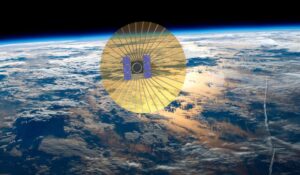
SAN FRANCISCO – Radar satellite startup Umbra plans to capture imagery with a resolution as high as 15 centimeters per pixel thanks to a Federal Communications Commission license.
The FCC granted Umbra, a Santa Barbara, California, startup preparing to launch its first X-band synthetic aperture radar (SAR) microsatellite this year, an experimental license in February to operate high-bandwidth SAR using the 1,200 MHz band centered on 9.8 GHz and low-bandwidth SAR with the 600 MHz band centered on 9.6 GHz.
International Space Station images trace bird migrations
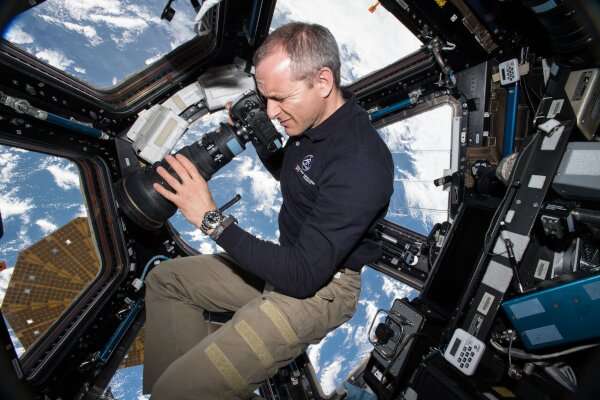
Those who see Earth from the International Space Station often say it provides a new appreciation of our planet. The Avian Migration Aerial Surface Space project, or AMASS, takes advantage of thousands of images captured by astronauts to give people an appreciation of the migrations many birds undertake across the planet.
Also called Space for Birds, the project maps the routes taken by seven endangered or threatened bird species, highlighting along those routes habitat changes caused mainly by human activities. After more than four years, astronauts now have captured images of key locations along the migratory paths of all seven species. The Roberta Bondar Foundation sponsors AMASS in collaboration with NASA and the Canadian Space Agency (CSA). The foundation is a research and education effort started by Bondar, the first Canadian woman to fly in space.
SEAKR wins $60 million DARPA contract to demonstrate autonomous satellite operations
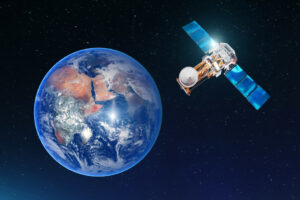
WASHINGTON — The Defense Advanced Research Projects Agency announced March 12 it awarded SEAKR Engineering a $60.4 million contract to develop a data processing system for satellites to operate autonomously.
SEAKR, based in Centennial, Colorado, was selected by DARPA in 2019 to develop the artificial brain of the agency’s Blackjack satellite network.
Arecibo telescope collapse may complicate NASA asteroid mission
 The destructive collapse in December of the world's most powerful radar telescope, Arecibo Observatory in Puerto Rico, will make some observations of an upcoming asteroid mission difficult, according to NASA.
The primary goal of the asteroid experiment, or DART mission, is to crash a spacecraft into a small moon that circles asteroid Didymos in 2022, and to observe how the impact affect
The destructive collapse in December of the world's most powerful radar telescope, Arecibo Observatory in Puerto Rico, will make some observations of an upcoming asteroid mission difficult, according to NASA.
The primary goal of the asteroid experiment, or DART mission, is to crash a spacecraft into a small moon that circles asteroid Didymos in 2022, and to observe how the impact affect Mechanical cosmos recreated inside world's first analogue computer
 Scientists have reconstructed a cosmological model to fit the complex arithmetic of the Antikythera Mechanism, the world's first analogue computer.
One of the most sophisticated engineering feats to have survived from the ancient world, the 2,000-year-old Antikythera Mechanism was used by Greek astronomers to calculate the positions of the sun, moon and planets, as well as predict lunar
Scientists have reconstructed a cosmological model to fit the complex arithmetic of the Antikythera Mechanism, the world's first analogue computer.
One of the most sophisticated engineering feats to have survived from the ancient world, the 2,000-year-old Antikythera Mechanism was used by Greek astronomers to calculate the positions of the sun, moon and planets, as well as predict lunar Astronauts plan Saturday spacewalk at space station
 Two NASA astronauts are scheduled for the fifth spacewalk of the year Saturday at the International Space Station.
Michael Hopkins and Victor Glover will exit the station's Quest airlock about 7:30 a.m. EST to conduct space-based maintenance on the orbiting platform for about 6 1/2 hours.
Hopkins and Glover will attempt to connect power cables for the new European science platfor
Two NASA astronauts are scheduled for the fifth spacewalk of the year Saturday at the International Space Station.
Michael Hopkins and Victor Glover will exit the station's Quest airlock about 7:30 a.m. EST to conduct space-based maintenance on the orbiting platform for about 6 1/2 hours.
Hopkins and Glover will attempt to connect power cables for the new European science platfor Russia deploys giant space telescope in Lake Baikal
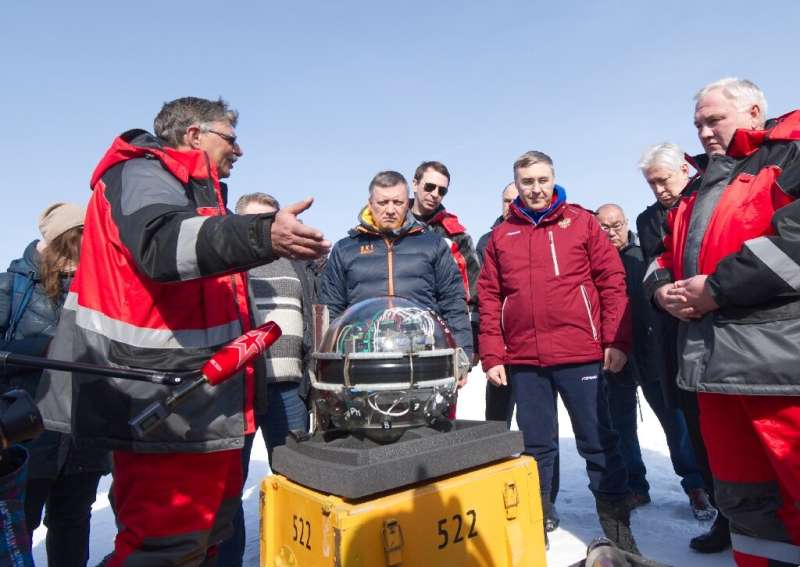
Russian scientists on Saturday launched one of the world's biggest underwater space telescopes to peer deep into the universe from the pristine waters of Lake Baikal.
The deep underwater telescope, which has been under construction since 2015, is designed to observe neutrinos, the smallest particles currently known.
Dubbed Baikal-GVD, the telescope was submerged to a depth of 750-1,300 meters (2,500-4,300 feet), around four kilometres from the lake's shore.
Neutrinos are very hard to detect and water is an effective medium for doing so.
The floating observatory consists of strings with spherical glass and stainless steel modules attached to them.
On Saturday, scientists observed the modules being carefully lowered into the freezing waters through a rectangular hole in the ice.
"A neutrino telescope measuring half a cubic kilometre is situated right under our feet," Dmitry Naumov of the Joint Institute for Nuclear Research told AFP while standing on the lake's frozen surface.