

Mars-bound payload on way to Florida for 1st launch of Blue Origin New Glenn
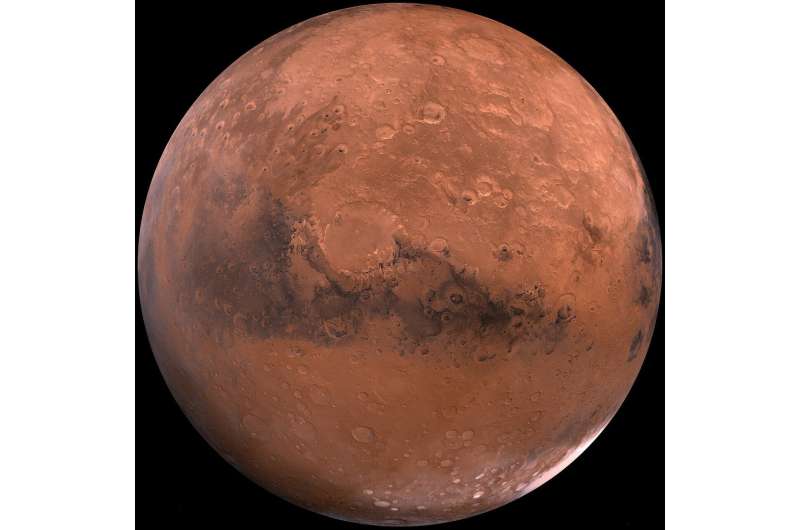
The Mars-bound twin spacecraft for NASA's ESCAPADE mission were packed up in California to be shipped out to Florida this week ahead of what would be the first ever launch of Blue Origin's New Glenn rocket from Cape Canaveral.
ESCAPADE stands for Escape and Plasma Acceleration and Dynamics Explorers, and the mission's purpose is to orbit Mars and observe plasma and magnetic fields around the planet to help understand what processes strip atoms from Mars' magnetosphere and upper atmosphere. That could help explain why Mars' atmosphere is so thin, and how it may have evolved over time.
The two small satellites, dubbed Blue and Gold, were built by Rocket Lab in California for NASA and the University of California Berkeley's Space Science Laboratory.
They will soon arrive at Kennedy Space Center where they will head to a cleanroom for post-transport inspections and tests. Eventually, they will be encapsulated for launch on New Glenn from Blue Origin's pad at Cape Canaveral Space Force Station's Launch Complex 36, something Blue Origin officials state will happen before the end of the year.
Why Juice is coming back to Earth
 Video:
00:09:15
Video:
00:09:15
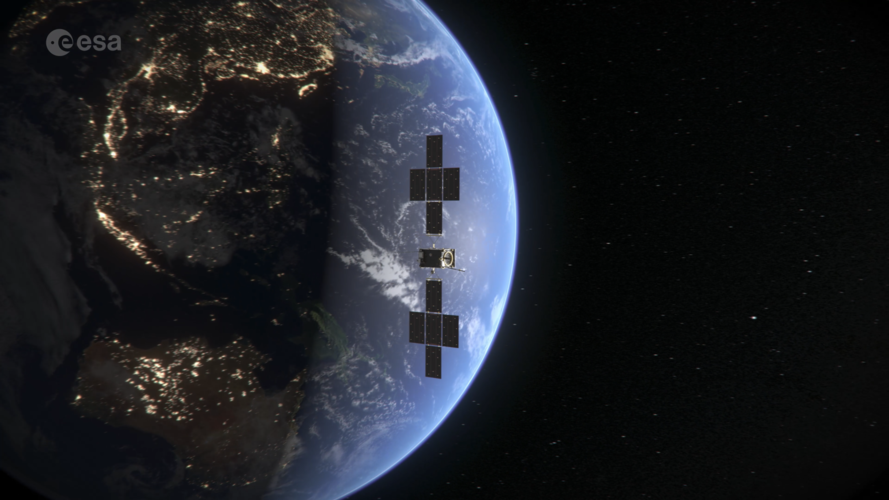
ESA’s Jupiter Icy Moons Explorer (Juice) returns to Earth on 19–20 August 2024, to complete the world's first Lunar-Earth gravity assist. Flight controllers will guide the spacecraft past the Moon and then Earth itself, ‘braking’ the spacecraft. This manoeuvre may seem counterintuitive but will allow Juice to take a shortcut via Venus on it's way to Jupiter.
Juice has already travelled more than 1000 million km to the giant planet but it still has a long way to go even though Jupiter is on average ‘just’ 800 million km away from Earth. Join us as we explain why
Sentinel-2C fully loaded
 Image:
Sentinel-2C fully loaded
Image:
Sentinel-2C fully loaded South Korea hires SpaceX to launch GEO satellite in 2027


Boeing Starliner astronauts: What six months stuck in space may do to their perception of time
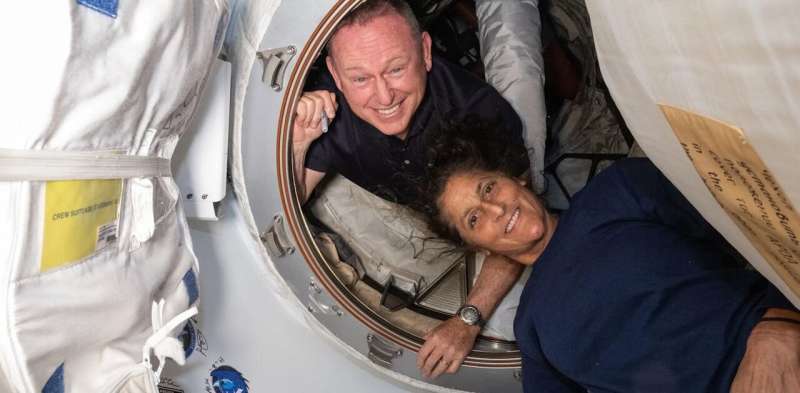
Two astronauts marooned in space may sound like the plot of a Hollywood blockbuster, but for two NASA crew members, it is now a reality. Commander Barry Wilmore and pilot Sunita Williams are currently in limbo on the International Space Station (ISS).
They arrived in the Boeing Starliner spacecraft—the first test of the spaceship with astronauts. Wilmore and Williams were supposed to stay on the ISS for around eight days and return on the same spacecraft. But there is now debate about the safety of Starliner after it experienced helium leaks and thruster problems on its way to the ISS.
In coming days, NASA and Boeing may decide to clear Starliner to carry the astronauts back to Earth. This means their stay might not last too much longer. But if officials decide against Starliner, the astronauts face waiting an additional six months in orbit before returning.
Planet signs deal with NATO to supply satellite imagery


Specialized materials could passively control the internal temperature of space habitats
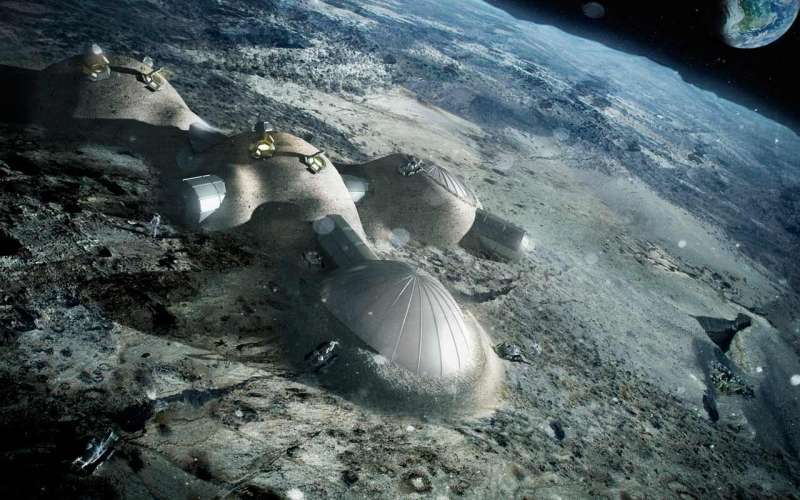
Areas of space have wildly different temperatures depending on whether they are directly in sunlight or not. For example, temperatures on the moon can range from 121 °C during the lunar "day" (which lasts for two weeks), then drop down to -133 °C at night, encompassing a 250 °C swing.
Stabilizing the temperature inside a habitat in those environments would require heating and cooling on a scale never before conducted on Earth. But what if there was a way to ease the burden of those temperature swings? Phase change materials (PCMs) might be the answer, according to a paper, appearing in Thermo, by researchers at the Universidad Politecnica de Madrid.
PCMs have been known for some time and are currently used in several industries, including batteries, solar power plants, heat pumps, and even spacecraft. Perhaps most interestingly, they've been used to cool and heat the interiors of buildings on Earth.
Project Helianthus—a solar-sail-driven geomagnetic storm tracker

Solar storms captured the imagination of much of the American public earlier this year when auroras were visible well south of their typical northern areas. As the sun ramps into another solar cycle, those storms will become more and more common, and the dangers they present to Earth's infrastructure will continue to increase.
Currently, most of our early warning systems only give us a few minutes warning about a potentially destructive impending geomagnetic storm event. So a team of researchers from Sapienza University in Rome and the Italian Space Agency proposed a plan to sail a series of detectors to a point out in space where they could give us an early warning. And they want those detectors to stay on station without rockets.
The mission, known as Helianthus, the official name for a sunflower, was initially described at the 6th International Symposium on Space Sailing in June 2023.


