
GHGSat gains NASA approval for methane-emissions data


Companies describe studies to revise Mars Sample Return


SES wins $46 million U.S. Air Force contract for satellite services


Glimpses of Hera’s target asteroids inspire new science

As ESA’s Hera mission for planetary defence completes its pre-launch testing, its target asteroids have come into focus as tiny worldlets of their own. A special issue of Nature Communications published this week presents studies of the Didymos asteroid and its Dimorphos moon, based on the roughly five and a half minutes of close-range footage returned by NASA’s DART spacecraft before it impacted the latter body – along with post-impact images from the Italian Space Agency’s LICIACube.
China’s Space Pioneer pushes towards launch despite static-fire debacle


Fly-around observation images of space debris released
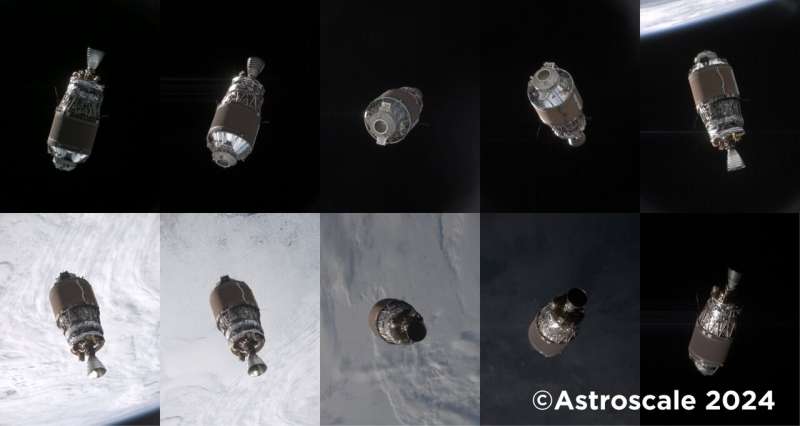
The Japan Aerospace Exploration Agency (JAXA) has advanced the Commercial Removal of Debris Demonstration (CRD2) Phase I project. Under this initiative, the demonstration satellite ADRAS-J, developed by Astroscale Japan Inc., has successfully captured images of space debris, a non-cooperative target, through "Fly-around observation." These images have now been released by Astroscale Japan Inc.
The fly-around observation service is the third of the four services required by JAXA in CRD2 Phase I. This service involves pointing a camera at the target debris, maintaining a constant distance from it, and orbiting around the target debris to capture images from different directions.
'The clock's already started': NASA counting down to most powerful human spaceflight ever
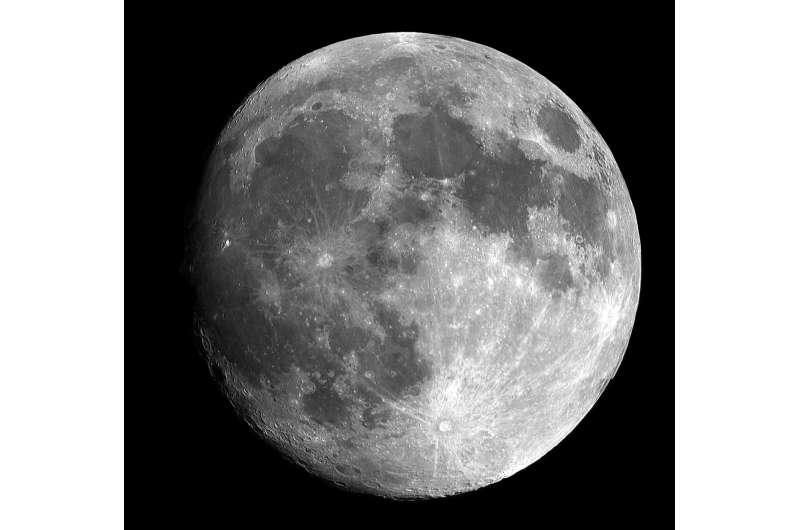
The launch clock isn't set yet, but the hardware is lined up for what would become the most powerful rocket to ever send humans into space during a moonbound trip the likes of which has not happened in more than 50 years.
The biggest piece of the Space Launch System rocket, the 212-foot-long core stage, crept its way into the massive Vehicle Assembly Building on July 24 where work will begin to prepare it for the Artemis II launch set for no earlier than September 2025.
"The clock's already started," NASA SLS program manager John Honeycutt said. "We've got a great deal of work to do to get the rocket ready to go fly."
The core stage sports four RS-25 engines converted by Melbourne-based L3Harris' Aerojet Rocketdyne from the retired stock of the Space Shuttle Program. Two of the engines have previously flown on a combined 20 shuttle missions while the other pair are making their debuts.
Engine 2047 flew on STS-135, the final launch of the program on Space Shuttle Atlantis in 2011.
Also no stranger to KSC are the casings from the two solid rocket boosters fabricated by Northrop Grumman.
CACI secures $450 million contract to support U.S. Space Command’s navigation warfare center


Honoring the Best in Space: 2024 SpaceNews Icon Awards Nominations Open