
The Young Professional Satellite - From Theory to Reality (episode 2)
 Video:
00:14:53
Video:
00:14:53
In the second episode of this docu series, we take a closer look into what it took to build ESA’s Young Professional Satellite (YPSat). YPSat’s mission objectives are to capture the key moments of Ariane 6’s inaugural flight and take in-orbit pictures of Earth and space. To achieve this, the satellite requires the multiple sub-systems to work in harmony and adhere to a pre-defined mission sequence.
This episode zooms in four of the sub-systems: the Wake-Up System (WUS), Battery, On-Board Computer (OBC) and Telecommunications.
Running at ultra low power, the WUS circuit board was designed, tested and manufactured specifically
Highlights from ESA’s first open day in the UK
 Video:
00:02:54
Video:
00:02:54
On Saturday 29 June, thousands of visitors made their way to ESA’s European Centre for Space Applications and Telecommunications (ECSAT), as part of the very first ESA open day to be held in the UK.
ECSAT is located at the Harwell Science and Innovation Campus in Oxfordshire and the ESA open day formed part of the campus-wide Harwell open week.
The open day, hosted by ESA’s Magali Vaissiere Conference Centre, featured fascinating talks and activities that enabled people to experience first-hand how ESA is pushing the boundaries of exploration and using space to improve life on Earth. It also showcased the many career
Juice's lunar-Earth flyby link to blog
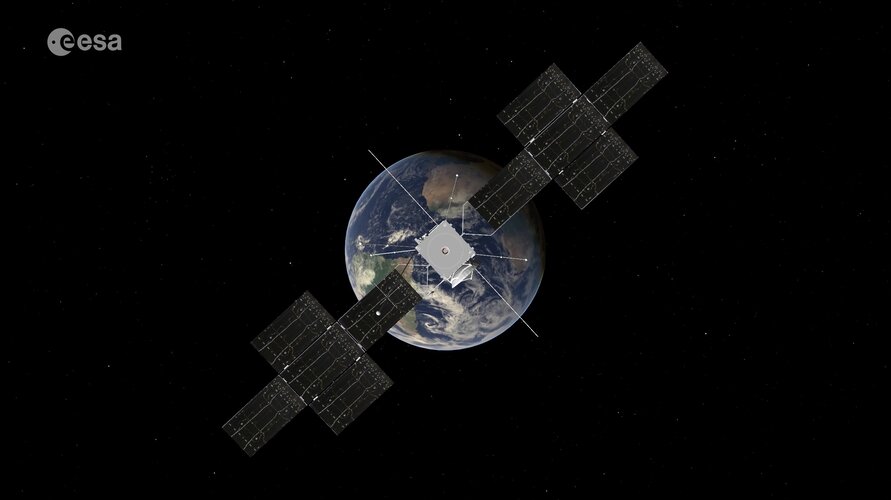
Blog: Juice's lunar-Earth flyby
Follow for the latest updates as ESA's Jupiter mission swings through the Earth system this summer
Scout Space selected for DARPA’s commercial tech initiative


Military-to-civilian space traffic transition nears critical juncture

NASA astronauts spend unexpected July 4 on the International Space Station
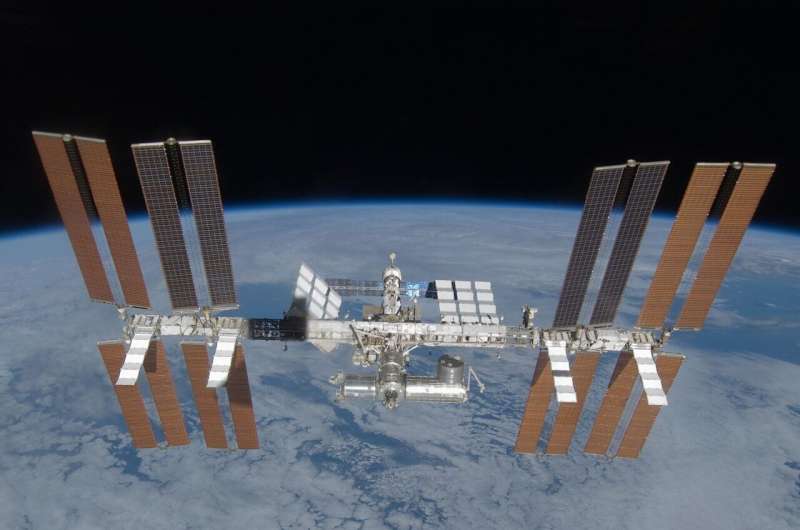
Astronauts Suni Williams and Butch Wilmore spent an unexpected Fourth of July aboard the International Space Station—but it was hardly a patriotic display of engineering prowess.
The two NASA astronauts docked with the orbiting lab June 6 for what was supposed to be an eight-day mission, but their return home may be delayed for months in what has become a star-crossed test flight for Boeing's new Starliner capsule.
Not only was the launch of the spacecraft with astronauts aboard for the first time repeatedly delayed because of multiple problems, but NASA and Boeing are taking a cautious approach in returning the pair to Earth largely because of five thrusters that malfunctioned during docking.
Four of the tiny engines that direct the craft in space are now working properly, but engineers don't have a clear understanding of what caused the shutdown, so they have decided to conduct ground tests at NASA's White Sands Test Facility in New Mexico, NASA officials said. The tests will put a Starliner thruster through its paces in a replicated space environment.
The delay also will allow engineers to further study a helium leak in the capsule's propulsion system that was first detected before launch and worsened as Starliner made its way up to the space station roughly 250 miles above Earth.
Space Force preparing for the age of proliferated low Earth orbit satellite networks


Pentagon greenlights $140 billion ICBM program despite cost overruns