Marvel at stunning echo of 800-year-old explosion
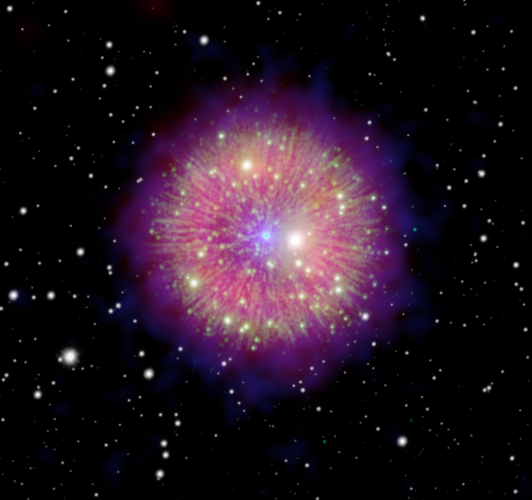 Image:
In the year 1181 a rare supernova explosion appeared in the night sky, staying visible for 185 consecutive days. Historical records show that the supernova looked like a temporary ‘star’ in the constellation Cassiopeia shining as bright as Saturn.
Ever since, scientists have tried to find the supernova’s remnant. At first it was thought that this could be the nebula around the pulsar (dead star) 3C 58. However closer investigations revealed that the pulsar is older than supernova 1181.
In the last decade, another contender was discovered; Pa 30 is a nearly circular nebula with a central star in
Best geologic map for a European rover on Mars

A team of European scientists have published the most detailed geologic map of Oxia Planum – the landing site for ESA’s Rosalind Franklin rover on Mars. This thorough look at the geography and geological history of the area will help the rover scout the once water-rich terrain, in the search for signs of past and present life.
Connecting the Dots | Incoming illegal NGSO service crackdown


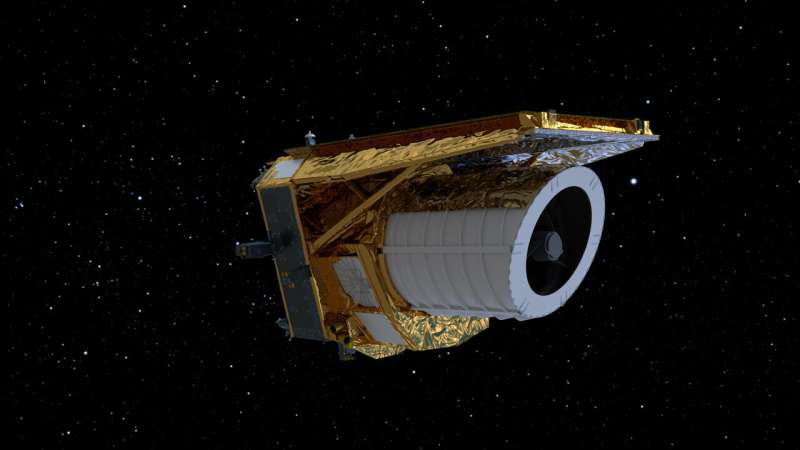
Europe space telescope's sight restored after de-icing procedure
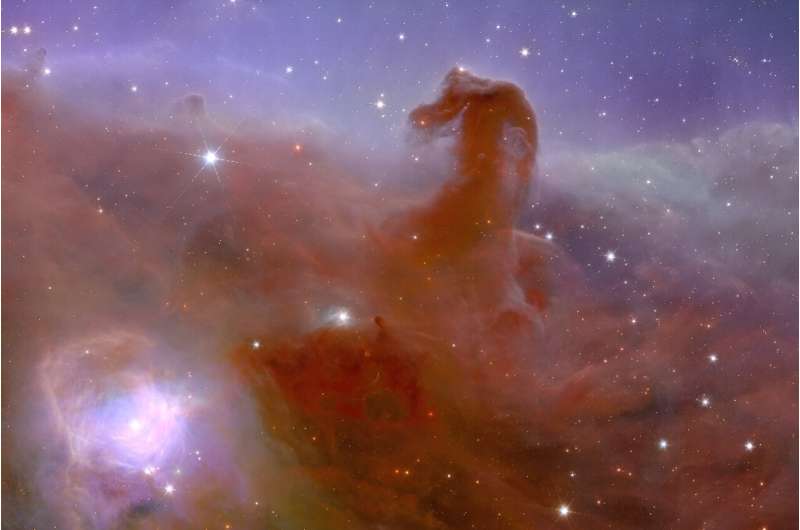
The vision of the Euclid space telescope has been restored following a delicate operation that successfully melted a thin layer of ice that had been clouding its sight, the European Space Agency announced on Tuesday.
There had been fears that the creeping ice could delay the mission of Europe's space telescope, which blasted off in July on the world's first mission to investigate the cosmic mysteries of dark matter and dark energy.
However a de-icing procedure to gently warm up an optimal mirror on the telescope "performed significantly better than hoped", the ESA said.
"After the very first mirror was warmed by just 34 degrees, Euclid's sight was restored," it added.
In November, scientists on the ground noticed that they were losing a little light coming into the telescope's visible light imager.
They determined that the problem was a layer of ice—thought to be just the width of a strand of DNA—building up on the telescope's optical surfaces.
New NASA software simulates science missions for observing terrestrial freshwater
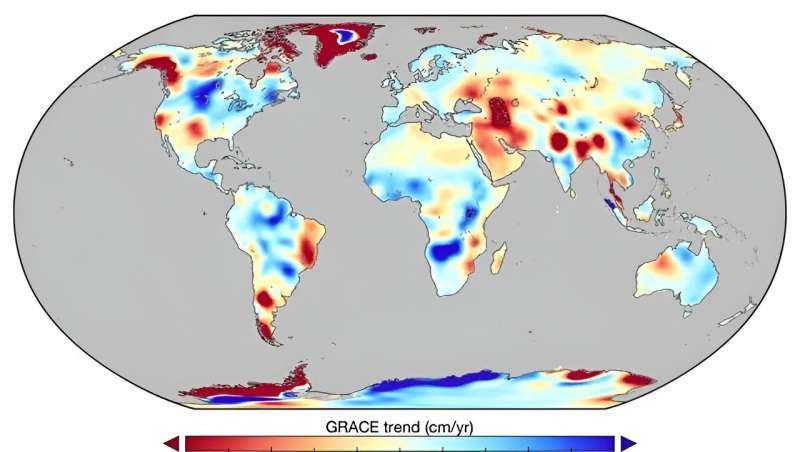
From radar instruments smaller than a shoebox to radiometers the size of a milk carton, there are more tools available to scientists today for observing complex Earth systems than ever before. But this abundance of available sensors creates its own unique challenge: how can researchers organize these diverse instruments in the most efficient way for field campaigns and science missions?
To help researchers maximize the value of science missions, Bart Forman, an Associate Professor in Civil and Environmental Engineering at the University of Maryland, and a team of researchers from the Stevens Institute of Technology and NASA's Goddard Space Flight Center prototyped an Observational System Simulation Experiment (OSSE) for designing science missions dedicated to monitoring terrestrial freshwater storage.


Astrobotic hires space industry veterans to help with Griffin lander


Vegetation gets a boost with data from space
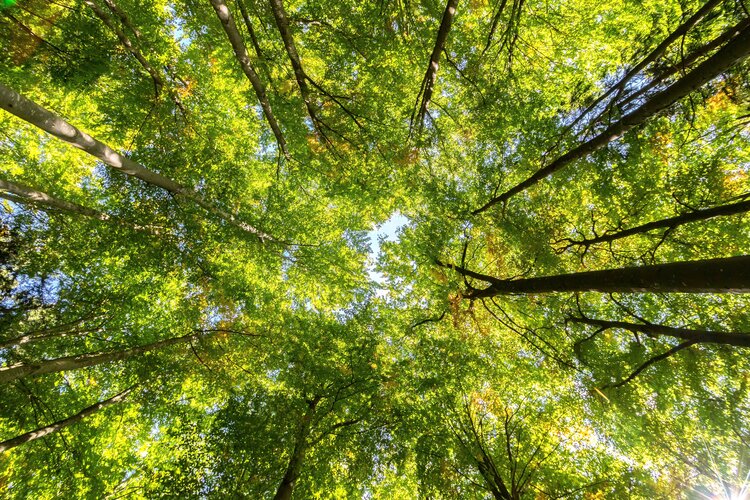
When it comes to predicting what our climate will be like in the future, vegetation matters. Plants and trees exert a powerful influence over both the energy cycle and the water cycle. And, crucially, it is estimated that vegetation draws down well over three billion tonnes of carbon from the atmosphere each year – this is equivalent to a third of greenhouse-gas emissions from human activity.
Accounting for vegetation growth is clearly important in the complex climate puzzle – and the release of a new satellite dataset is set to help climate modellers with the