Space-connected ambulances improve patient care
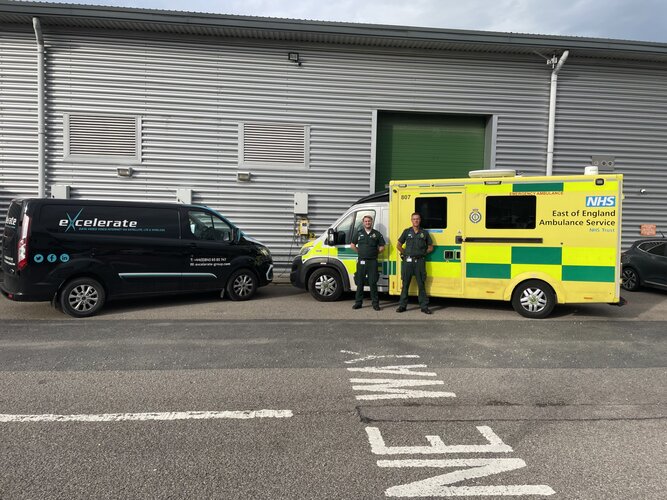
Satellites are helping to improve at-home patient care for those living in remote areas of the UK. ESA and the UK Space Agency (UKSA) are working with the UK’s National Health Service (NHS) to trial the Digital Ambulance of the Future project, which enables paramedics to stay connected to vital patient data, support and resources as they serve people in remote areas. The ultimate aim is to improve patient care and reduce unnecessary hospital admissions.
Accelerating the ‘‘Data Management to Decision Chain’’ in Military Space Operations


US Moon lander 'permanently' asleep after historic landing: Company
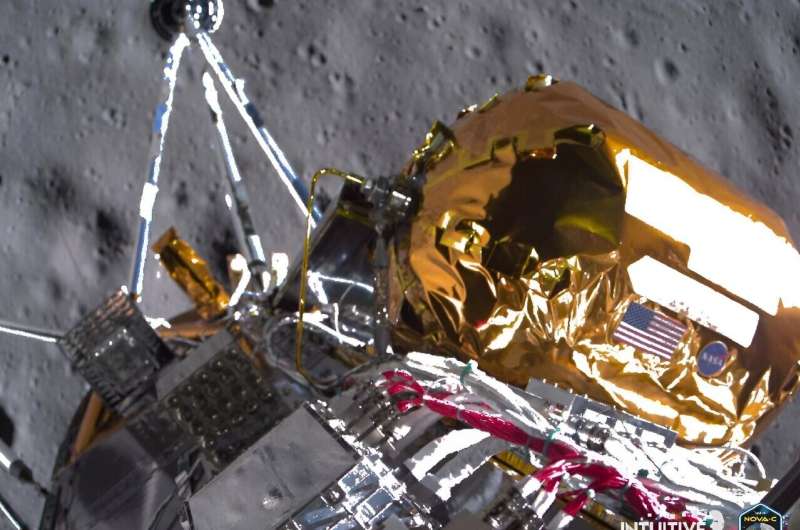
An uncrewed American lander that became the first private spaceship on the moon has met its ultimate end after failing to "wake up," the company that built it said.
Houston-based Intuitive Machines said late Saturday that the lander, named Odysseus, had not phoned home this week when its solar panels were projected to receive enough sunlight to turn on its radio.
The lander touched down at a wonky angle on February 22, but was still able to complete several tests and send back photos before its mission was determined to have ended a week later, as it entered a weeks-long lunar night.
Intuitive Machines had hoped that it might "wake up" once it received sunlight again, as Japan's SLIM spaceship—which landed upside down in January—did last month.
Building ChatGPT-style tools with Earth observation

Imagine being able to ask a chatbot, “Can you make me an extremely accurate classification map of crop cultivation in Kenya?” or “Are buildings subsiding in my street?” And imagine that the information that comes back is scientifically sound and based on verified Earth observation data.
ESA, in conjunction with technology partners, is working to make such a tool a reality by developing AI applications that will revolutionise information retrieval in Earth observation.
Help make an orbital megastructure with genetic computation
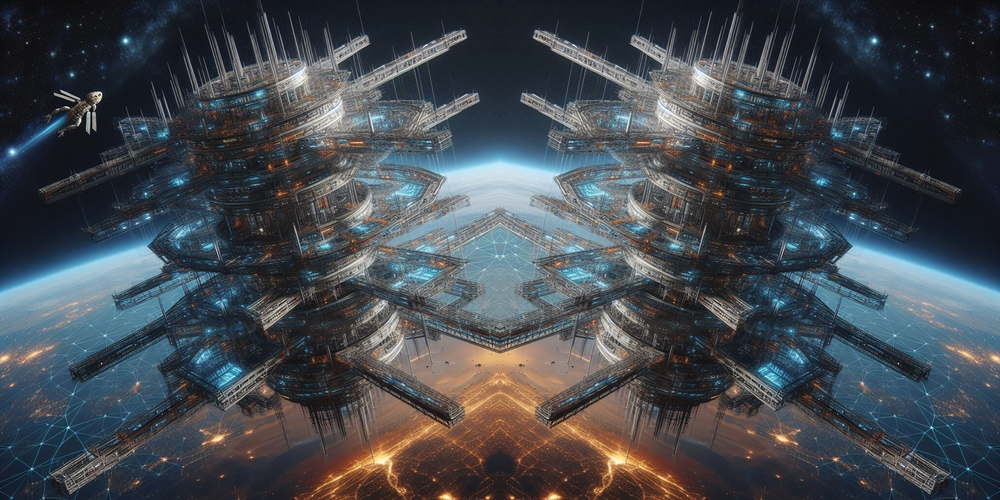
More than two hundred years into the future, our descendants contemplate creating the largest single structure in human history for the next evolutionary leap: a multi-generational starship capable of bringing people to the first truly Earth-like exoplanet. Yet this interstellar ark – to be self-assembled out of builder units in Earth orbit – will be sufficiently complex as well as vast that even designing it involves formidable mathematical challenges. And this odyssey needs to be preceded by a mammoth astronomy effort to prospect the way ahead, involving a formation of orbital telescopes able to operate together as one, yielding
Saturn's moon Enceladus top target for ESA
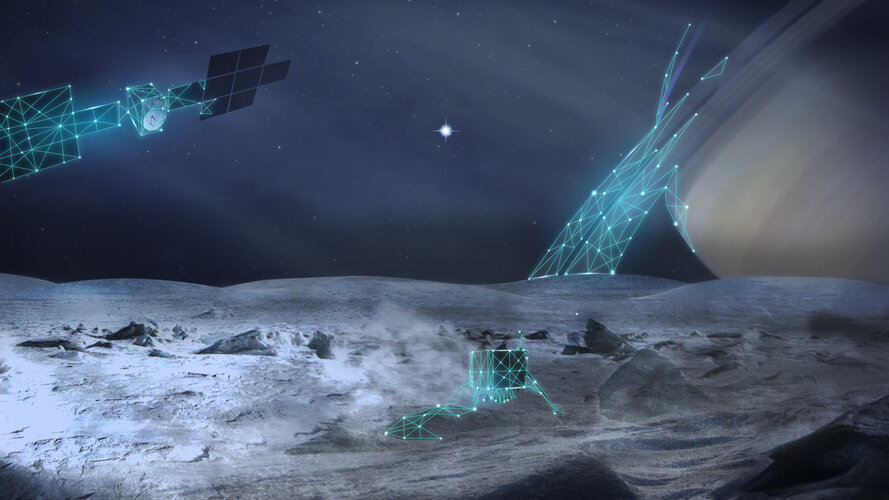
A fresh, icy crust hides a deep, enigmatic ocean. Plumes of water burst through cracks in the ice, shooting into space. An intrepid lander collects samples and analyses them for hints of life.
ESA has started to turn this scene into a reality, devising a mission to investigate an ocean world around either Jupiter or Saturn. But which moon should we choose? What should the mission do exactly? A team of expert scientists has delivered their findings.


Soyuz rocket carrying first Belorussian woman in space en route to ISS
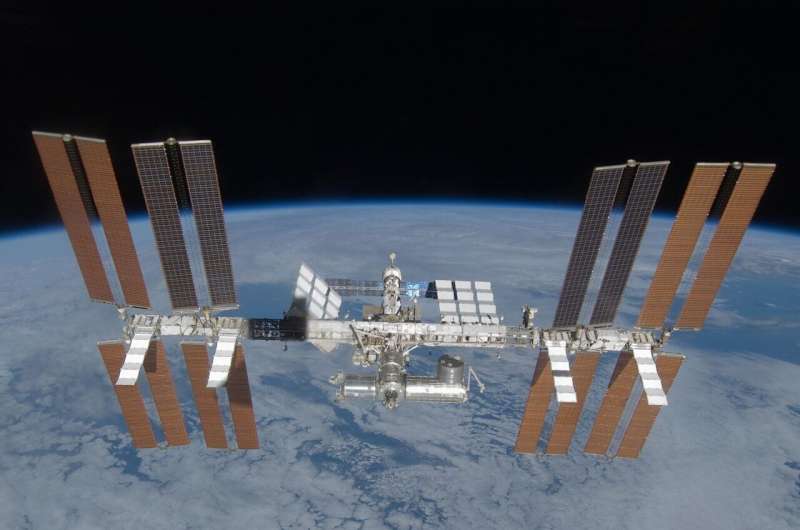
Two astronauts from Belarus and the U.S. have set off for the International Space Station together with a Russian cosmonaut, marking the first time that a woman from Belarus is traveling to space.
The Soyuz MS-25 spacecraft lifted off from Russia's Baikonur Cosmodrome in the steppes of Kazakhstan at 12:36 GMT.
A first launch attempt had been aborted 20 seconds before takeoff on Thursday due to technical problems.
Saturday's launch saw Belorussian astronaut Marina Vasilevskaya, who is being accompanied by NASA astronaut Tracy Dyson and Russian cosmonaut Oleg Novitsky, becoming the first woman from her country to make it into space.
Space cooperation between the U.S. and Russia, including Moscow's ally Belarus, continues despite the U.S. sanctions imposed on Russia over the war in Ukraine.
The launch also saw two women aboard a Soyuz capsule flying to the ISS for the first time.
This is Dyson's third flight into space and Novitsky's fourth.
Vasilevskaya works as a flight attendant for the Belorussian company Belavia. During her two-week stay on the ISS, she will carry out scientific experiments and take spectral images of the Earth's surface.
Cluster explains spiral dance seen over Norway
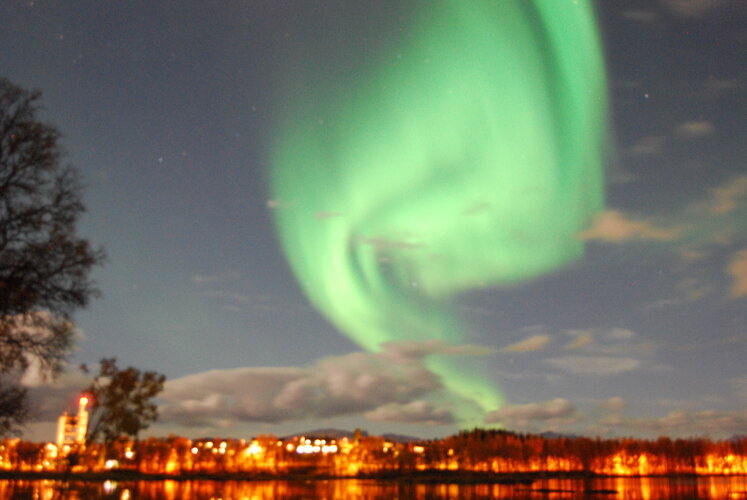 Image:
Photo of auroral spiral
Image:
Photo of auroral spiral