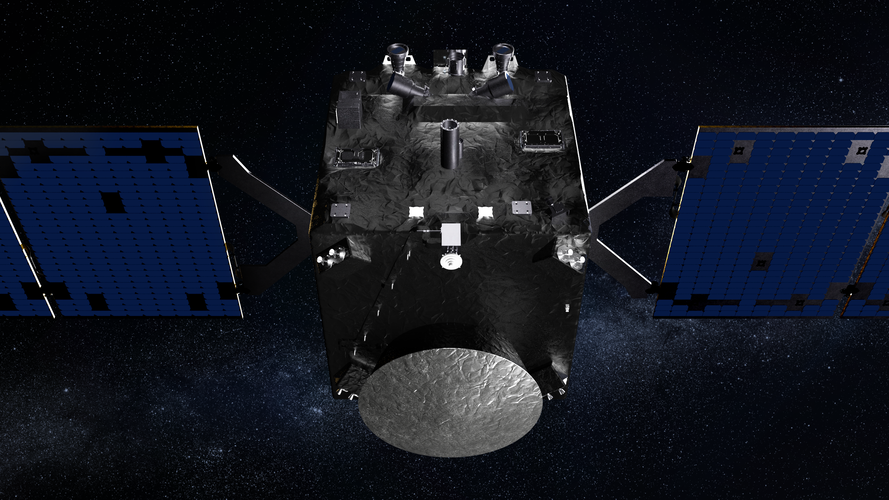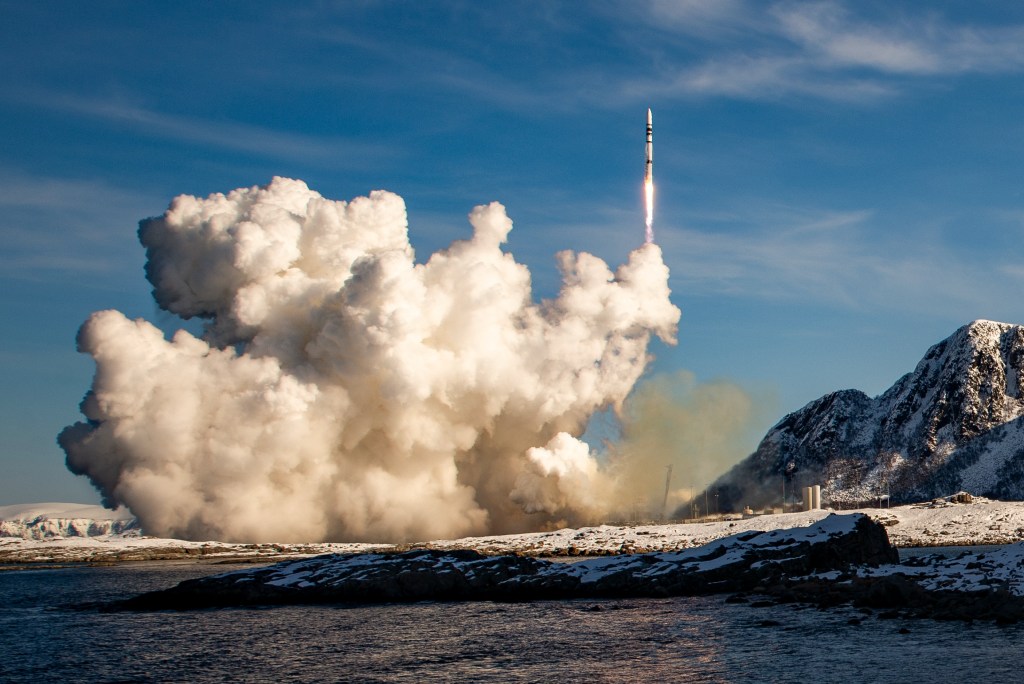
China rolls out rocket for Queqiao-2 lunar satellite launch


Maxar eyes spring launch of long-delayed WorldView Legion satellites


Gaia maps largest ever collection of quasars in space and time
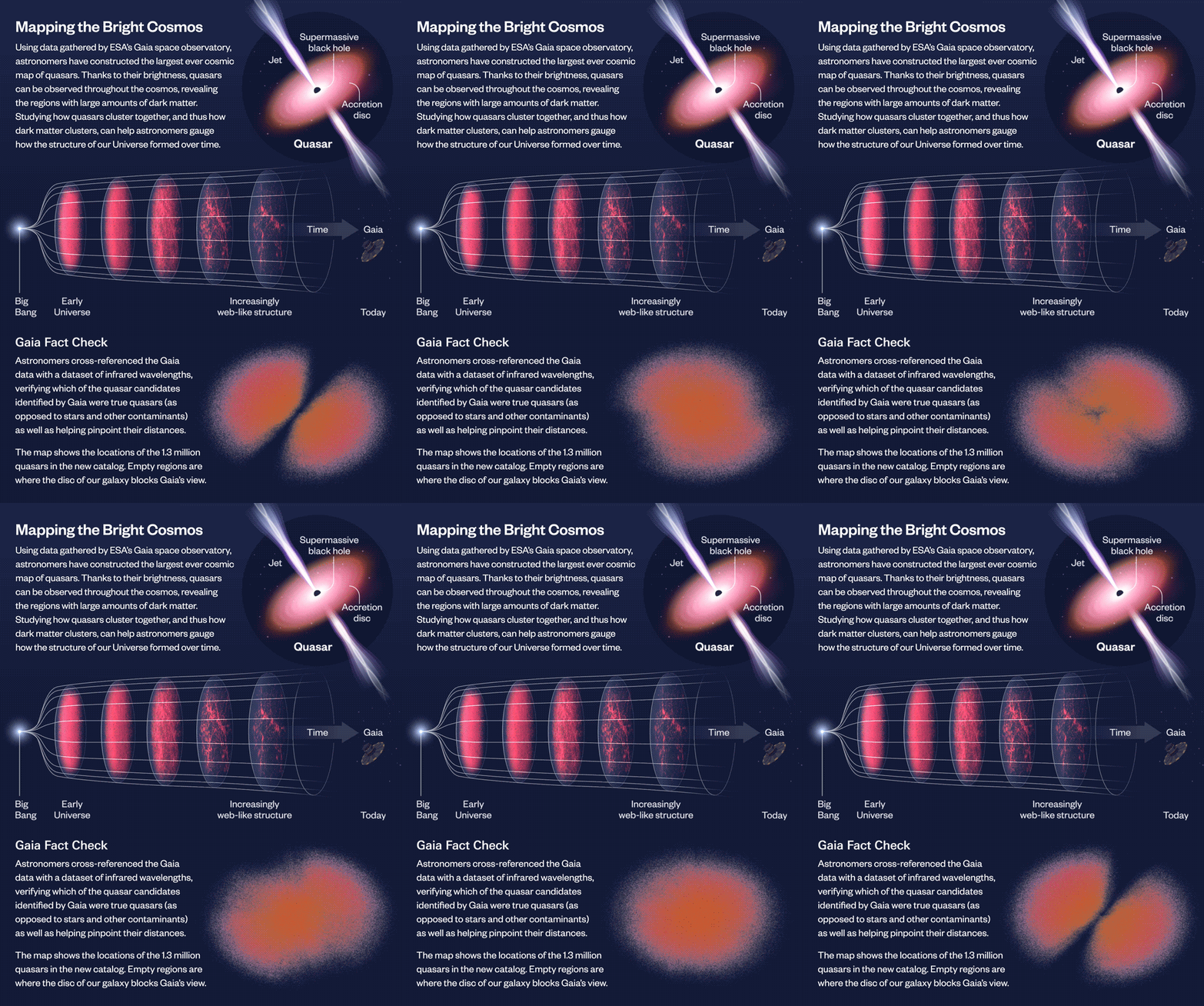 Image:
Astronomers have created the largest yet cosmic 3D map of quasars: bright and active centres of galaxies powered by supermassive black holes. This map shows the location of about 1.3 million quasars in space and time, with the furthest shining bright when the Universe was only 1.5 billion years old.
The new map has been made with data from ESA’s Gaia space telescope. While Gaia’s main objective is to map the stars in our own galaxy, in the process of scanning the sky it also spots objects outside the Milky Way, such as quasars and other galaxies.
The graphic
Orbith orders small Astranis GEO broadband satellite for Argentina


National Reconnaissance Office embracing mix of big and small satellites


Bundling enterprise service in the fractured Direct-to-Device LEO landscape

Aerospace Corp. and Space Foundation announce partnership on workforce initiative

SpaceX is building a spy satellite network for US, news agency says
Elon Musk's SpaceX is building a network of hundreds of spy satellites under a classified contract with a U.S. intelligence agency, Reuters reported, citing five people familiar with the program.
SpaceX's Starshield business unit is building the network as part of a $1.8 billion contract signed in 2021 with the National Reconnaissance Office, Reuters said. The new spy system comprises of hundreds of satellites bearing Earth-imaging capabilities that can operate as a swarm in low orbits, according to the news agency.
The contract signals a strengthening relationship between the billionaire's space company and the US government's national security agencies, Reuters said.
SpaceX and the NRO did not immediately respond to requests for comment sent after regular business hours. The NRO said last year that it planned to quadruple its orbiting spacecraft by 2033.
2024 Bloomberg L.P. Distributed by Tribune Content Agency, LLC.
SpaceX finally manages Kennedy Space Center launch with record-tying booster
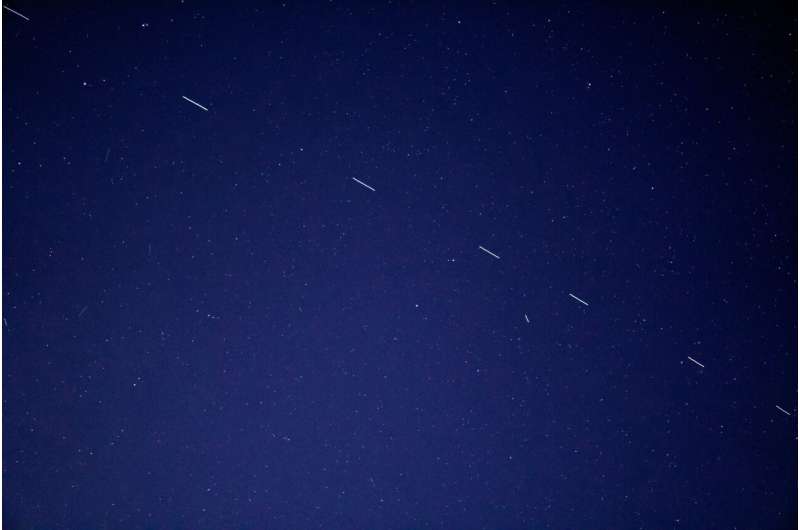
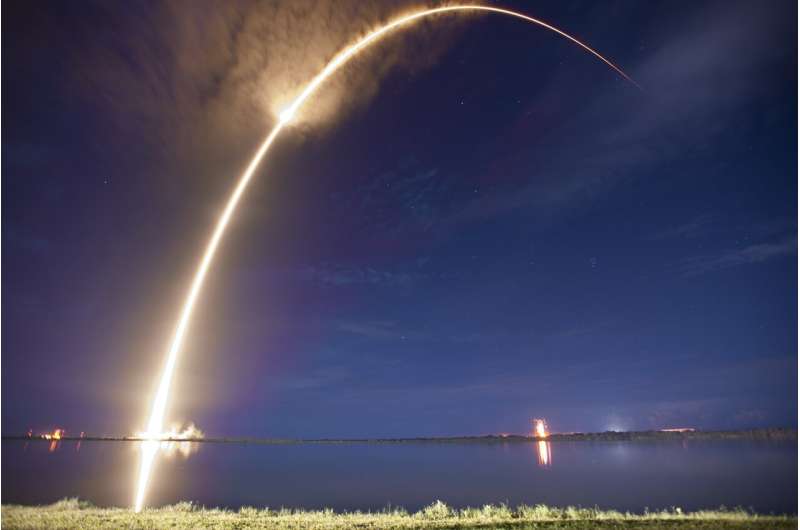
After two days of scrubs, SpaceX pulled out some Friday night lights sending up another batch of Starlink satellites from Florida's Space Coast using a first-stage booster for a record-tying 19th time.
A Falcon 9 rocket lifted off from Kennedy Space Center's Launch Pad 39-A at 8:21 p.m. carrying 23 of SpaceX's internet satellites. Two previous launch attempts were called off with about two minutes left on the countdown clock, the most recent because of an "issue with the transporter erector's cradle arms."
But despite venturing two hours deep into a four-hour window, the launch took off without a hitch.
The first-stage booster equaled the total number of flights by two of SpaceX's other boosters, one of which, though, was destroyed when it toppled over at sea.
This booster's resume includes two human spaceflights, the Inspiration4 orbital mission flown by billionaire Jared Issacman and the first private spaceflight for Axiom Space on its Ax-1 mission to the International Space Station. It has also flown the GPS III Space Vehicle 04, GPS III Space Vehicle 05, Nilesat 301, OneWeb Launch 17, ARABSAT BADR-8 and 11 Starlink missions.
Startical orders test satellites for air traffic surveillance and comms constellation