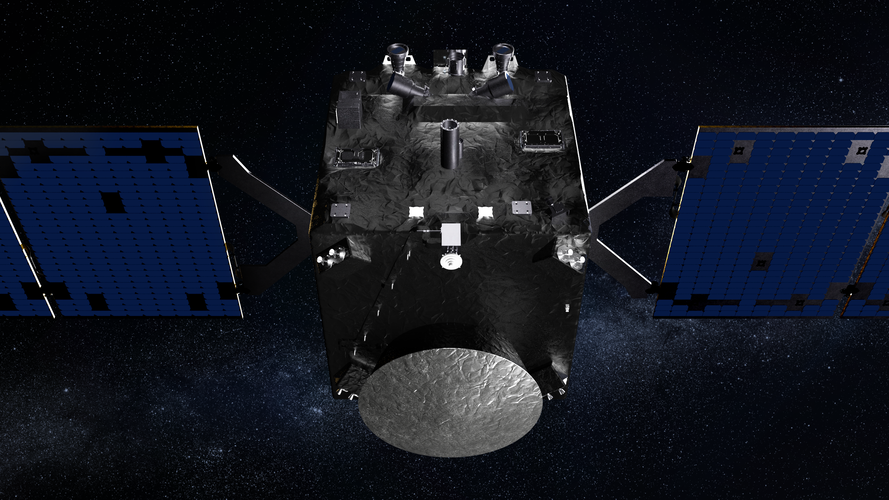
Sierra Space Launches Axelerator: A New Incubator for Next-Gen Defense and Space Innovations
 In a significant move to bolster defense and space technology, Sierra Space has introduced the Sierra Space Axelerator, a groundbreaking initiative aimed at accelerating the development of innovative defense technologies and solutions. This innovation incubator is designed to expedite the creation and deployment of novel defense products, marking a notable shift towards enhanced efficiency in th
 Week in images: 11-15 March 2024

Week in images: 11-15 March 2024
Discover our week through the lens
 Image:
Laser light sabre
Image:
Laser light sabre Koons on the Moon? Artists’ crucial role in shaping humanity’s image on Earth and beyond

Redwire looks to larger deals and new markets to fuel growth


Businesses are ready for April's total solar eclipse with celestial-themed doughnuts and beer
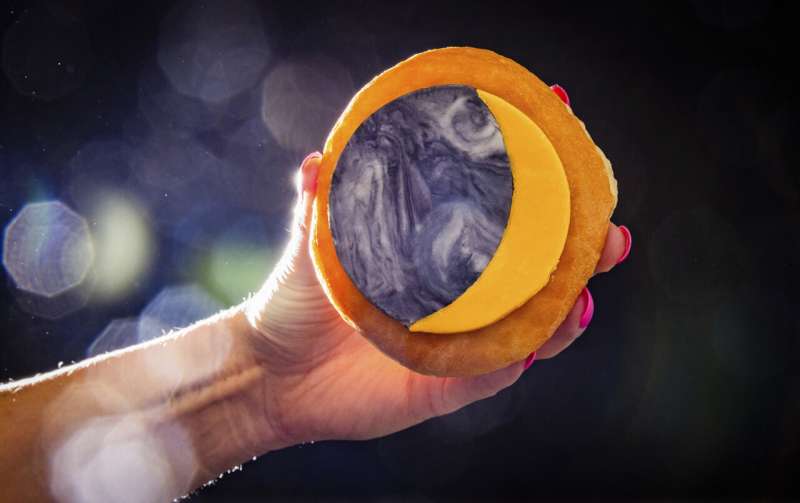
Eclipse-themed beer. Jewelry and ornaments. And doughnuts that capture the sun's disappearing act with the help of buttercream frosting.
With April 8's total solar eclipse right around the corner, businesses are ready for the celestial event that will dim skies along a generous path across North America.
Compact robot takes flight to support CERISS initiative

A new robot will be taking flight soon to test its ability to support biological and physical science experiments in microgravity. As one of NASA's 2023 TechFlights selections, this compact robot will have a chance to fly on a commercial suborbital flight to see just how well it can perform in a space environment.
Managed by NASA's Flight Opportunities program, the TechFlights 2023 solicitation included a call for technologies to support the agency's Commercially Enabled Rapid Space Science (CERISS) initiative. CERISS, administered by NASA's Biological and Physical Sciences Division, uses the spaceflight environment to study phenomena in ways that cannot be done on Earth.
One of the 11 TechFlights selections that will undergo flight testing is a compact robot designed to prepare samples for science experiments in microgravity, improve in-flight sample preparation capabilities and potentially reduce astronauts' time tending to such research while on the International Space Station or future commercial destinations in low Earth orbit.
Led by principal investigator Phil Putman, manager of advanced projects at Sierra Lobo, Inc, in Fremont, Ohio, the tests will leverage parabolic flights from Zero Gravity Corporation to evaluate the technology's performance in microgravity.
Mars Sample Return science continues amid budget uncertainty


Dune: What the climate of Arrakis can tell us about the hunt for habitable exoplanets

Frank Herbert's Dune is epic sci-fi storytelling with an environmental message at its heart. The novels and movies are set on the desert planet of Arrakis, which various characters dream of transforming into a greener world—much like some envision for Mars today.
We investigated Arrakis using a climate model, a computer program similar to those used to give weather forecasts. We found the world that Herbert had created, well before climate models even existed, was remarkably accurate—and would be habitable, if not hospitable.
However, Arrakis wasn't always a desert. In Dune lore, 91% of the planet was once covered by oceans, until some ancient catastrophe led to its desertification. What water remained was further removed by sand trout, an invasive species brought to Arrakis. These proliferated and carried liquid into cavities deep underground, leading to the planet becoming more and more arid.
To see what a large ocean would mean for the planet's climate and habitability, we have now used the same climate model—putting in an ocean while changing no other factors.
Peregrine payloads returned useful data despite no lunar landing