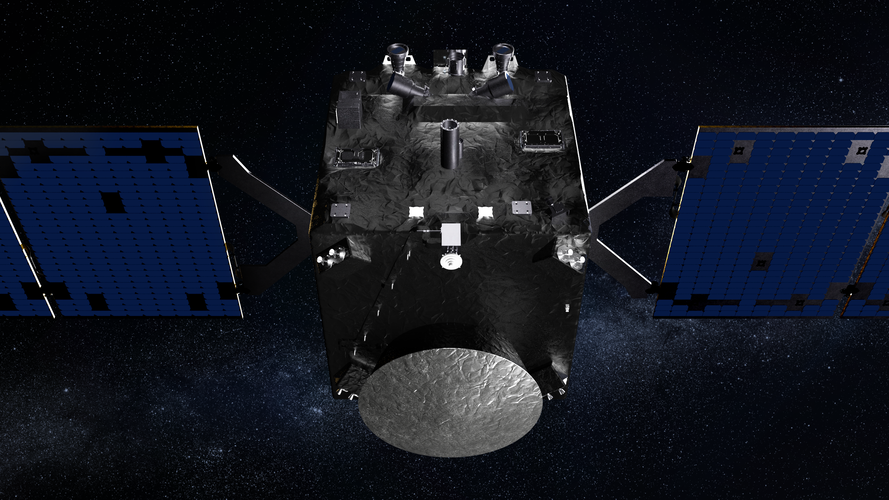
Spaceflight readies its largest satellite contracted to date, Amazonia-1, for Launch
 Spaceflight Inc has provided details about the upcoming launch of its largest customer satellite launch to date, the Amazonia-1 spacecraft. To accommodate the nearly 700-kilogram satellite, Spaceflight purchased an entire NewSpace India Limited's (NSIL) Polar Satellite Launch Vehicle (PSLV). The mission, named PSLV-C51/ Amazonia-1, is targeted for launch at the end of February from Satish Dhawan
 Arch Mission Foundation announces first in series of Earth Archives
 The Arch Mission Foundation, a nonprofit designed to preserve human heritage forever, has successfully placed the first in a series of terrestrial Earth Archives. The Lava Library is the longest lasting time capsule ever deployed on Earth, and follows the placement of Arch Mission's Lunar Library on the Moon in 2019.
The Arch Mission Foundation creates and maintains ultra-long-term data st
The Arch Mission Foundation, a nonprofit designed to preserve human heritage forever, has successfully placed the first in a series of terrestrial Earth Archives. The Lava Library is the longest lasting time capsule ever deployed on Earth, and follows the placement of Arch Mission's Lunar Library on the Moon in 2019.
The Arch Mission Foundation creates and maintains ultra-long-term data st Perseverance landing wins broad political praise
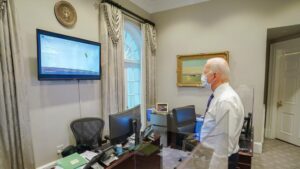
WASHINGTON — When the White House called to congratulate NASA on the successful landing of the Mars rover Perseverance, acting administrator Steve Jurczyk new immediately it was the real deal.
“About an hour after landing, I got a phone call from the president of the United States, and his first words were, ‘Congratulations, man,’” Jurczyk recalled during a Feb.
Week in images: 15 - 19 February 2021

Week in images: 15 - 19 February 2021
Discover our week through the lens
Etna erupts
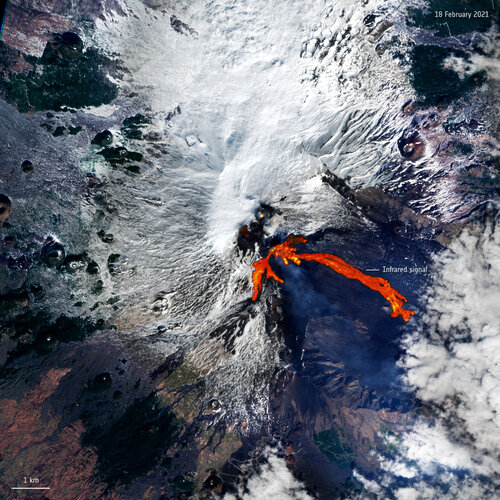 Image:
Italy’s Mount Etna, one of the world’s most active volcanoes, has erupted twice in less than 48 hours, spewing a fountain of lava and ash into the sky. This Copernicus Sentinel-2 image has been processed to show the lava flow in bright red.
Image:
Italy’s Mount Etna, one of the world’s most active volcanoes, has erupted twice in less than 48 hours, spewing a fountain of lava and ash into the sky. This Copernicus Sentinel-2 image has been processed to show the lava flow in bright red. Satellite radar interferometry effective for mapping crops
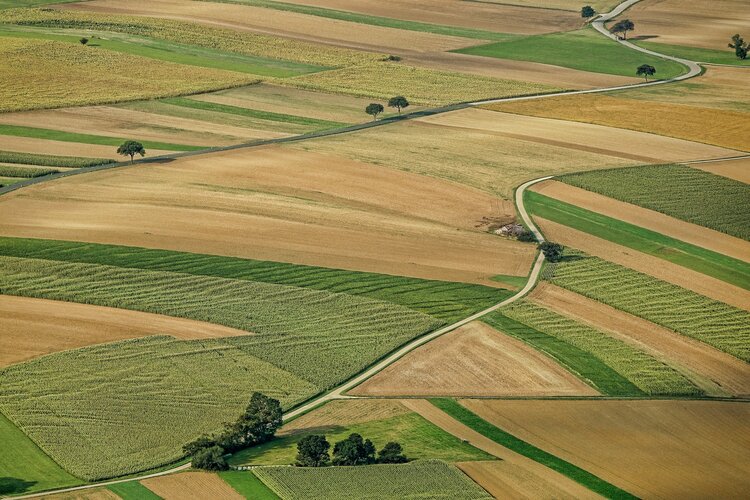
Traditionally, optical, or ‘camera-like’, satellite images are used to map different crops from space, but a recent study shows that Copernicus Sentinel-1 radar data along with interferometric processing can make crop-type mapping even better. This, in turn, will help improve crop-yield forecasts, production statistics, drought and storm damage assessments, and more.
Landspace closes in on orbital launch with liquid methane rocket
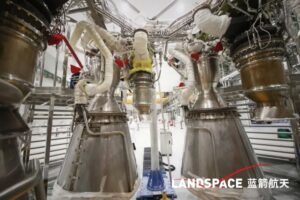
HELSINKI — Chinese private firm Landspace is working towards a potential first orbital launch attempt with a methane-fueled launch vehicle later this year.
Mars rovers safe from lightning strikes, research finds
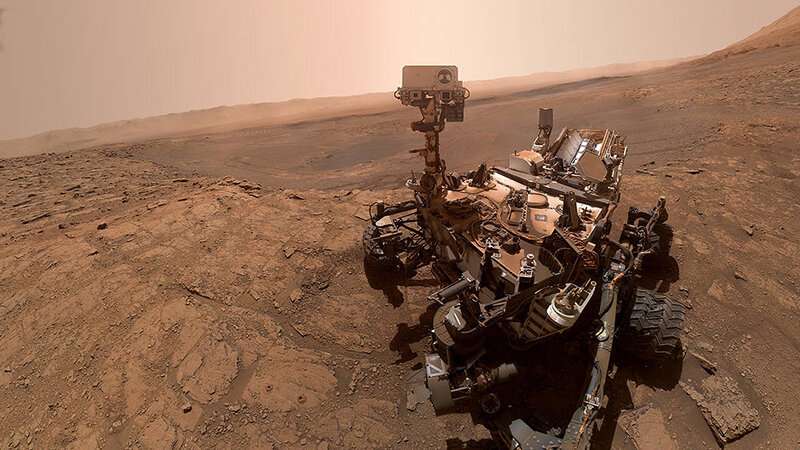
If experiments done in small bottles in a University of Oregon lab are accurate, the friction of colliding Martian dust particles are unlikely to generate big electrical storms or threaten the newly arrived exploration vehicles or, eventually, human visitors.
For 50 years since Viking landers and later orbiters detected silts, clays, wind-blown bedforms and dust devils on Mars, scientists have worried about the potential for large lightning storms and whether static electricity generated by the planet's mostly basaltic rock particles could damage vehicles or human protective gear.
In the journal Icarus, a UO team reports that the friction caused by dust particles making contact with each other may indeed produce electrical discharges at the surface and in the planet's atmosphere, but any resulting sparks are likely to be small.
Such concerns had resurfaced in relation to the new NASA Mars mission, which successfully put the Perseverance rover and Ingenuity robotic helicopter on the red planet Feb. 18.
In the lab of volcanologist Josef Dufek, researchers used a vertical glass tube comparable in size to a water bottle measuring some 4 inches in diameter and 8 inches in length.
Has Earth been visited by an alien spaceship? Harvard Professor Avi Loeb vs. everybody else
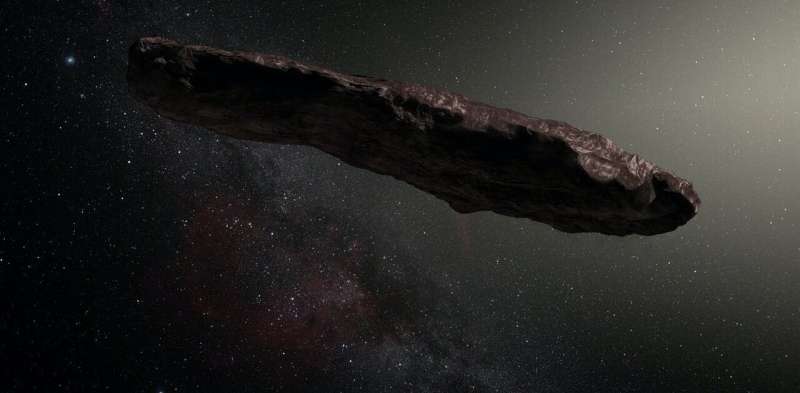
A highly unusual object was spotted traveling through the solar system in 2017. Given a Hawaiian name,ʻOumuamua, it was small and elongated—a few hundred meters by a few tens of meters, traveling at a speed fast enough to escape the Sun's gravity and move into interstellar space.
I was at a meeting when the discovery of ʻOumuamua was announced, and a friend immediately said to me, "So how long before somebody claims it's a spaceship?" It seems that whenever astronomers discover anything unusual, somebody claims it must be aliens.
Nearly all scientists believe that ʻOumuamua probably originates from outside the solar system. It is an asteroid- or comet-like object that has left another star and traveled through interstellar space—we saw it as it zipped by us. But not everyone agrees. Avi Loeb, a Harvard professor of astronomy, suggested in a recent book that it is indeed an alien spaceship.
Researchers developing drugs to enable longer space missions
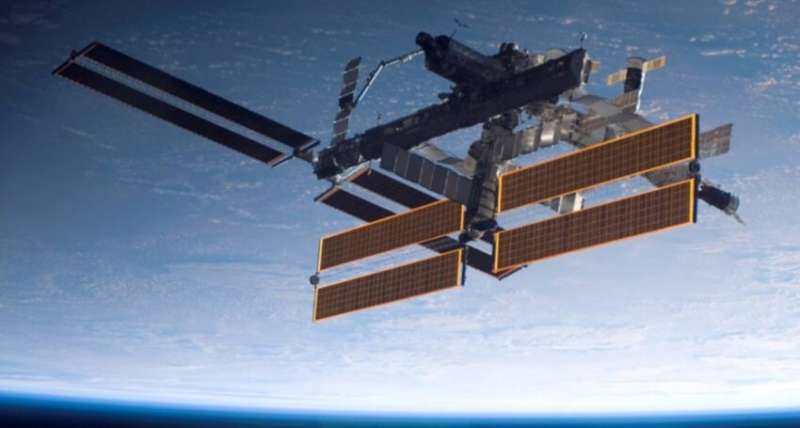
The University of Adelaide is sending pills to the International Space Station (ISS) to determine if it will be possible to produce medicine in space to enable longer-term space missions.
Scheduled to launch from NASA's Wallops Flight Facility in Virginia on Sunday 21 February, the pills will contain Ibuprofen and vitamin C as active ingredients, in addition to excipients that can be found on the moon's surface. These include silica, magnesium silicate (talcum) and calcium phosphate.
University of Adelaide professor and research director for Andy Thomas Centre for Space Resources Volker Hessel said the project was making the first step towards "autonomous on-board pharmaceutical manufacturing."
The 60 pills will be packaged in blister packs and will be placed outside the ISS for six months to discover how exposure to microgravity and space radiation affects the stability of pharmaceutical tablet formulations.
"Radiation protection was incorporated into the design of the pills," Hessel said.
"By altering the interaction between the ingredients and the drug we will be able to examine how these variations affect their stability."
Space technology companies Alpha Space and Space Tango have partnered with the University of Adelaide to send the pills to space.