

Giant planets cast a deadly pall
 Giant gas planets can be agents of chaos, ensuring nothing lives on their Earth-like neighbors around other stars. New studies show, in some planetary systems, the giants tend to kick smaller planets out of orbit and wreak havoc on their climates.
Jupiter, by far the biggest planet in our solar system, plays an important protective role. Its enormous gravitational field deflects comets and
Giant gas planets can be agents of chaos, ensuring nothing lives on their Earth-like neighbors around other stars. New studies show, in some planetary systems, the giants tend to kick smaller planets out of orbit and wreak havoc on their climates.
Jupiter, by far the biggest planet in our solar system, plays an important protective role. Its enormous gravitational field deflects comets and 30 years of ESA innovation: GSTP
30 years of ESA innovation: GSTP
The future’s magnetic pull
 Image:
The future’s magnetic pull
Image:
The future’s magnetic pull Relive the Earth Observation Commercialisation Forum

ESA’s first Earth Observation Commercialisation Forum took place at ESA Headquarters in Paris on 30–31 October 2023. The event saw investors, institutions, entrepreneurs and different-sized companies from the Earth observation sector come together to discuss the commercial potential and challenges of Earth observation. Revisit the event by watching the streaming replay.


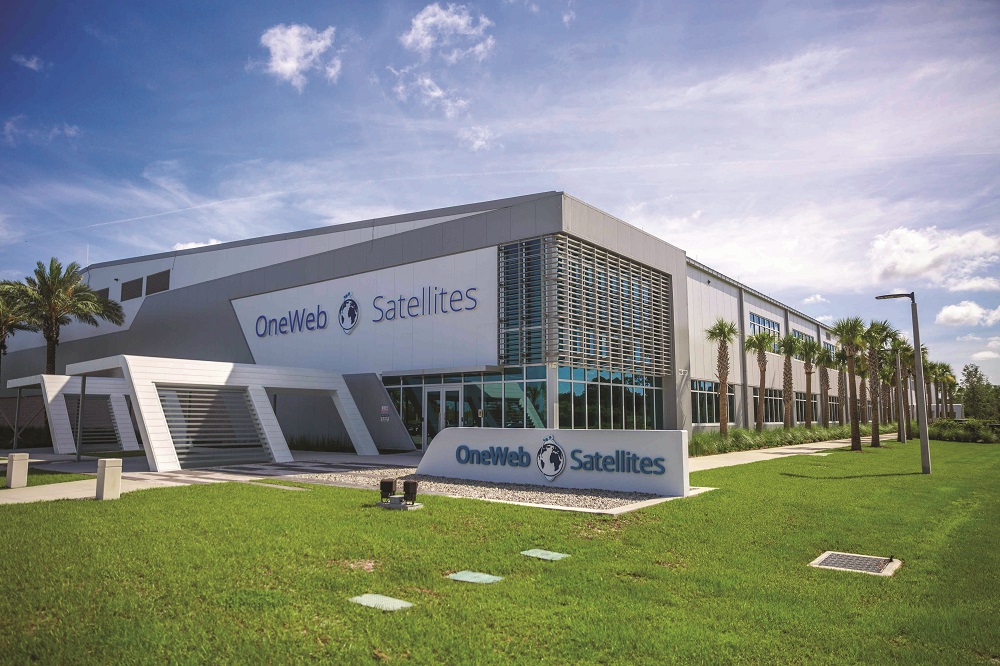
UK pushing to combine OneWeb Gen 2 and European sovereign constellation efforts

Permanent residency in space
 Image:
Permanent residency in space
Image:
Permanent residency in space China’s iSpace launches and lands rocket test stage


Launch your career in space! Apply now to the ESA Student Internship Programme

The 2024 internship opportunities at ESA have been published! Applications are open for one month and positions are available in engineering, science, IT, natural/social sciences, business, economics and administration services. This is your chance to kick-off your career in the space sector!
Scientists describe deployment of three-body chain-type tethered satellites in low-eccentricity orbits
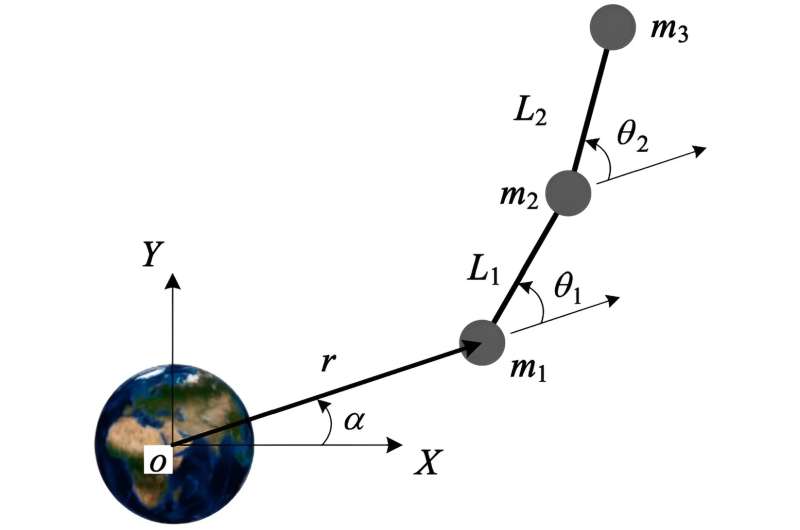
Recently, the tethered satellite system (TSS) has been used in Earth observations, space interferometry and other space missions, due to its potential merits. The tethered TSAR (tomographic synthetic aperture radar) system is a group of tethered SAR satellites that can be rapidly deployed and provide a stable baseline for 3-dimensional topographic mapping and moving target detection.
Successful deployment is critical for TSAR tethered systems.
Several control methods, including length, length rate, tension, and thrust-aided control, have been proposed over the years. Among them, adjusting tension is a viable yet challenging approach due to the tether's strong nonlinearity and underactuated traits.
Current tether deployment schemes focus on two-body TSS, with little emphasis on multi-TSSs. In a research article recently published in Space: Science & Technology, a research team led by Zhongjie Meng from Northwestern Polytechnical University has developed a new deployment strategy for a 3-body chain-type tethered satellite system in a low-eccentric elliptical orbit.


