

How to make roads on the Moon
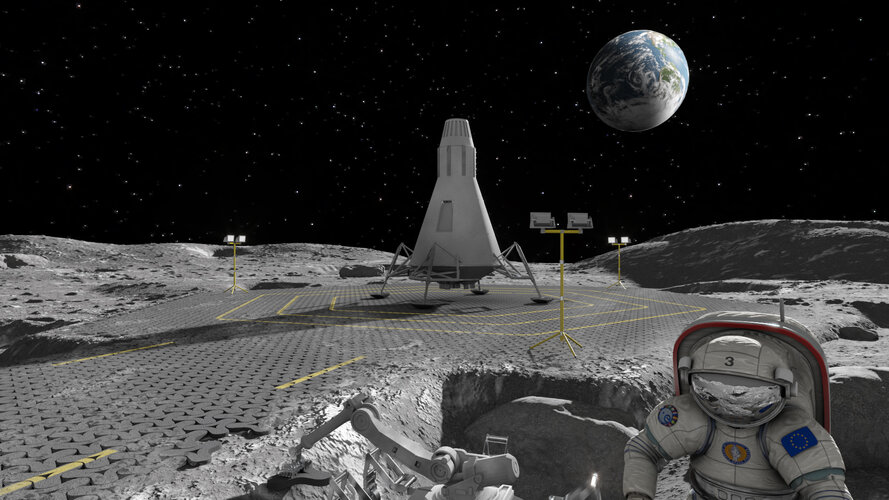
When astronauts return to the lunar surface they are probably going to be doing more driving than walking – but to keep billowing moondust at bay they are going to need roads. An ESA project reported in today’s Nature Scientific Reports tested the creation of roadworthy surfaces by melting simulated moondust with a powerful laser.
Hera asteroid mission on show
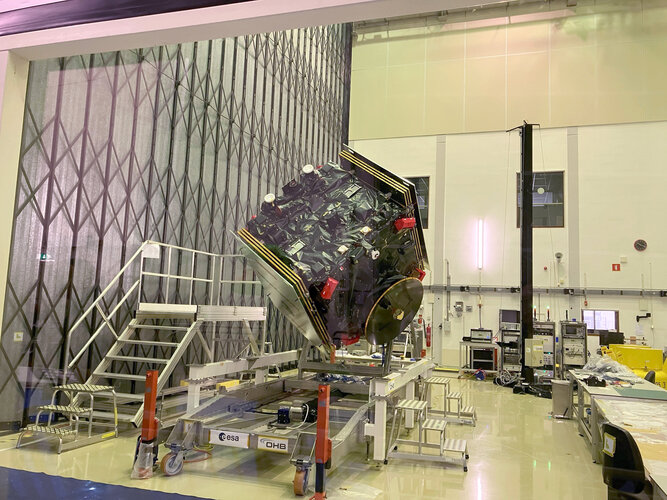 Image:
Hera asteroid mission on show
Image:
Hera asteroid mission on show  Image:
TIE Fighter down
Image:
TIE Fighter down UPDATE: First spacewalk for Andreas Mogensen

UPDATE: There has been a postponement of the spacewalk from its original date. Once a new date is selected, this article will be updated.
ESA astronaut Andreas Mogensen will venture outside the International Space Station to install a new camera and prepare an experiment for a future upgrade on his first spacewalk.
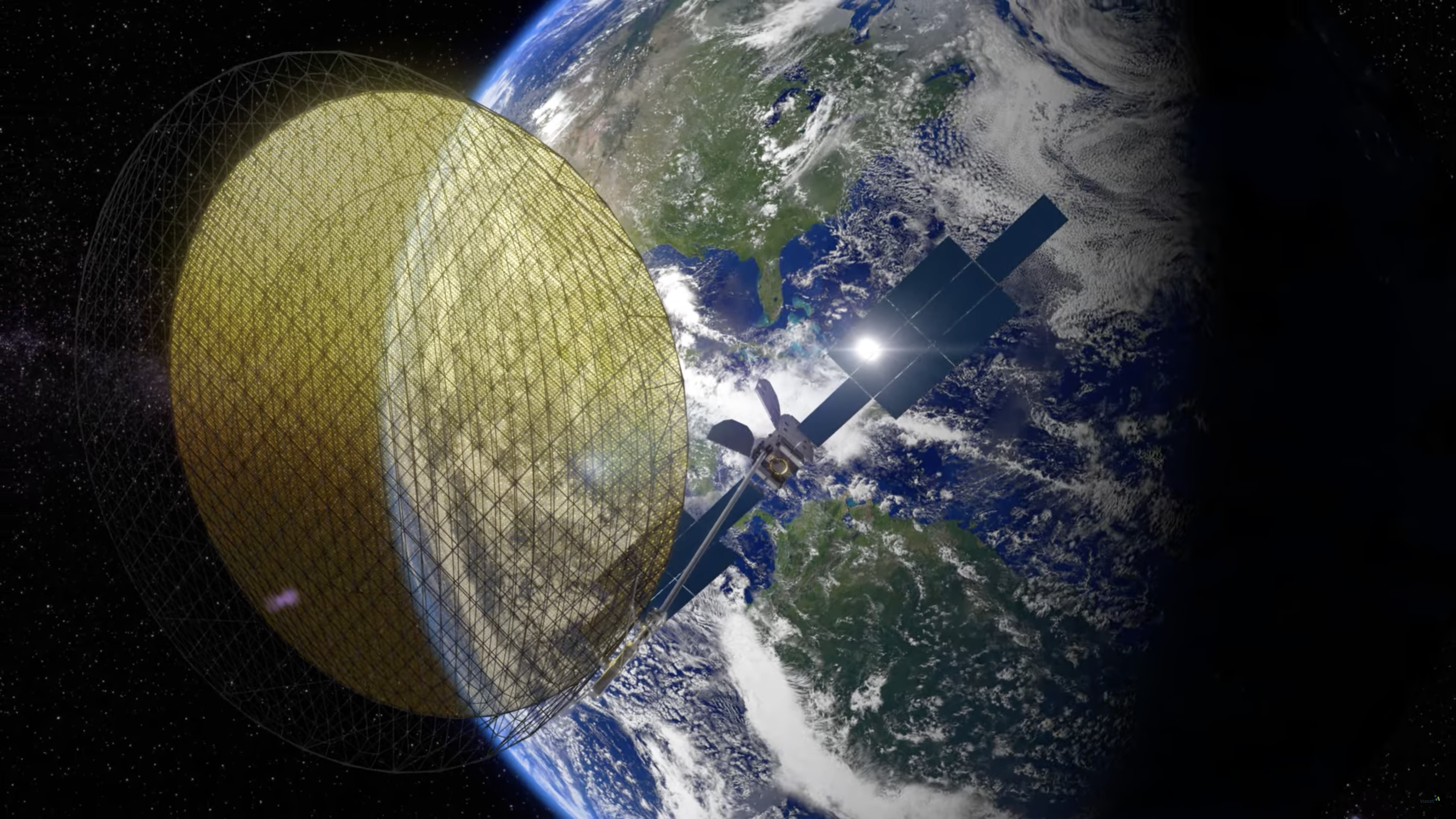
Viasat has enough throughput on ViaSat-3 Americas to avoid replacement
One small step towards lunar roads, a potentially giant leap for creating infrastructure on the moon
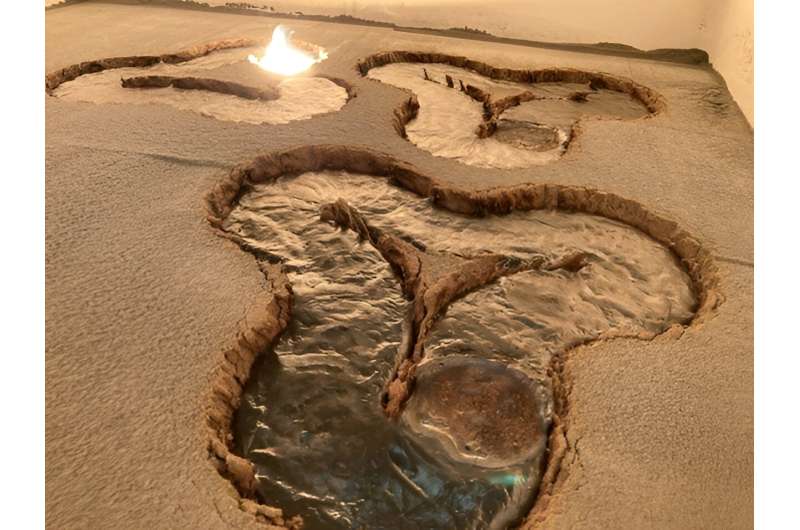
It may be possible to create paved roads and landing pads on the moon by using lasers to melt lunar soil into a more solid, layered substance, reports a proof-of-concept study in Scientific Reports. Although these experiments were carried out on Earth using a substitute for lunar dust, these findings demonstrate the viability of the technique and suggest it could be replicated on the moon. However, further work may be needed to refine the process, according to the authors.
Moon dust poses a significant challenge to lunar rovers as, due to the low levels of gravity, it tends to float around when disturbed and can damage equipment. Therefore, the infrastructure such as roads and landing pads will be essential to mitigate dust issues and facilitate transport on the moon.
Space Force challenged to define commercial services


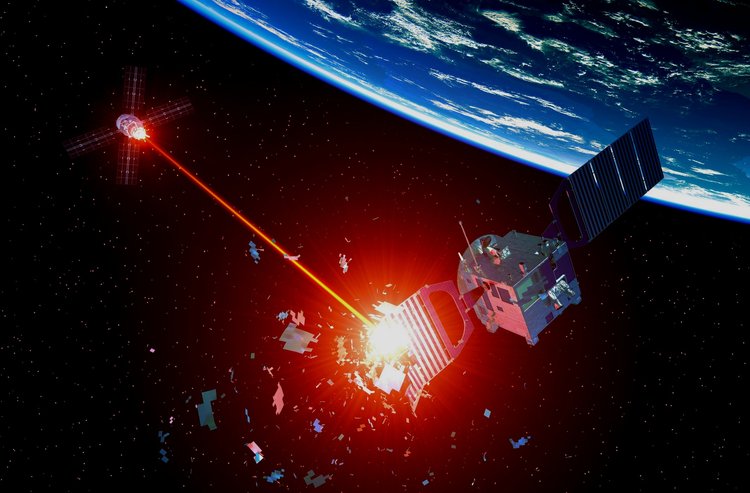
Startup GuardianSat gets research grant for satellite self-defense technology

Commercial Interruption: Space wargame exposes risk of dangerous escalation


NASA set to journey to a metal-rich asteroid
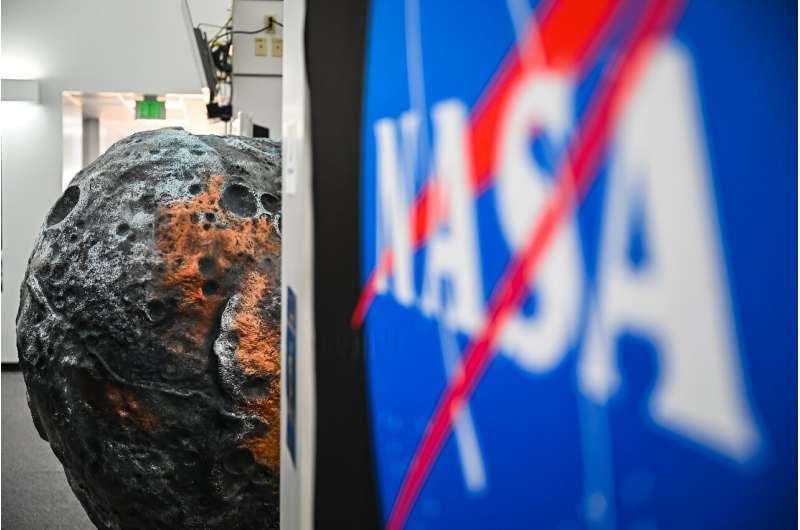
It's a world like no other: a metal-rich asteroid that could be the remnants of a small planet, or perhaps an entirely new type of celestial body unknown to science.
A NASA probe is set to blast off Friday bound for Psyche, an object 2.2 billion miles (3.5 billion kilometers) away that could offer clues about the interior of planets like Earth.
"We've visited either in person or robotically worlds made of rock, worlds made of ice and worlds made of gas.


