Isotropic Systems raises $42 million

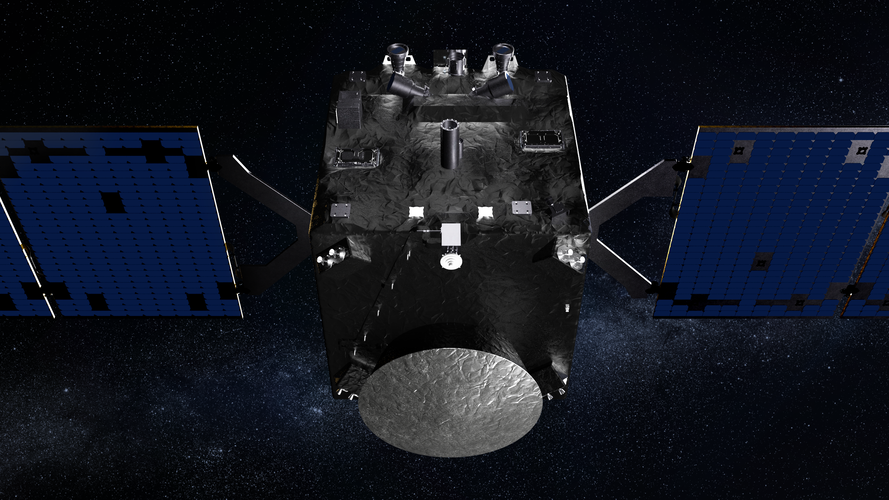
WASHINGTON — Isotropic Systems raised $42 million to continue development of broadband terminals for use by a wide range of satellite systems in a round led by satellite operator SES.
Isotropic announced Feb. 8 the new round, including equity investment as well as grant funding from the British government.
Sentinel-6 passes in-orbit tests with flying colours
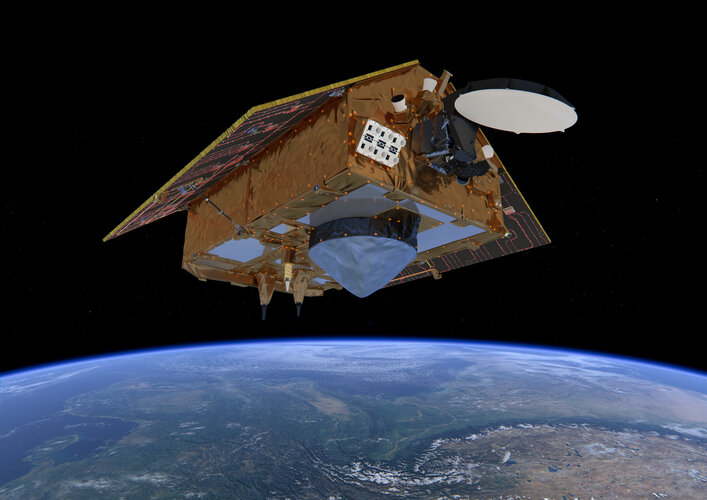
In November 2020, the Copernicus Sentinel-6 Michael Freilich satellite was launched into orbit from the Vandenberg Air Force Base in California, US. Now, months later, the satellite has successfully passed what is known as the ‘in-orbit verification phase’, where its equipment is switched on and the instruments’ performance is checked.
Call for media: ESA seeks new astronauts - applications open 31 March 2021
Press Release N° 3–2021
For the first time in 11 years, ESA is looking for new astronauts. These recruits will work alongside ESA’s existing astronauts as Europe enters a new era of space exploration.
Xenesis adopts revenue-sharing model for optical communications
SAN FRANCISCO – Xenesis is adopting an usual business model in its campaign to establish an optical communications constellation.
The Illinois startup is signing revenue-sharing agreements with key suppliers, including satellite component manufacturer Space Micro, Geost, a firm focused on sensors and electro-optics, and optical system specialist PlaneWave Instruments.
Mars missions from China and UAE are set to go into orbit – here's what they could discover
How times have changed since the Apollo era. Within the space of a few days, two space missions from China and the United Arab Emirates (UAE), respectively, are set to reach Mars. The UAE's Hope mission will go into orbit around Mars on February 9. The next day, the Chinese Tianwen-1 mission – an orbiter and lander—will swing into orbit, with a predicted landing date sometime in May.
It is a very big moment for both countries. Hope is the first interplanetary mission by an Arab nation ever. And if China succeeds, it will be the first country ever to visit and land on Mars on its first try. The odds are stacked against them with nearly 50% of all Mars missions failing. China already lost a Mars orbiter mission (Yinghuo-1) back in 2011.
But before the missions can start doing science, tense moments await. As they arrive at the planet, they need to trigger a burn of their engines just at the right time to slow the probes down so they can be captured by Mars' gravitational field. Given the large distance from Earth, this needs to be carried out automatically by the probe.
Tianwen-1
If all goes well, the orbiter Tianwen, which means "Questions to Heaven" and the yet unnamed rover will attempt to measure Mars's climate and "ionosphere", a layer of electrically charged particles surrounding the planet.
Satellite imagery is not yet flowing like water from a tap

SAN FRANCISCO – Companies are collecting more Earth imagery from satellites than ever before, but for some customers the data remains too expensive and too difficult to consume.
That was the consensus from a panel of Earth-observation experts speaking Feb.
Space industry investment continues to grow
WASHINGTON — Nearly a year after the onset of the coronavirus pandemic raised fears of a slowdown in commercial space investment, experts say the industry is, in fact, doing better than ever.
During a panel discussion at the 2021 SmallSat Symposium Feb.
Op-ed | In defense of regulation
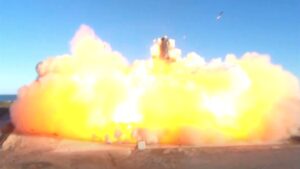
Steve Blank’s op-ed of Feb. 5, “The FAA and SpaceX,” demands an informed rebuttal. Public debate over the appropriate level of regulation within any industry is appropriate in our democracy. However, Mr. Blank’s arguments lack grounding in the history and nature of private space activity regulation and he erroneously conflates that mission with the FAA’s primary task of regulating the safest transportation system in human history.
Camera captures the Southern Pinwheel galaxy in glorious detail

New technique used to discover how galaxies grow
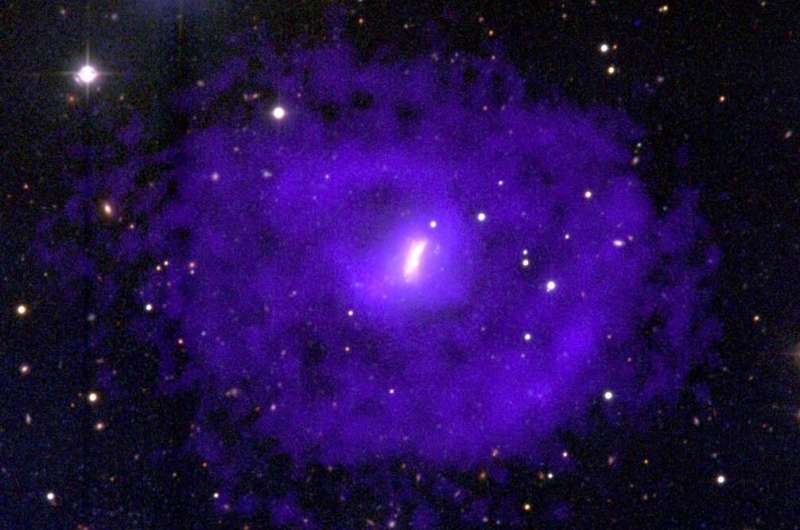
For decades, space and ground telescopes have provided us with spectacular images of galaxies. These building blocks of the universe usually contain several million to over a trillion stars and can range in size from a few thousand to several hundred thousand light-years across.