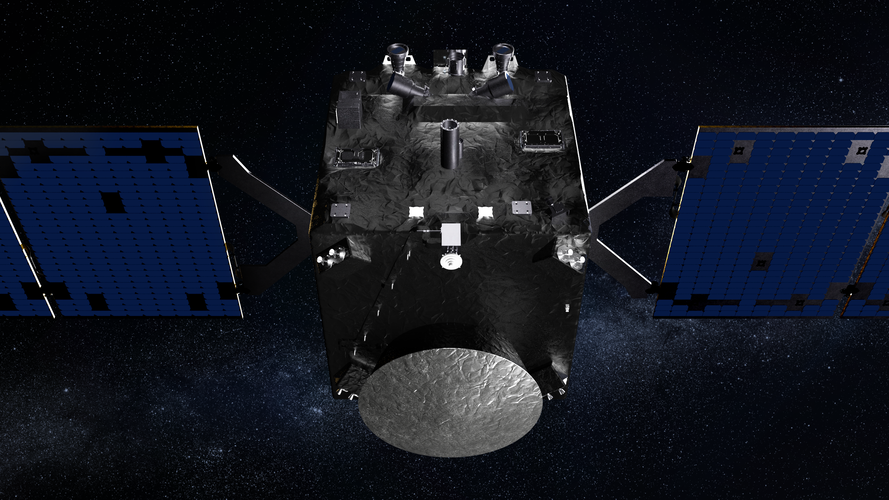
Mapped by Sentinel-1 for Vendée Globe safety
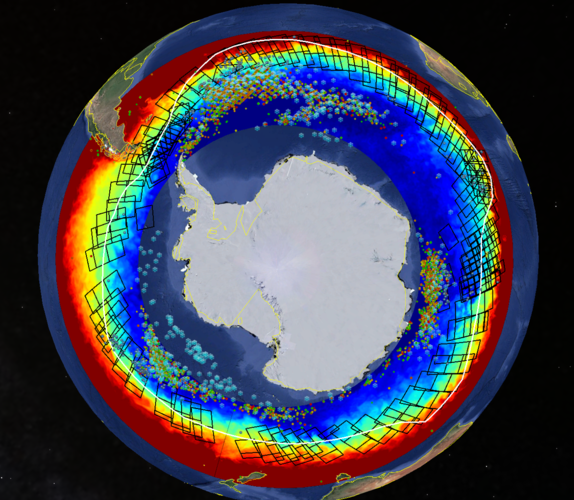 Image:
Competitors of the Vendée Globe sailing race are now nearing the finishing point, but while they were near the treacherous iceberg-infested waters of the Southern Ocean they remained relatively safe thanks to satellite observations.
Image:
Competitors of the Vendée Globe sailing race are now nearing the finishing point, but while they were near the treacherous iceberg-infested waters of the Southern Ocean they remained relatively safe thanks to satellite observations. First evidence that water can be created on the lunar surface by Earth's magnetosphere
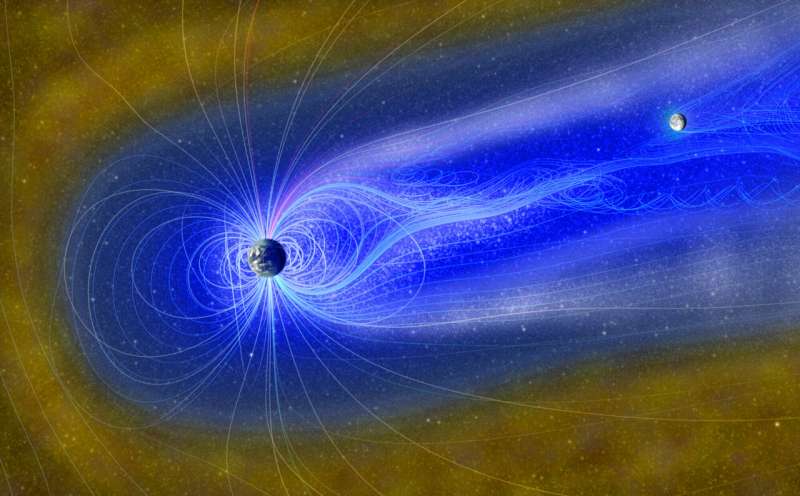
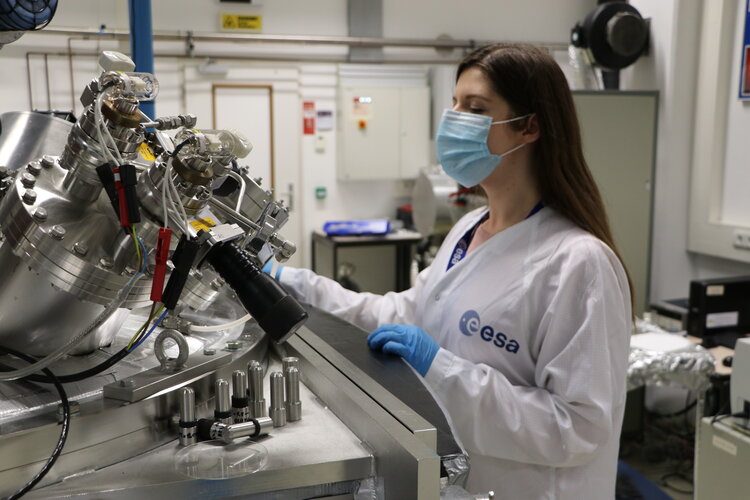 Image:
Simulating space
Image:
Simulating space Artificial intelligence behind 21st Century spaceflight

- Maintaining safety of operations and maximising scientific return are key concerns as satellites increase in number and complexity
- Artificial intelligence offers promising solutions to modern spaceflight challenges
- ESA and Germany’s DFKI institute have launched a new lab ‘ESA_Lab@DFKI’ for artificial intelligence research
ExoMars orbiter's 20000th image
 Image:
ExoMars orbiter's 20000th image
Image:
ExoMars orbiter's 20000th image NASA prepares for Mars 2020 landing
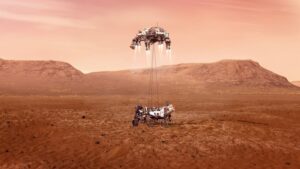
WASHINGTON — NASA’s Mars 2020 rover is on track for a landing next month that will begin in earnest an effort to return samples of the planet to Earth.
The spacecraft, launched July 30, is scheduled to land in Jezero Crater at 3:55 p.m.
Electron launch demonstrated enhanced kick stage
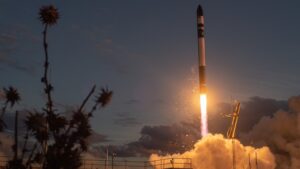
WASHINGTON — Rocket Lab stretched the performance of the kick stage of its Electron rocket on its most recent launch, the first in a series of milestones the company has set out for this year.
Thousands more satellites will soon orbit Earth—we need better rules to prevent space crashes
In recent years, satellites have become smaller, cheaper, and easier to make with commercial off the shelf parts. Some even weigh as little as one gram. This means more people can afford to send them into orbit. Now, satellite operators have started launching mega-constellations—groups of hundreds or even thousands of small satellites working together—into orbit around Earth.
Instead of one large satellite, groups of small satellites can provide coverage of the entire planet at once. Civil, military and private operators are increasingly using constellations to create global and continuous coverage of the Earth. Constellations can provide a variety of functions, including climate monitoring, disaster management or digital connectivity, like satellite broadband.
But to provide coverage of the entire planet with small satellites requires a lot of them. On top of this, they have to orbit close to Earth's surface to reduce interruption of coverage and communication delays. This means they take up an already busy area of space called low Earth orbit, the space 100 to 2,000km above the Earth's surface.
What did the solar system look like before all the planets migrated?
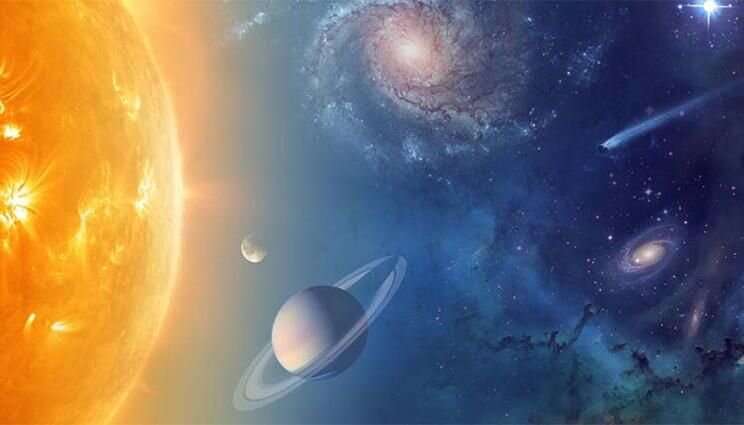
Early planetary migration in the solar system has been long established, and there are myriad theories that have been put forward to explain where the planets were coming from. Theories such as the Grand Tack Hypothesis an the Nice Model show how important that migration is to the current state of our solar system. Now, a team from Lawrence Livermore National Laboratory (LLNL) has come up with a novel way of trying to understand planetary migration patterns: by looking at meteorite compositions.
The researchers, led by postdoc Jan Render, had three key realizations. First, that almost all the meteorites that have fallen to Earth originated from the asteroid belt. Second, that the asteroid belt is known to have formed by sweeping material up from all over the solar system. And third, and perhaps most importantly, that they could analyze the isotopic signatures in meteorites to help determine where a given asteroid had formed in the solar system.
With that knowledge, they could then extrapolate out to other asteroids of the same type. There are approximately 100 different types of asteroids, with different isotopic signatures, in the asteroid belt.
Dickinson’s guidance to space troops: Prepare for ’competitive and dangerous’ environment

WASHINGTON — The commander of U.S. Space Command warns in a new document that keeping satellites safe from hostile attack will require a coordinated response involving all elements of the U.S. military and allies.