Showtime for ColKa
 Image:
Lights, camera, action for NASA astronauts Michael Hopkins and Victor Glover. The duo will install European payloads outside the International Space Station during a spacewalk on 27 January, guided by the know-how of their colleagues.
ESA astronaut Andreas Mogensen is seen in this image installing the Columbus Ka-band or ColKa terminal that will enable faster communication with Europe during a ‘dress rehearsal’ in the Neutral Buoyancy Lab at NASA’s Johnson Space Center in Houston, Texas in 2018.
Andrea will serve as ground IV, directing Mike and Victor through the installation of the small fridge-sized device by radio from NASA’s mission
How space-enabled 5G connectivity powers city life
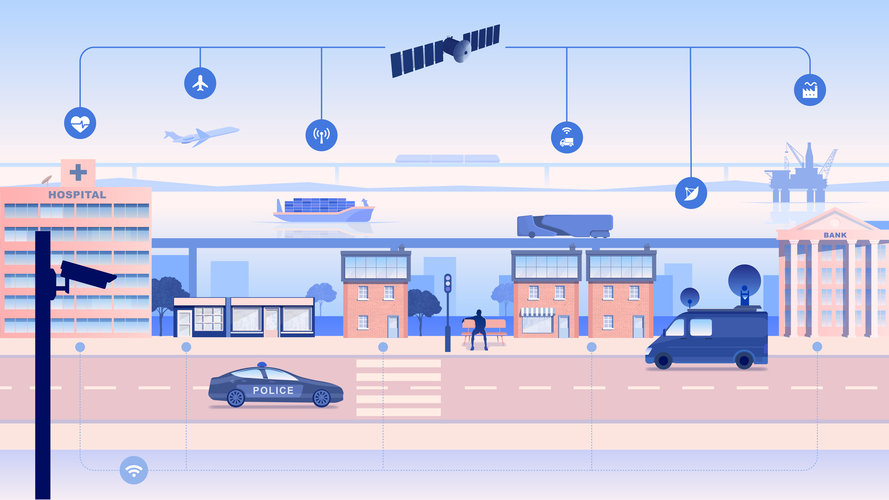
Discover how next-generation connectivity is using space to improve urban living at an online seminar to be held on Wednesday 27 January.
SpaceX adds laser crosslinks to polar Starlink satellites
WASHINGTON — The first Starlink satellites launched to polar orbit are equipped with laser crosslinks, a technology the company plans to add to other satellites next year.
SpaceX included 10 Starlink satellites on its Transporter-1 dedicated rideshare launch Jan.
Momentus CEO resigns amid U.S. government concerns

WASHINGTON — The founding chief executive of in-space transportation company Momentus is resigning in an effort to overcome U.S. government concerns about foreign control of the company.
Momentus announced Jan. 25 that Mikhail Kokorich was resigning as chief executive and a member of the company’s board, effective immediately.
Ready to apply to become a YGT at ESA?
There are only six days to go until ESA publishes its Young Graduate Trainee opportunities on 1 February and they will remain open for a month. Mark the dates in your calendar! Find out more about this year's call for applications below.
Solar Orbiter snaps Venus, Earth and Mars
 Video:
00:00:04
Video:
00:00:04
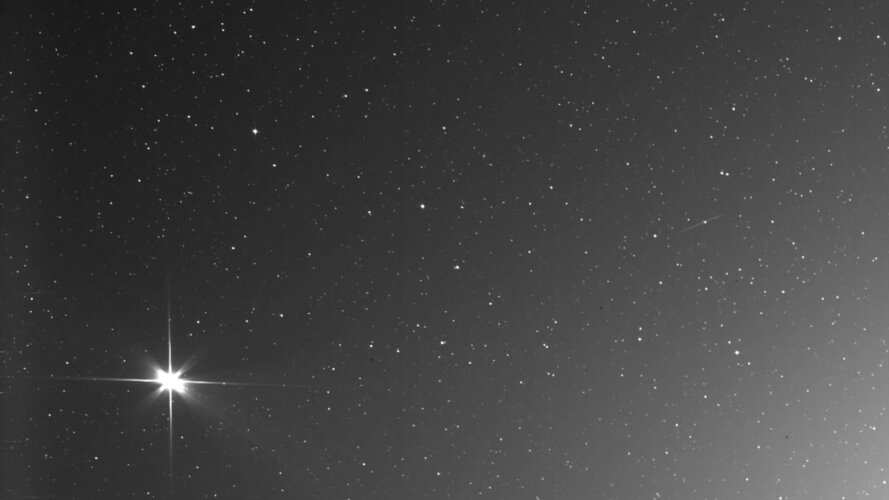
This recording was made on 18 November 2020 by the Heliospheric Imager (SoloHI) camera on board the ESA/NASA Solar Orbiter spacecraft.
Three Solar System planets are visible in the foreground: Venus (left), Earth (middle), and Mars (right). Stars are visible in the background, appearing to move in Solar Orbiter’s recording while the spacecraft travels around the Sun. The planets are also moving slightly in the SoloHI field-of-view, but their apparent motions are different because of their individual orbital motions around the Sun.
Venus is the brightest object in the video, roughly 48 million kilometres away from Solar Orbiter.
New long-term dataset to analyse global fire trends
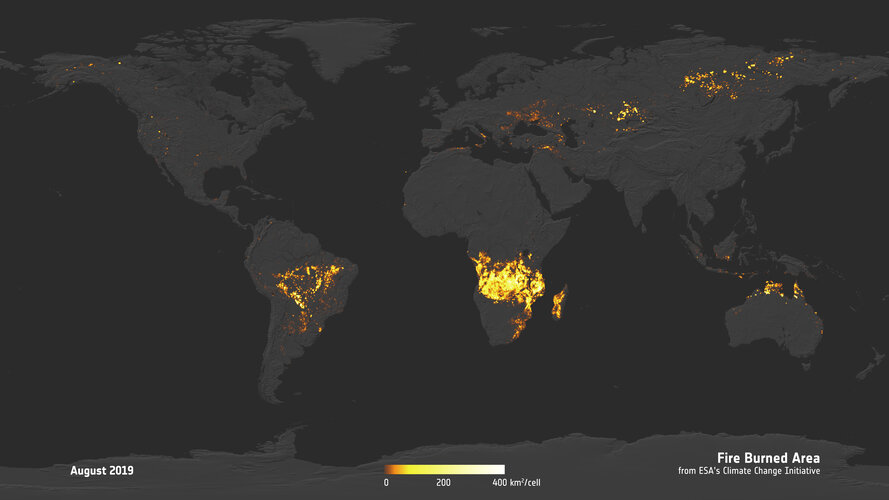
Fire affects an estimated four million square kilometres of Earth’s land each year and is responsible for releasing aerosols and greenhouse gases to the atmosphere. Understanding the influence that this has on atmospheric chemistry and representing these emissions in future climate predictions is, however, complex and remains poorly understood. To improve the situation, a team of scientists working as part of ESA’s Climate Change Initiative is using satellite observations, such as from Copernicus Sentinel-3, to gain a global view of land burned by fire.
NASA’s OSIRIS-REx Mission Plans for May Asteroid Departure
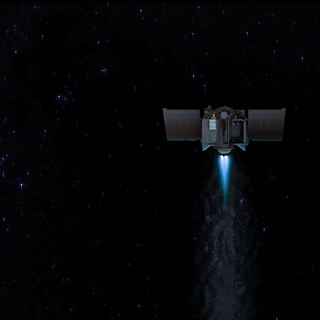 On May 10, NASA’s Origins, Spectral Interpretation, Resource Identification, Security, Regolith Explorer (OSIRIS-REx) spacecraft will say farewell to asteroid Bennu and begin its journey back to Earth.
 JAXA ships new H3 rocket to Tanegashima Space Center for testing
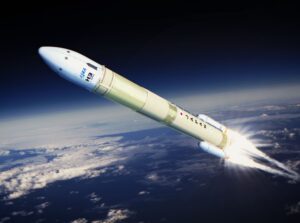
HELSINKI — The Japan Aerospace Exploration Agency is moving ahead with testing of its new H3 rocket as it seeks to replace its aging flagship H-IIA launch vehicle.
Five ways artificial intelligence can help space exploration
Artificial intelligence has been making waves in recent years, enabling us to solve problems faster than traditional computing could ever allow. Recently, for example, Google's artificial intelligence subsidiary DeepMind developed AlphaFold2, a program which solved the protein-folding problem. This is a problem which has had baffled scientists for 50 years.
Advances in AI have allowed us to make progress in all kinds of disciplines—and these are not limited to applications on this planet. From designing missions to clearing Earth's orbit of junk, here are a few ways artificial intelligence can help us venture further in space.
Astronaut assistants
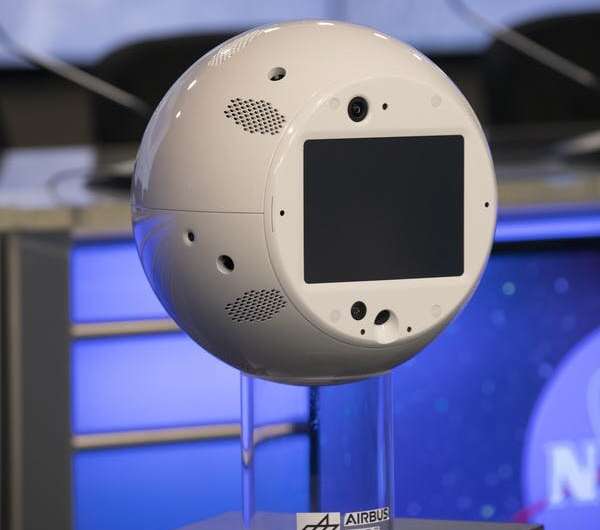
Do you remember Tars and Case, the assistant robots from the film Interstellar? While these robots don't exist yet for real space missions, researchers are working towards something similar, creating intelligent assistants to help astronauts. These AI-based assistants, even though they may not look as fancy as those in the movies, could be incredibly useful to space exploration.