Sardinia, Italy
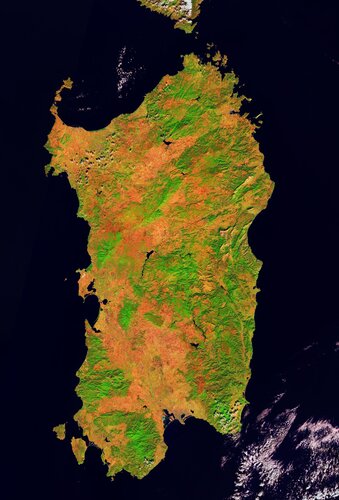 Image:
Sardinia, the second-largest island in the Mediterranean Sea, is featured in this false-colour image captured by the Copernicus Sentinel-2 mission.
Image:
Sardinia, the second-largest island in the Mediterranean Sea, is featured in this false-colour image captured by the Copernicus Sentinel-2 mission. Earth from Space: Sardinia
 Video:
00:03:23
Video:
00:03:23
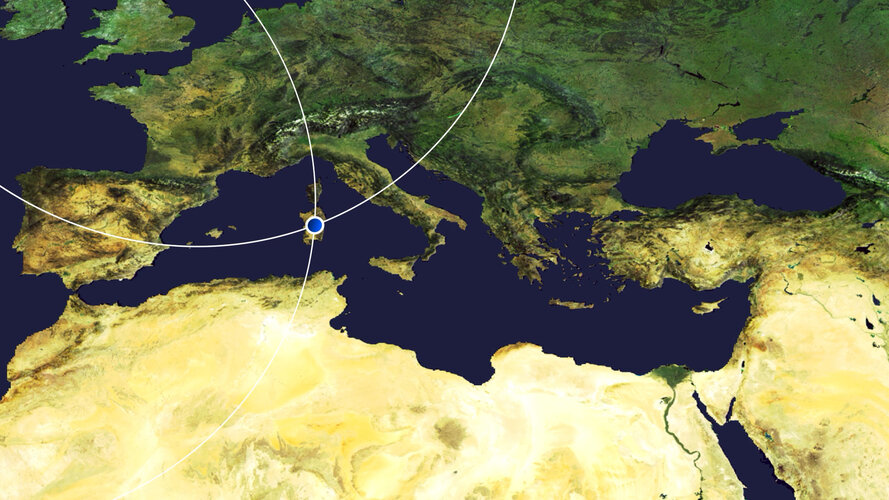
This week's edition of the Earth from Space programme features a Copernicus Sentinel-2 image of Sardinia, the second-largest island in the Mediterranean Sea.
See also Sardinia, Italy to download the image.
French startup demonstrates iodine propulsion in potential boost for space debris mitigation efforts
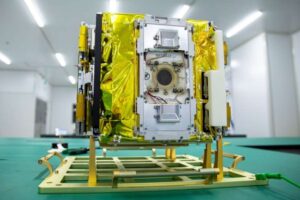
HELSINKI — French startup ThrustMe has performed the first on-orbit tests of an innovative iodine-fueled electric propulsion system, proving its ability to change a CubeSat’s orbit.
ESA and EU mend relations

WASHINGTON — After fraying relations in recent years, officials with the European Union and European Space Agency say they’re committed to rebuilding a more cooperative relationship on space programs.
Magnetic waves explain mystery of Sun's outer layer
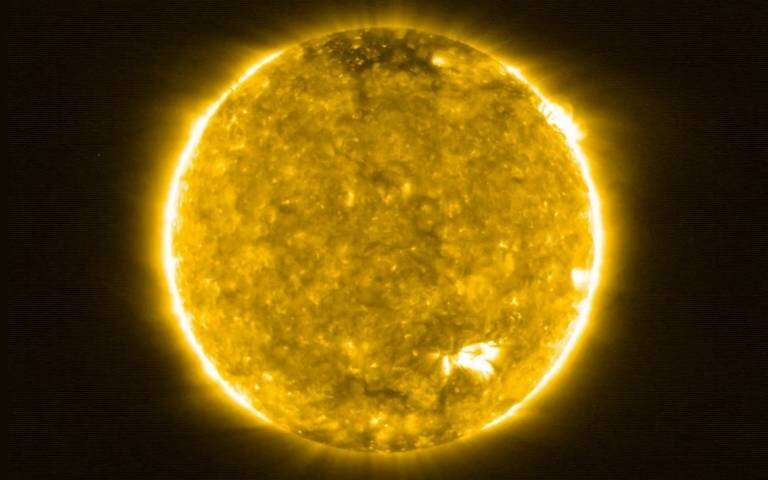
The Sun's extremely hot outer layer, the corona, has a very different chemical composition from the cooler inner layers, but the reason for this has puzzled scientists for decades.
One explanation is that, in the middle layer (the chromosphere), magnetic waves exert a force that separates the Sun's plasma into different components, so that only the ion particles are transported into the corona, while leaving neutral particles behind (thus leading to a build-up of elements such as iron, silicon and magnesium in the outer atmosphere).
Now, in a new study published in The Astrophysical Journal, researchers combined observations from a telescope in New Mexico, the United States, with satellites located near Earth to identify a link between magnetic waves in the chromosphere and areas of abundant ionized particles in the hot outer atmosphere.
Lead author Dr. Deborah Baker (UCL Space & Climate Physics) said: "The different chemical compositions of the Sun's inner and outer layers were first noted more than 50 years ago. This discovery generated what is one of the long-standing open questions in astrophysics.
SpaceX to send TU Dresden satellite into space
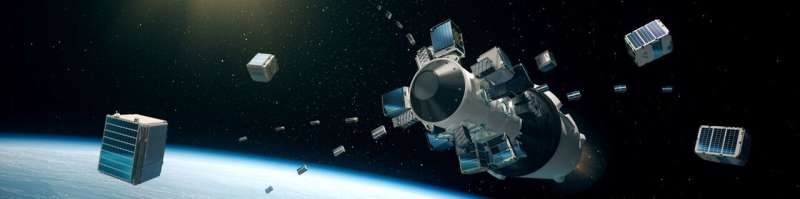
TU Dresden's SOMP2b satellite will be lifted into orbit by SpaceX on January 22, 2021. It will be used to investigate new nanomaterials under the extreme conditions of space, to test systems for converting the sun's heat into electricity and to precisely measure the residual atmosphere around the satellite. SOMP2b will begin its journey around the Earth at an altitude of 500 km—slightly higher than the ISS space station. It will orbit the Earth in a special polar, sun-synchronous orbit, always flying over the TU Dresden ground station at approximately the same time of day and sending measurement data.
SOMP2b is a follow-up satellite to SOMP2, a nanosatellite jointly developed by students, Ph.D. candidates and scientists from TU Dresden's Faculty of Mechanical Science and Engineering. SOMP2b stands for Student On-Orbit Measurement Project 2b. It is 20 cm x 10 cm x 10 cm in size and weighs a little less than 2 kilograms.
Week in images: 18 - 22 January 2021
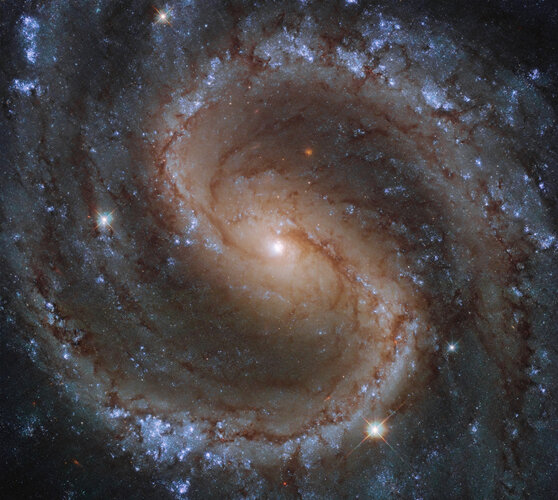
Week in images: 18 - 22 January 2021
Discover our week through the lens
Arecibo replacement could support space situational awareness
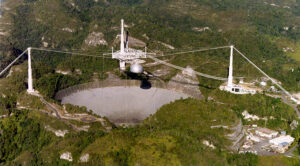
WASHINGTON — A proposal to replace the giant radio telescope at Arecibo Observatory in Puerto Rico with a new facility suggests it could be used for tracking space objects as well as for scientific research.
SpaceX’s record-setting rideshare mission a challenge for space traffic control
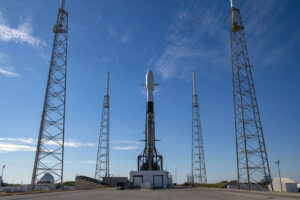
WASHINGTON — U.S. Space Command’s traffic watchers have been working with SpaceX and satellite operators in recent days in preparation for Transporter-1, a rideshare mission scheduled to launch Jan. 23 that could set a new record for the most satellites ever launched in a single flight.
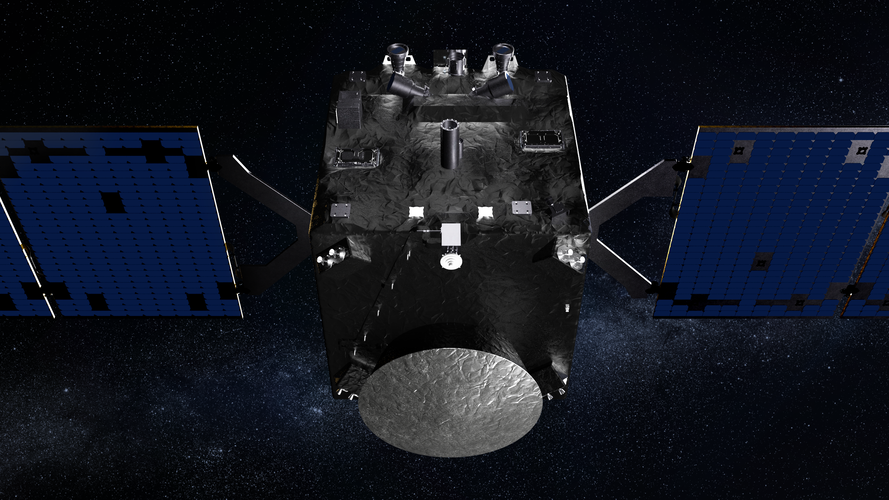
Northrop Grumman and L3Harris to build sensor satellites for Missile Defense Agency
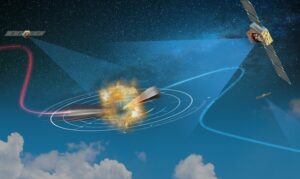
WASHINGTON — Northrop Grumman and L3Harris were selected by the Defense Department’s Missile Defense Agency to each build a prototype sensor satellite capable of tracking hypersonic and ballistic missiles.
The Missile Defense Agency awarded Northrop Grumman a $155 million contract Jan.