Lunar Surface Trash or Treasure?
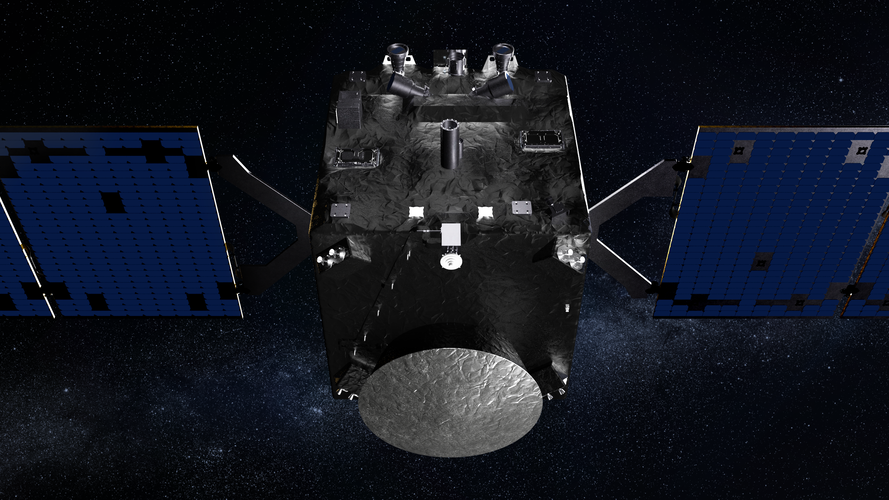
 Now that NASA is leading the development of the Artemis lunar habitation program that will send men and women to the Moon within the next few years, this may be a good time to preview at least one aspect of the environment that the astronauts will experience when they arrive, i. e., trash from Earth.
Since 1959, the lunar surface has experienced a barrage of man-made attacks of various kin
Now that NASA is leading the development of the Artemis lunar habitation program that will send men and women to the Moon within the next few years, this may be a good time to preview at least one aspect of the environment that the astronauts will experience when they arrive, i. e., trash from Earth.
Since 1959, the lunar surface has experienced a barrage of man-made attacks of various kin Autonomous driving on intelligent road at Europe's edge
 An ESA-supported effort put an intelligent road up in Finnish Lapland through its paces, assessing its suitability for testing autonomous vehicles in some of Europe's most challenging driving conditions.
"If autonomous vehicles can drive well here, they can drive almost anywhere," says Sarang Thombre of the Finnish Geospatial Research Institute, managing the Arctic-PNT project.
"Our
An ESA-supported effort put an intelligent road up in Finnish Lapland through its paces, assessing its suitability for testing autonomous vehicles in some of Europe's most challenging driving conditions.
"If autonomous vehicles can drive well here, they can drive almost anywhere," says Sarang Thombre of the Finnish Geospatial Research Institute, managing the Arctic-PNT project.
"Our Astronomers dissect the anatomy of planetary nebulae using Hubble images
 Images of two iconic planetary nebulae taken by the Hubble Space Telescope are revealing new information about how they develop their dramatic features. Researchers from Rochester Institute of Technology and Green Bank Observatory presented new findings about the Butterfly Nebula (NGC 6302) and the Jewel Bug Nebula (NGC 7027) at the 237th meeting of the American Astronomical Society on Friday, J
 Airbus, Thales win second-generation Galileo satellite contracts
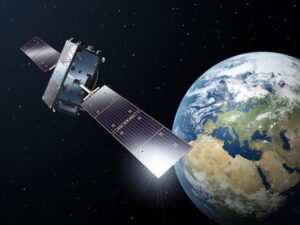
WASHINGTON — The European Commission announced Jan. 20 it will award contracts to Airbus Defence and Space and Thales Alenia Space to build an initial set of next-generation Galileo navigation satellites, shutting out incumbent manufacturer OHB.
Airbus and Thales will each build six of the second-generation Galileo satellites under contracts that will be formally signed at the end of January.
3-D printing to pave the way for moon colonization
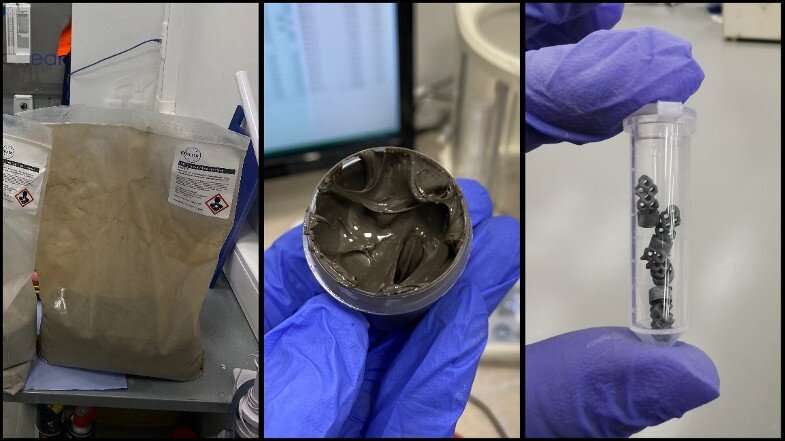
A research team from the Skoltech Center for Design, Manufacturing and Materials (CDMM) comprising 2nd year Ph.D. student Maxim Isachenkov, Senior Research Scientist Svyatoslav Chugunov, Professor Iskander Akhatov, and Professor Igor Shishkovsky has prepared an extensive review on the use of Additive Manufacturing (AM) technologies (also known as 3-D-printing) in crewed lunar exploration. Their paper published in the journal Acta Astronautica contains a comprehensive description of the geological composition of the lunar surface and the properties of lunar soil (lunar regolith) and its simulants, detailing their mineralogy, morphology, and chemical composition, in the light of their future use as feedstock for 3-D-printing on the moon surface.
The authors evaluated different 3-D-printing techniques presented in literature in terms of their suitability for in-situ manufacturing and maintainability, with focus on the adaptation of AM methods to low gravity, limited energy consumption, dimension and weight constraints of AM components delivered to the moon, scalability of AM technologies, low-gravity performance of 3-D-printing methods, and autonomy of AM applications.
Rocks show Mars once felt like Iceland
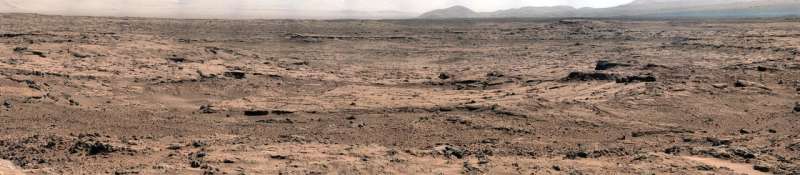
Once upon a time, seasons in Gale Crater probably felt something like those in Iceland. But nobody was there to bundle up more than 3 billion years ago.
The ancient Martian crater is the focus of a study by Rice University scientists comparing data from the Curiosity rover to places on Earth where similar geologic formations have experienced weathering in different climates.
Oldest carbonates in the solar system
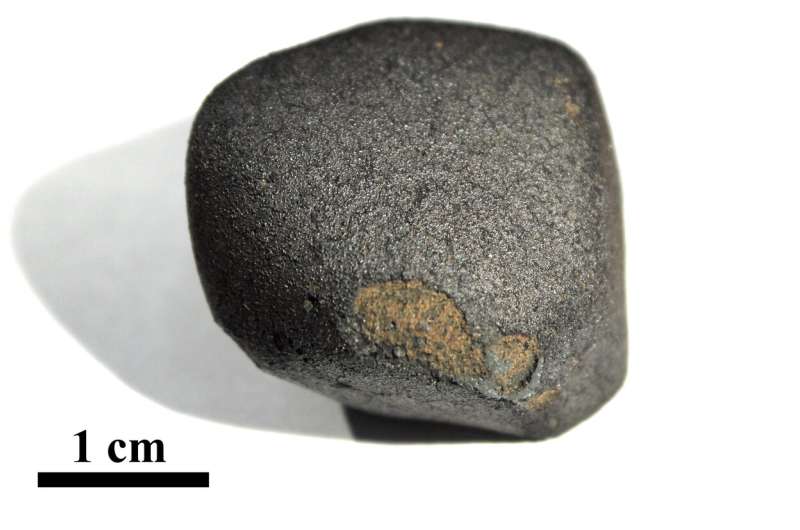
A meteorite that fell in northern Germany in 2019 contains carbonates which are among the oldest in the solar system; it also evidences the earliest presence of liquid water on a minor planet. The high-resolution Ion Probe—a research instrument at the Institute of Earth Sciences at Heidelberg University—provided the measurements. The investigation by the Cosmochemistry Research Group led by Prof. Dr. Mario Trieloff was part of a consortium study coordinated by the University of Münster with participating scientists from Europe, Australia and the U.S.
Juno maps water ice across northern Ganymede
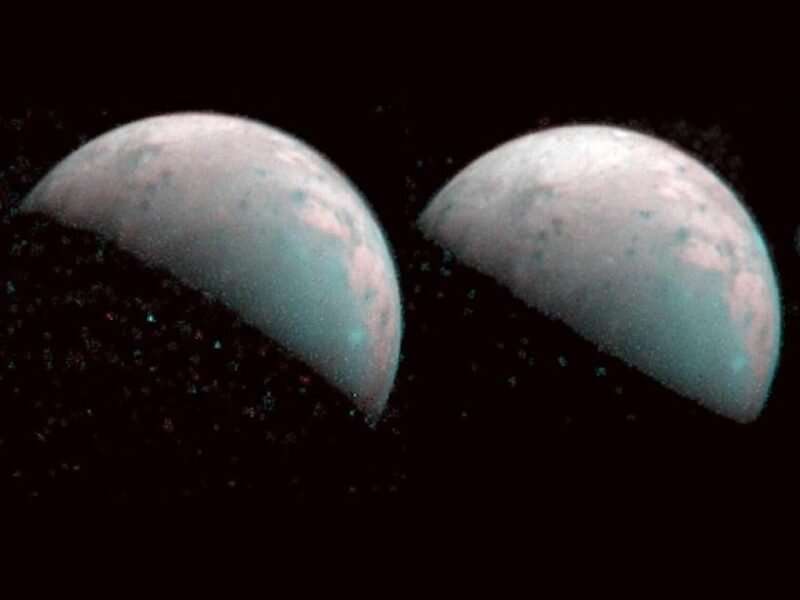
Jupiter's moon Ganymede is the largest planetary satellite in the solar system. It's also one of the most intriguing: Ganymede is the only moon with its own magnetic field, it is the most differentiated of all moons, and it likely possesses a subsurface ocean of liquid water. It was studied by the early Jupiter flybys made by the Pioneer and Voyager spacecraft, but our understanding today rests largely on observations made by NASA's Galileo orbiter from 1995 to 2003.
Mura et al. now report some of the first in situ observations of Ganymede since the end of the Galileo mission. They used the Jovian Infrared Auroral Mapper (JIRAM) on board NASA's Juno spacecraft to take images and spectra of the moon's north polar region.
Google to shut down Loon
WASHINGTON — Google announced Jan. 21 it is shutting down Loon, a venture to provide wireless connectivity by balloon that has been seen as both complementary to and competitive with satellite networks.
In a blog post, Astro Teller, head of X, the advanced projects or “moonshot factory” division of Google parent company Alphabet, announced that Loon will wind down operations in the next several months.
Green propellant successfully demonstrated on NASA mission
WASHINGTON — A recent NASA mission successfully demonstrated the performance of a non-toxic “green” propellant, creating opportunities for its use in a wide range of future spacecraft.
NASA flew the Green Propellant Infusion Mission (GPIM) spacecraft as one of the payloads on the Space Test Program 2 mission that launched on a SpaceX Falcon Heavy in June 2019.