Orion back at Kennedy Space Center so NASA can dissect Artemis I mission
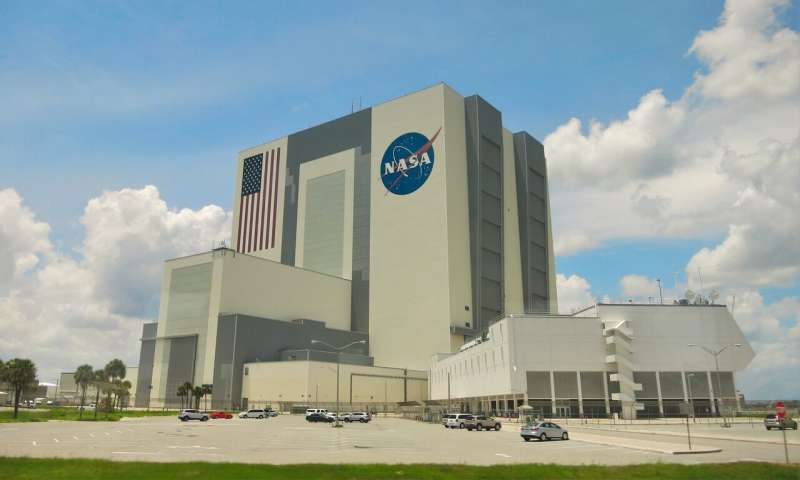
The Orion space capsule from Artemis I has come full circle, having launched from Kennedy Space Center, traveled 1.4 million miles in space and around the moon, splashed back down to Earth in the Pacific Ocean, and now journeyed 2,500 miles over land for its return to Florida.
After Orion was recovered at sea on Dec. 11, it made its way to Naval Base San Diego before heading by truck to arrive at KSC on Dec. 30. It now sits at NASA's Multi Payload Processing Facility, still sealed tight from its celestial journey.
The passengers have been waiting patiently to get out of the capsule. Since they're just mannequins, though, they can wait a little longer.
The most human-looking of the three, named Commander Moonikin Campos in deference to the late Arturo Campos who helped NASA bring the Apollo 13 crew safely back to Earth, was joined by two partial-body mannequins named Zohar and Helga. Their presence will help NASA determine just what sort of radiation levels and other flight stresses humans will face during the first crewed flight of Orion on Artemis II.
Are chemical rockets or solar sails better to return resources from asteroids?
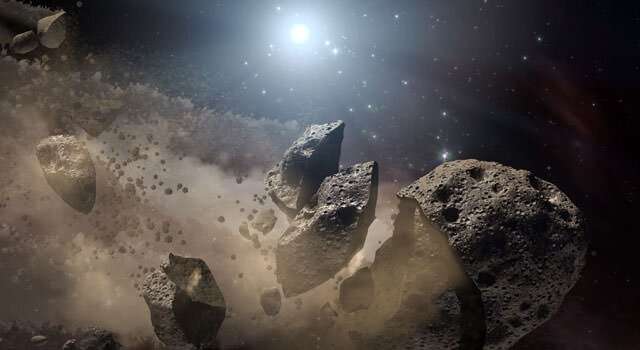
If and when we ever get an asteroid mining industry off the ground, one of the most important decisions to be made in the structure of any asteroid mining mission would be how to get the resources back to where all of our other infrastructure is—somewhere around the Earth.
That decision typically will focus on one of two propulsion methodologies—chemical rockets, such as those we already use to get us into space in the first place, or solar sails, which, while slower and unable to get us into orbit, don't require any fuel. So which propulsion methodology is better for these future missions? A study by researchers at the University of Glasgow looked at those two scenarios and came out with a clear-cut answer—solar sails.
When answering these types of theoretical questions, it is essential to impose limits on the answers. For example, billions of asteroids exist in the solar system, so it's more realistic to only look at those known as near-Earth asteroids (NEAs).
Historic UK rocket mission ends in failure
 An attempt to launch the first rocket into orbit from UK soil ended in failure on Tuesday, with scientists reporting an "anomaly" as it neared its goal.
A Virgin Orbit Boeing 747 carrying the 70-foot (21-metre) rocket took off from a spaceport in Cornwall, southwest England, at 2202 GMT.
The rocket then detached from the aircraft and ignited as planned at a height of 35,000 feet over the
An attempt to launch the first rocket into orbit from UK soil ended in failure on Tuesday, with scientists reporting an "anomaly" as it neared its goal.
A Virgin Orbit Boeing 747 carrying the 70-foot (21-metre) rocket took off from a spaceport in Cornwall, southwest England, at 2202 GMT.
The rocket then detached from the aircraft and ignited as planned at a height of 35,000 feet over the Commercial innovation for NOAA ground enterprise architecture
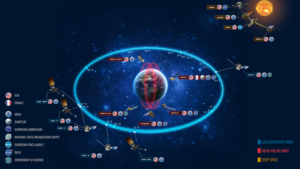
NOAA would “far exceed the funds available” if the agency carries out plans to expand its constellation through 2042 without changing its ground architecture, said Michael Morgan, Commerce Department assistant secretary for environmental observation and prediction.
The post Commercial innovation for NOAA ground enterprise architecture appeared first on SpaceNews.
First Virgin Orbit U.K. launch fails
Virgin Orbit’s first launch from the United Kingdom failed to reach orbit Jan. 9, dealing a high-profile setback to a company that has been struggling financially.
The post First Virgin Orbit U.K.
European firms partner for LEO collision avoidance demo

Three young European space companies said Jan. 9 they have teamed up to test a collision avoidance system on a small satellite this year in low Earth orbit.
The post European firms partner for LEO collision avoidance demo appeared first on SpaceNews.
Observing lightning with a cubesat constellation
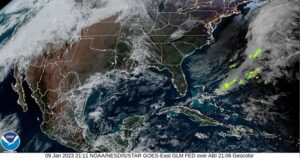
NASA Marshall Space Flight Center is working with Los Alamos National Laboratories and the University of Alabama, Huntsville, on Cubespark, a proposed constellation of six cubesats to map lightning.
The post Observing lightning with a cubesat constellation appeared first on SpaceNews.
Terran Orbital's GEOStare SV2 completes commercial imaging contract for Lockheed Martin
 Terran Orbital Corporation (NYSE: LLAP), a global leader in satellite-based solutions primarily serving the aerospace and defense industries, has announced its GEOStare SV2 spacecraft completed a commercial data services imagery contract for Lockheed Martin.
Throughout the duration of the contract, Terran Orbital's operations team successfully demonstrated the ability to rapidly re-task th
Terran Orbital Corporation (NYSE: LLAP), a global leader in satellite-based solutions primarily serving the aerospace and defense industries, has announced its GEOStare SV2 spacecraft completed a commercial data services imagery contract for Lockheed Martin.
Throughout the duration of the contract, Terran Orbital's operations team successfully demonstrated the ability to rapidly re-task th Chinese scientists discover ubiquitous, increasing ferric iron on lunar surface
 The Moon has been considered extremely reductive since the Apollo era, as estimated by the low ferric iron content in lunar samples returned in the 1970s. In addition, it has long been a mystery whether a large amount of ferric iron exists on the Moon and how it is formed.
Recently, however, a research team led by Profs. XU Yigang and HE Hongping from the Guangzhou Institute of Geochemistr
The Moon has been considered extremely reductive since the Apollo era, as estimated by the low ferric iron content in lunar samples returned in the 1970s. In addition, it has long been a mystery whether a large amount of ferric iron exists on the Moon and how it is formed.
Recently, however, a research team led by Profs. XU Yigang and HE Hongping from the Guangzhou Institute of Geochemistr Webb reveals wide diversity of galaxies in the early universe
 New data from the James Webb Space Telescope (JWST) have revealed that the structures of galaxies in the early universe were much more diverse and mature than previously known. Scientists compared images of hundreds of galaxies taken by JWST for the Cosmic Evolution Early Release Science (CEERS) Survey with corresponding images previously taken by the Hubble Space Telescope and presented the res