Black carbon aerosols accelerate loss of glacial mass over the Tibetan plateau
 Black carbon aerosols are produced by the incomplete combustion of fossil fuels and biomass, and are characterized by strong light absorption. Black carbon deposition in snow/ice reduces the albedo of snow/ice surfaces, which may accelerate the melting of glaciers and snow cover, thus changing the hydrological process and water resources in the region.
The South Asia region adjacent to the
Black carbon aerosols are produced by the incomplete combustion of fossil fuels and biomass, and are characterized by strong light absorption. Black carbon deposition in snow/ice reduces the albedo of snow/ice surfaces, which may accelerate the melting of glaciers and snow cover, thus changing the hydrological process and water resources in the region.
The South Asia region adjacent to the Stellantis to build electric aircraft with Archer and provide strategic funding for growth
 Stellantis N.V. (NYSE / MTA / Euronext Paris: STLA) and Archer Aviation Inc. (NYSE: ACHR) have agreed to significantly expand their partnership by joining forces to manufacture Archer's flagship electric vertical take-off and landing (eVTOL) aircraft, Midnight.
Stellantis will work with Archer to stand up Archer's recently announced manufacturing facility in Covington, Georgia at which the
Stellantis N.V. (NYSE / MTA / Euronext Paris: STLA) and Archer Aviation Inc. (NYSE: ACHR) have agreed to significantly expand their partnership by joining forces to manufacture Archer's flagship electric vertical take-off and landing (eVTOL) aircraft, Midnight.
Stellantis will work with Archer to stand up Archer's recently announced manufacturing facility in Covington, Georgia at which the Independent review warns of cost growth on key Earth science mission
An independent review warned of potential cost overruns on a future major NASA Earth science mission, prompting NASA to consider removing some instruments from it.
The post Independent review warns of cost growth on key Earth science mission appeared first on SpaceNews.
NASA faces budget crunch for extended Earth science missions
NASA will allow three aging Earth science missions to participate in an upcoming senior review of extended missions even as the agency warns of budget pressures on its overall portfolio of missions.
Delta throws down the gauntlet with free Wi-Fi plan

Plans by Delta Airlines to start offering free inflight Wi-Fi next month increase pressure on other major airlines to follow suit, driving up more demand for satellite capacity.
The post Delta throws down the gauntlet with free Wi-Fi plan appeared first on SpaceNews.
Aiming for instantaneous Earth-observation data

Hedron's goal is automatic networking in space. Satellite operators would pass packets to a network that moves data almost instantaneously to the ground.
The post Aiming for instantaneous Earth-observation data appeared first on SpaceNews.
Senators seek funding boost for NASA and NSF astrophysics programs

Five senators are asking the White House to add at least $300 million in the next budget proposal for NASA and the National Science Foundation (NSF) to support priorities from the astrophysics decadal survey.
The post Senators seek funding boost for NASA and NSF astrophysics programs appeared first on SpaceNews.
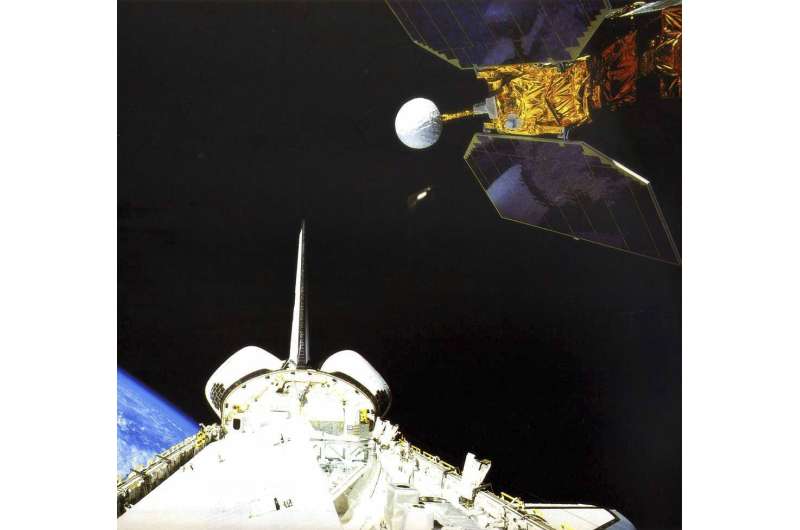
Old NASA satellite falling from sky this weekend, low threat
Once in 50,000-year comet may be visible to the naked eye
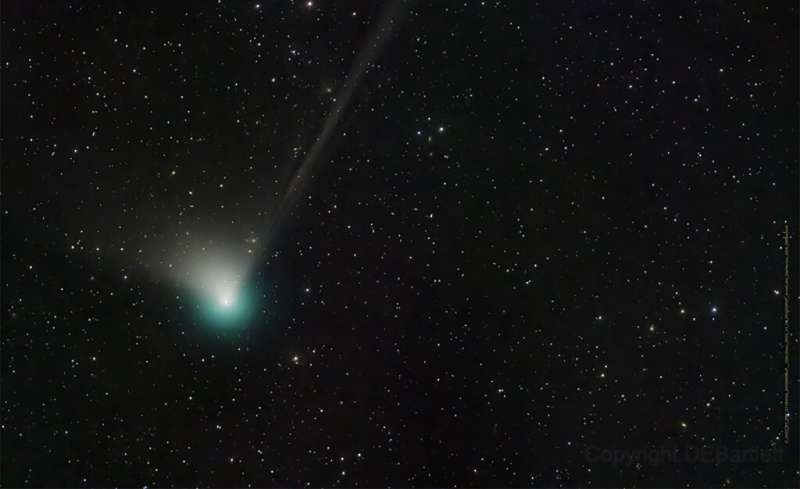
A newly discovered comet could be visible to the naked eye as it shoots past Earth and the Sun in the coming weeks for the first time in 50,000 years, astronomers have said.
The comet is called C/2022 E3 (ZTF) after the Zwicky Transient Facility, which first spotted it passing Jupiter in March last year.
After traveling from the icy reaches of our Solar System it will come closest to the Sun on January 12 and pass nearest to Earth on February 1.
It will be easy to spot with a good pair of binoculars and likely even with the naked eye, provided the sky is not too illuminated by city lights or the Moon.
The comet "will be brightest when it is closest to the Earth", Thomas Prince, a physics professor at the California Institute of Technology who works at the Zwicky Transient Facility, told AFP.
Defunct NASA satellite to reenter

A defunct NASA satellite, launched nearly four decades ago, is predicted to reenter late Jan. 8 with a very small risk to people on the ground.
The post Defunct NASA satellite to reenter appeared first on SpaceNews.