China’s Tianwen-1 Mars orbiter and rover appear to be in trouble
The two spacecraft making up China’s first interplanetary mission are both suffering issues, with the rover potentially lost on the surface after winter hibernation.
Pair of Chinese launches put classified and commercial satellites into orbit
China conducted its first two launches of 2023 over the weekend, sending three classified payloads into geosynchronous transfer orbit and five commercial satellites into sun-synchronous orbits.
Defunct NASA satellite reenters
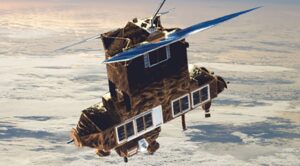
A defunct NASA satellite, launched nearly four decades ago, is predicted to reenter late Jan. 8 with a very small risk to people on the ground.
The post Defunct NASA satellite reenters appeared first on SpaceNews.
Sentinel-1 and AI uncover glacier crevasses
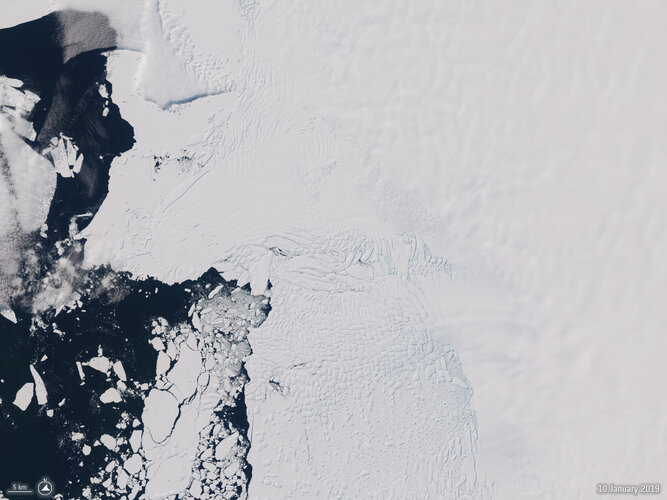
Scientists have developed a new Artificial Intelligence, or AI, technique using radar images from Europe’s Copernicus Sentinel-1 satellite mission, to reveal how the Thwaites Glacier Ice Tongue in West Antarctica is being damaged by squeezing and stretching as it flows from the middle of the continent to the coast. Being able to track fractures and crevasses in the ice beneath the overlying snow is key to better predicting the fate of floating ice tongues under climate change.
Rogue Space hires sustainability expert to advocate for startup-friendly policies
Daniel Porras, a former executive at the Secure World Foundation, has joined Rogue Space, a startup developing small satellites for in-orbit services.
The post Rogue Space hires sustainability expert to advocate for startup-friendly policies appeared first on SpaceNews.
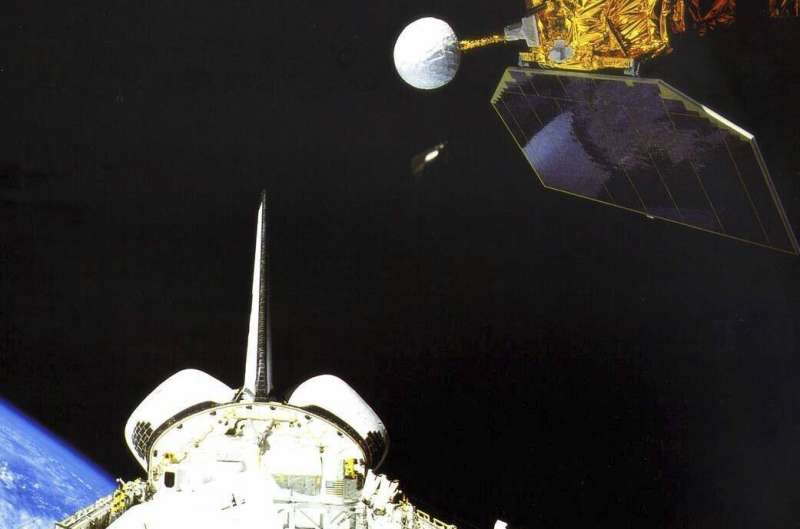
Old NASA satellite falls harmlessly from sky off Alaska
Historic UK rocket mission set for liftoff
Final preparations were under way Monday for the first rocket launch from UK soil, catapulting it into the "exclusive" club of nine nations able to send crafts into Earth's orbit.
A repurposed Boeing 747 carrying the 70-foot (21-meter) rocket containing nine satellites will take off from a spaceport in Cornwall, southwest England, at 2216 GMT.
The rocket will detach from the aircraft at a height of 35,000 feet over the Atlantic Ocean to the south of Ireland before later discharging the satellites.
The aircraft will then return to Spaceport Cornwall, a consortium that includes Virgin Orbit and the UK Space Agency, at Cornwall Airport Newquay.
The launch will be the first from UK soil. UK-produced satellites have previously had to be sent into orbit via foreign spaceports.
"Joining that really exclusive club of launch nations is so important because it gives us our own access to space... that we've never had before here in the UK," Spaceport Cornwall chief Melissa Thorpe told BBC television on Monday.
Over 2,000 people are expected to watch the launch named "Start Me Up" after the Rolling Stones song.
Space Force looking to extend laser communications to satellites in higher orbits
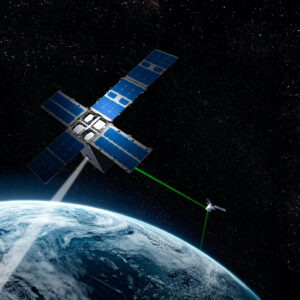
The U.S. Space Force is requesting information on laser communications systems to connect satellites in medium and high orbits.
The post Space Force looking to extend laser communications to satellites in higher orbits appeared first on SpaceNews.
NOAA declares GOES-18 operational ahead of schedule

The National Oceanic and Atmospheric Administration declared the newest satellite in its geostationary fleet, GOES-18, operational Jan. 4 and designated it GOES West.
The post NOAA declares GOES-18 operational ahead of schedule appeared first on SpaceNews.
Full moon rising: The first lunar spectacle of 2023 is this weekend's wolf moon
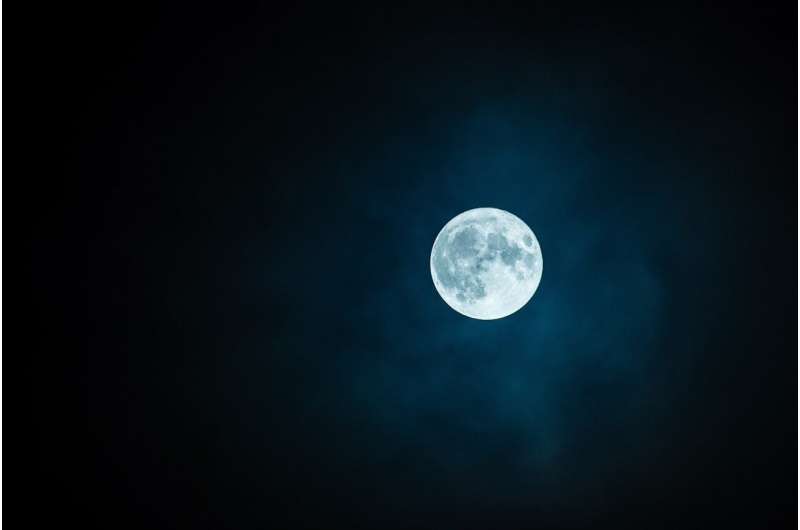
If you lift your eyes to the sky Friday night, you can catch the first full moon of 2023—the wolf moon.
The full moon can best be seen at 6:08 p.m. EST on Friday and will appear full through Sunday morning, according to NASA.
"Look for the moon to rise from the northeastern horizon around sunset that evening," according to the Old Farmer's Almanac.
This is the first of 13 full moons in 2023, the Old Farmer's Almanac said.
The moon is also known as a micromoon, because the moon, which circles the Earth in an elliptical orbit, is farther from the Earth, said Space.com.
Why is it called the wolf moon?
The first full moon of the year is known as the wolf moon because historically it was believed during the winter wolves howled more at night because they were hungry, the Old Farmer's Almanac said.
The name has stuck even though there are doubts about the accuracy of the wolf moon moniker.
Why is it also called a micromoon?
For this full moon, the moon will be about 250,000 miles from Earth.