Space Force to activate sensor on Wide-Field-of-View missile warning satellite
A U.S. Space Force infrared sensing demonstration satellite launched in July will soon start receiving data, the Space Systems Command announced Oct. 24.
The post Space Force to activate sensor on Wide-Field-of-View missile warning satellite appeared first on SpaceNews.
War in Ukraine shifts priorities among European government agencies

The war in Ukraine has prompted European civil and military space to revise budgets, programs, and policies to fortify launch capabilities and meet emerging needs.
The post War in Ukraine shifts priorities among European government agencies appeared first on SpaceNews.
Foust Forward | Hard choices facing commercial space stations

For all the optimism about the development of commercial space stations, the International Astronautical Congress also showed the lingering concern about the business case for such stations, be it for research, tourism or other space agencies.
NASA announces 16 people who will study UFOs to see what's natural—and what isn't

What is behind all these UFO sightings? We may find out.
NASA announced the 16 people who will spend the next nine months studying unidentified aerial phenomena, also known as UFOs.
Using unclassified data, the team will "lay the groundwork for future study" of UFOs by examining how the data is gathered by the public, local government and other sources. The goal is to have a roadmap for NASA's data analysis on the flying objects, and determine what events are natural or not.
"Exploring the unknown in space and the atmosphere is at the heart of who we are at NASA," Thomas Zurbuchen, associate administrator of the Science Mission Directorate at NASA, said in a statement. "Understanding the data we have surrounding unidentified aerial phenomena is critical to helping us draw scientific conclusions about what is happening in our skies. Data is the language of scientists and makes the unexplainable, explainable."
The announcement of the study participants comes amid a renewed interest in UFOs. In June 2021, the office of the U.S. Director of National Intelligence released a highly anticipated report examining unidentified aerial phenomena, but no "firm conclusions" could be drawn on more than 140 instances.
Sending DNA-infused Space Crystals to the moon
Space Crystals plans to send crystals grown in microgravity and infused with customer DNA to the moon next year.
The post Sending DNA-infused Space Crystals to the moon appeared first on SpaceNews.
Final two Pléiades Neo imagery satellites land in French Guiana

The last two high-resolution imaging satellites for Airbus Defence and Space’s Pléiades Neo constellation have arrived in French Guiana ahead of their launch next month.
The post Final two Pléiades Neo imagery satellites land in French Guiana appeared first on SpaceNews.
Balancing risk and reward in planetary exploration
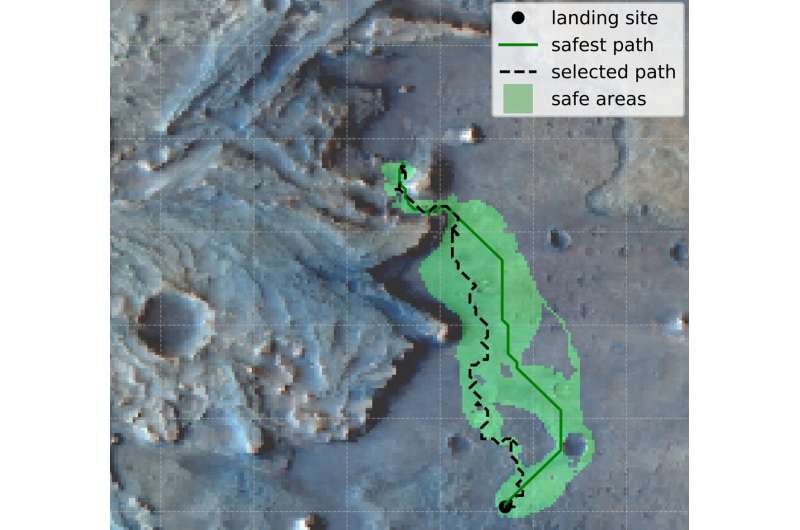
NASA's Mars rovers strive for groundbreaking scientific discoveries as they traverse the Martian landscape. At the same time, the crews operating the rovers do all they can to protect them and the billions of dollars behind the mission. This balance between risk and reward drives the decisions surrounding where the rovers go, the paths they take to get there and the science they uncover.
Researchers in the School of Computer Science's Robotics Institute (RI) have developed a new approach to balancing the risks and scientific value of sending planetary rovers into dangerous situations.
From Rome to Cannes
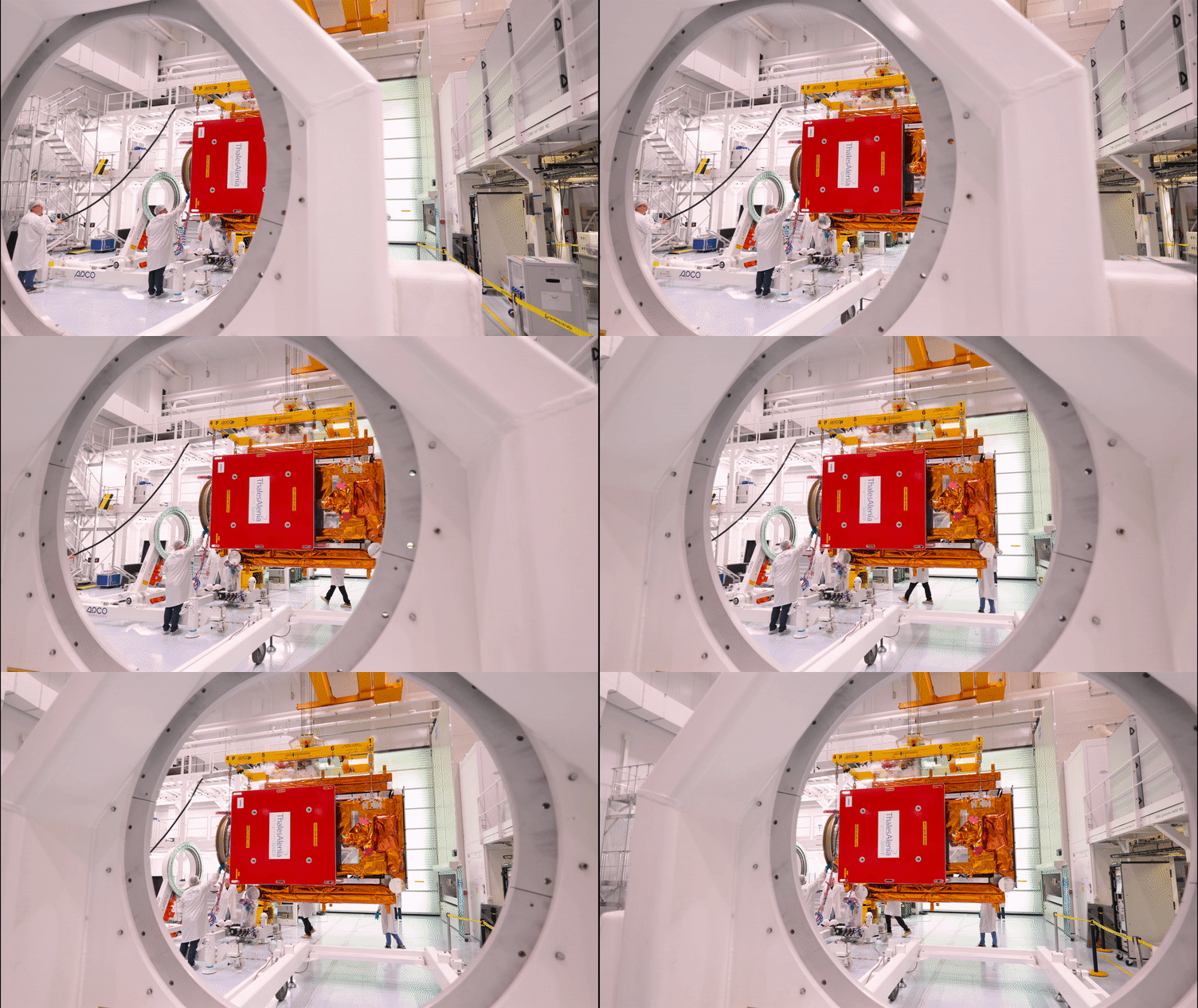
The Copernicus Sentinel-1C satellite is currently in Cannes undergoing a series of demanding tests in preparation for launch in 2023. The third member of the Sentinel-1 radar family, part of Europe’s Copernicus programme, will continue the critical task of delivering key radar imagery of Earth’s surface for a wide range of services and scientific applications.
Relativity Space maps path to Terran production at scale with 3D printers
 Relativity Space, the first company to 3D print rockets and build the largest metal 3D printers in the world, today unveiled the latest iteration of its first-of-its-kind proprietary manufacturing platform, Stargate 4th Generation metal 3D printers. These printers will underpin both the development and rate production of Terran R, Relativity's fully reusable, 3D printed rocket that will be capab
 Planet launches nonprofit program to drive more access to timely, global satellite data
 Planet Labs PBC (NYSE: PL)reports the launch of its Nonprofit Program, an offering that provides access to Planet imagery and support services specifically for nonprofits and non-governmental organizations (NGOS).
In line with Planet's mission to use space to help life on Earth and in effort to enable more impactful uses of Planet's data, the offering addresses two traditional challenges f
Planet Labs PBC (NYSE: PL)reports the launch of its Nonprofit Program, an offering that provides access to Planet imagery and support services specifically for nonprofits and non-governmental organizations (NGOS).
In line with Planet's mission to use space to help life on Earth and in effort to enable more impactful uses of Planet's data, the offering addresses two traditional challenges f