ESA finalizes package for ministerial
ESA is putting the finishing touches on a package of programs it will ask its member states to support at a council meeting in November.
The post ESA finalizes package for ministerial appeared first on SpaceNews.
Week in images: 17-21 October 2022
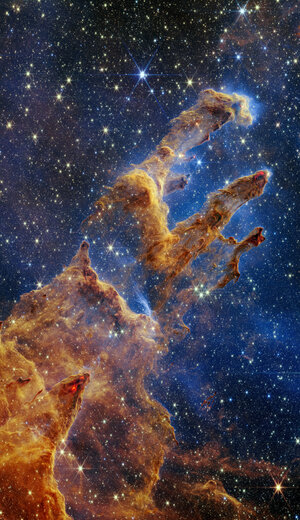
Week in images: 17-21 October 2022
Discover our week through the lens
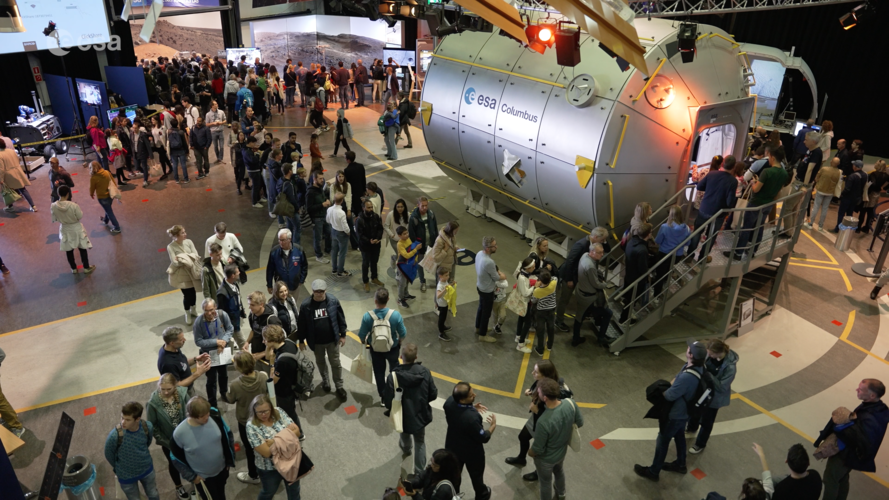
ESA Open Day at ESTEC 2022
 Video:
00:02:30
Video:
00:02:30
The 11th annual ESA Open Day at ESTEC took place on Sunday 2 October 2022, opened by ESA Director General Josef Aschbacher and Head of ESTEC and ESA Director of Technology, Engineering and Quality Torben Henriken with ESA astronauts Matthias Mauruer and André Kuipers. Visitors were able to meet space scientists and engineers and see and learn all about the work carried out at Europe’s largest space establishment.
Scientists discover the source of one of the rarest groups of meteorites
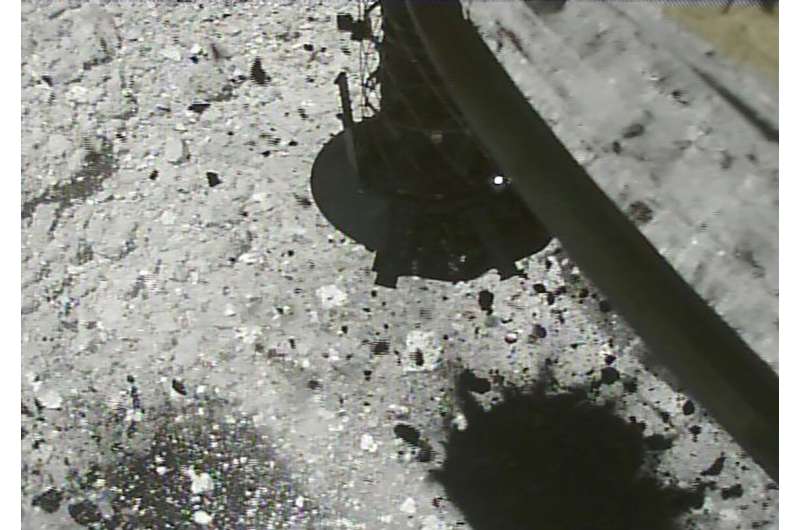
Since return mission Hayabusa2 brought samples of asteroid Ryugu back to Earth in 2020, a team of experts from across the world have been examining them to learn more about the origins of our solar system.
Carbonaceous chondrites, such as the Winchcombe meteorite which fell to Earth and was retrieved in Gloucestershire in 2021, are an extremely rare group of meteorites which have been known to contain organics and amino acids—ingredients for life. They are the most primitive and pristine materials of the solar system and can provide unique information on where water and the building blocks of life were formed, and what planets are made from.
Ryugu returned
In this study, published Oct. 20 in the journal Science Advances, the team conclude that Ryugu, now a near-Earth object, was among the group of asteroids known as the Cb-type which formed billions of kilometers away from Earth, toward the edge of the sun's influence, in a region of space such as the Kuiper Belt, or perhaps even deeper into space.
Professor Sara Russell, A senior research lead at the museum who co-authored the paper, says, "It's only within the last decade we've begun to appreciate just how far objects in the solar system can move towards, and away from, the sun.
Designing the trajectory of microsatellite swarms from the macro-micro perspective
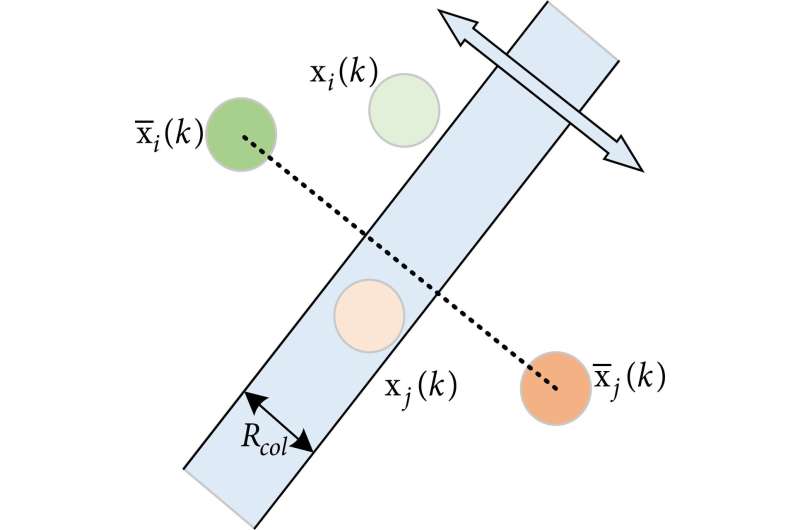
As an emerging multi-satellite cooperative flight mode, the microsatellite swarm has become an important future research issue for distributed space systems. It offers low cost, rapid response, and collaborative decision-making. To address the coordination of swarms for autonomous agents, a probabilistic guidance approach has been investigated, which contained sub-swarms with different mission objectives.
Probabilistic swarm guidance enables autonomous microsatellites to generate their individual trajectories independently so that the entire swarm converges to the desired distribution shape. However, it is essential to avoid crowding for reducing the possibility of collisions between microsatellites, which adds challenges to the design of the collision avoidance algorithm.
In a research paper recently published in Space: Science & Technology, Bing Xiao, from School of Automation, Northwestern Polytechnical University, proposed a Centroidal Voronoi tessellation (CVT) and Model Predictive Control (MPC) based synthesis method, aiming to achieve macro-micro trajectory optimization of a microsatellite swarm.
Space Force to award up to $50 million in contracts for Space Test Program experiments
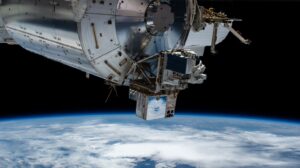
Vendors selected for the STEP 2.0 program will compete for task orders under a five-year indefinite delivery/indefinite quantity (IDIQ) contract
The post Space Force to award up to $50 million in contracts for Space Test Program experiments appeared first on SpaceNews.
Iridium sheds more light on direct-to-smartphone plan
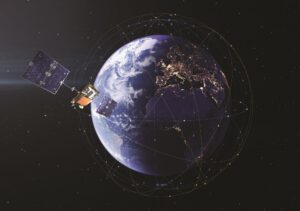
Initial direct-to-smartphone services from Iridium’s constellation will support occasional communications for emergencies and other unforeseen needs in remote areas worldwide, CEO Matt Desch said Oct. 20.
The post Iridium sheds more light on direct-to-smartphone plan appeared first on SpaceNews.
Report offers wide-ranging recommendations on space safety
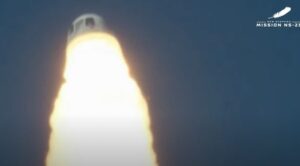
A new report by The Aerospace Corporation calls for a more holistic approach to space safety, from avoiding collisions in orbit to cybersecurity.
The post Report offers wide-ranging recommendations on space safety appeared first on SpaceNews.
Partial solar eclipse from Iceland to India on Tuesday
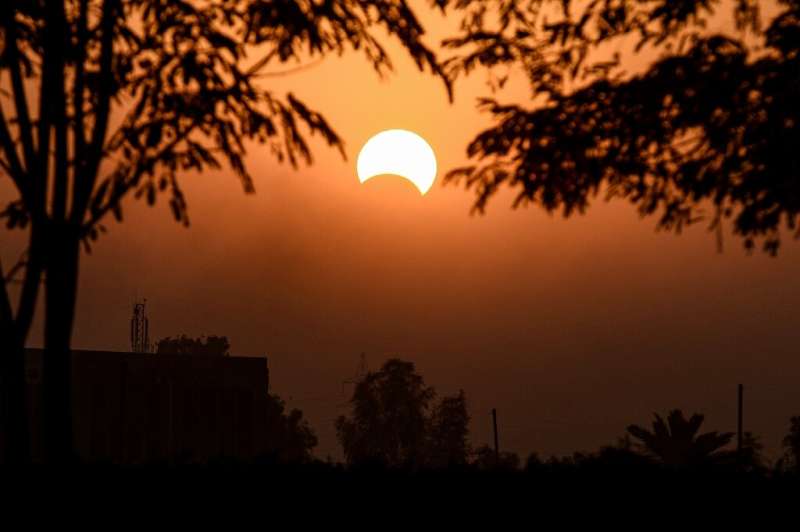
A partial solar eclipse will be visible across a swathe of the Northern Hemisphere on Tuesday, with amateur astronomers warned to take care watching the rare phenomenon.
The eclipse will start at 0858 GMT in Iceland and end off the coast of India at 1302 GMT, crossing Europe, North Africa and the Middle East on its way, according to the IMCCE institute of France's Paris Observatory.
Solar eclipses occur when the Moon passes between the Sun and Earth, casting its shadow down onto our planet.
A total solar eclipse happens when the Moon completely blocks the Sun's disk, momentarily plunging a portion of the Earth into complete darkness.
However Tuesday's eclipse is only partial, and the "Moon's shadow will not touch the surface of the Earth at any point," the Paris Observatory said in a statement.
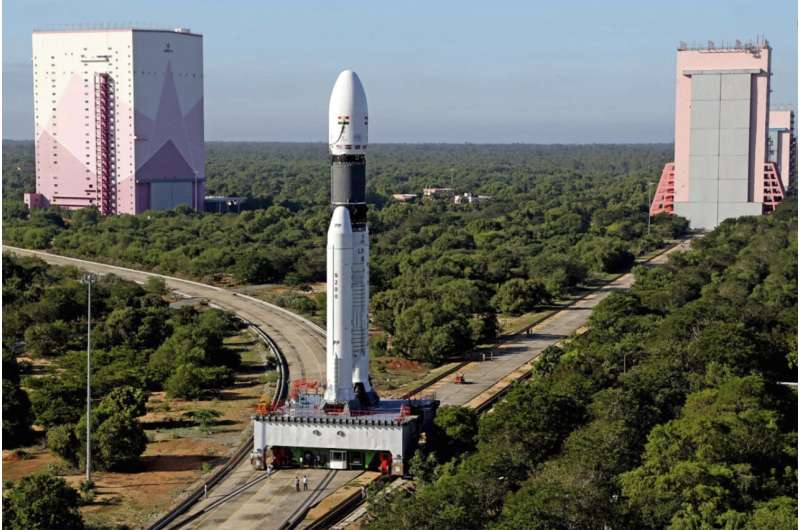
India launches 36 internet satellites delayed by Ukraine war