

Wealthy nations are carving up space and its riches, and leaving other countries behind
Satellites help run the internet and television and are central to the Global Positioning System. They enable modern weather forecasting, help scientists track environmental degradation and play a huge role in modern military technology.
Nations that don't have their own satellites providing these services rely on other countries. For those that want to develop their own satellite infrastructure, options are running out as space fills up.
I am a research fellow at Arizona State University, studying the wider benefits of space and ways to make it more accessible to developing countries.
What's the best way to build landing pads on the moon?
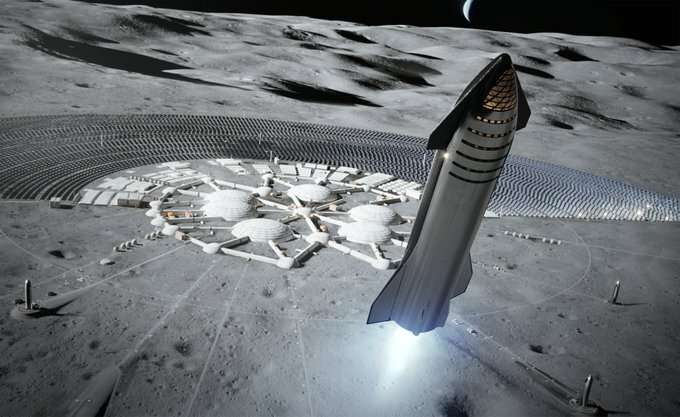
In the near future, NASA, the European Space Agency (ESA), China, and Roscosmos all mount crewed missions to the moon. This will constitute the first time astronauts have walked on the lunar surface since the Apollo era. But unlike the "race to the moon," the goal of these programs is not to get there first and leave only a few experiments and landers behind (i.e., "footprints and flags" missions), but to establish a sustained human presence on the lunar surface. This means creating habitats on the surface and in orbit that can be used by rotating crews.
While NASA and other space agencies intend to leverage local resources as much as possible—a process known as in-situ resource utilization (ISRU)—creating lunar bases will still require lots of materials and machinery to be shipped from Earth. In a recent study, Philip Metzger and Greg Autry reviewed the cost and energy consumption of building landing pads on the lunar surface.
Orbex unveils prototype of rocket preparing for UK’s first vertical launch
British microlauncher startup Orbex unveiled a full-scale prototype May 11 of what it hopes will be the first-ever vertical rocket launched to orbit from British soil.
The post Orbex unveils prototype of rocket preparing for UK’s first vertical launch appeared first on SpaceNews.
Op-ed | Space Safety Concerns Put Economic Growth at Risk

Rapidly growing congestion of the space environment demands heightened Executive and Legislative Branch attention to protect the astronauts aboard the International Space Station, billions of dollars of U.S. investment, and the expected growth of the space economy.
UK company reveals micro-launcher rocket
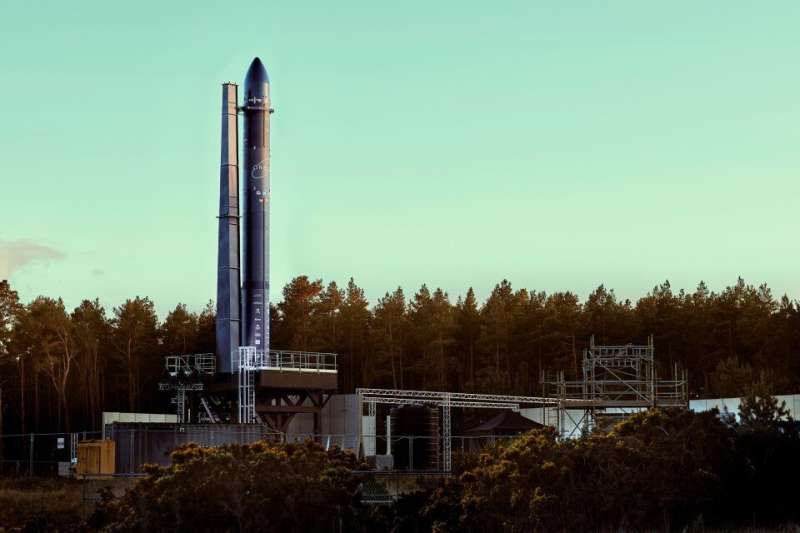
Orbex's Prime rocket reaching technical readiness represents a significant achievement that brings together key elements of the ground infrastructure and prototype launch vehicle for the first time and is a major step forward for the company and for the U.K. launch industry.
The U.K. Space Agency supported the development of Orbex's Prime rocket with £5.5 million of funding, as part of the government's plans to enable small satellite launch from U.K. spaceports.
With the first integration of a full scale Orbex prototype launch vehicle on a launch pad now complete, the company will enter a period of integrated testing, allowing dress rehearsals of rocket launches and the development and optimization of launch procedures.
Orbex recently revealed their first test launch platform at a new test facility in Kinloss, a few miles from the company's headquarters at Forres in Moray, Scotland.
Science Minister George Freeman said: "This is a hugely exciting time for the U.K. space and satellite sector as we count down to the first satellite launches from U.K. spaceports later this summer. Orbex Prime is a remarkable feat of engineering from a British rocket company, pioneering more sustainable and innovative fuels that cut carbon emissions.
Virgin Orbit projects growth despite widening loss

Despite a widening loss in the first quarter, Virgin Orbit executives said they believe they have enough financial runway for their air launch business to gain altitude this year.
Space Force general: Commercial satellite internet in Ukraine showing power of megaconstellations
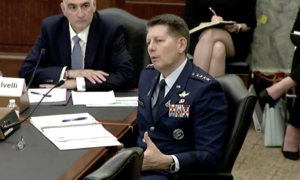
A lesson from the Ukraine war is the resiliency provided by large proliferated constellations, said Gen. David Thompson, vice chief of space operations of the Space Force
The post Space Force general: Commercial satellite internet in Ukraine showing power of megaconstellations appeared first on SpaceNews.
As US blames Russia for KA-SAT hack, Starlink sees growing threat

Elon Musk says Russian hackers are increasing efforts to take down SpaceX’s Starlink broadband service amid the war in Ukraine.
The post As US blames Russia for KA-SAT hack, Starlink sees growing threat appeared first on SpaceNews.
Smarter satellites: ESA Discovery accelerates AI in space

Could we capitalise on the Earth-based digital revolution to make our satellites smarter?
ESA Discovery is funding 12 projects that will explore the potential of applying the latest developments in artificial intelligence (AI) and advanced computing paradigms to make satellites more reactive, agile and autonomous. This could generate new practical applications that support life on Earth and our exploration of other planets.
Boeing considering redesign of Starliner valves
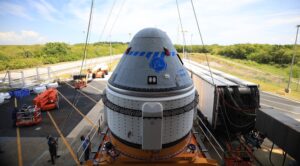
Boeing says it is considering redesigning the propellant valves on future CST-100 Starliner commercial crew spacecraft as a long-term solution to the corrosion problem those valves suffered last year.
The post Boeing considering redesign of Starliner valves appeared first on SpaceNews.


