

'Spot the difference' to help reveal Rosetta image secrets
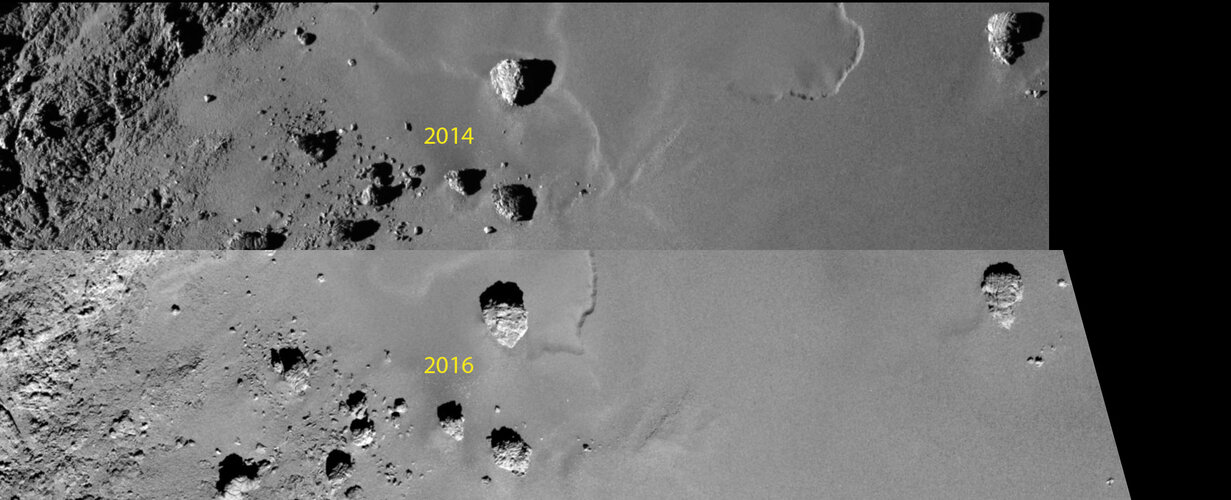
Today, ESA and the Zooniverse launch Rosetta Zoo, a citizen science project that invites volunteers to engage in a cosmic game of 'spot the difference'. By browsing through pictures collected by ESA's Rosetta mission, you can help scientists figure out how a comet's surface evolves as it swings around the Sun.
NASA to Discuss Webb Telescope Alignment, Instrument Setup
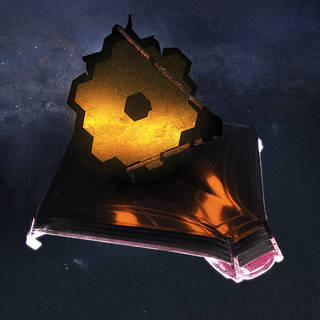 NASA will hold a media teleconference at 11 a.m. EDT on Monday, May 9, to discuss progress toward preparing the James Webb Space Telescope for science operations.
 Report: U.S. defense and intelligence agencies slow to embrace small-satellite revolution
The United States is at risk of being outpaced by China in space capabilities, in part due to the slow adoption of commercial innovations such as small satellites, warns a new report released May 5 by the Atlantic Council’s Scowcroft Center for Strategy and Security.
China launches new batches of Jilin-1 commercial remote sensing satellites
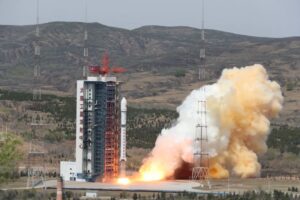
A Long March rocket launched eight Jilin-1 remote sensing satellites late Wednesday, days after an earlier batch rode to orbit via launch from a sea platform.
Lunar soil has the potential to generate oxygen and fuel
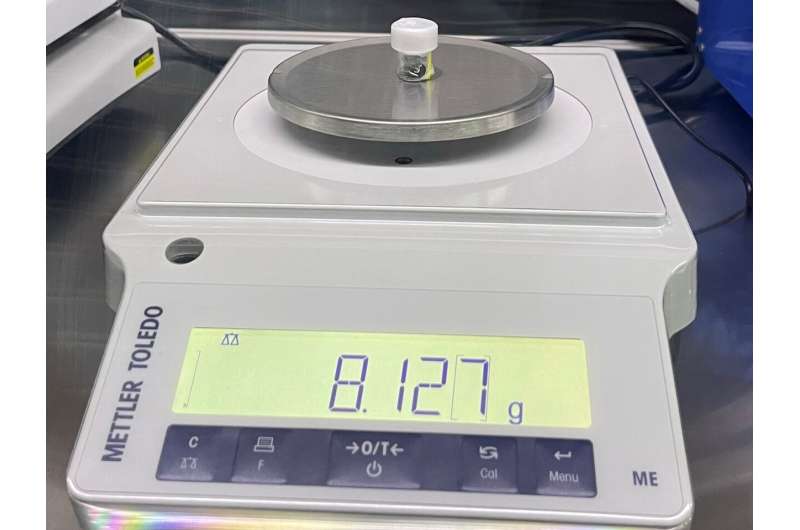
Soil on the moon contains active compounds that can convert carbon dioxide into oxygen and fuels, scientists in China report May 5 in the journal Joule. They are now exploring whether lunar resources can be used to facilitate human exploration on the moon or beyond.
Nanjing University material scientists Yingfang Yao and Zhigang Zou hope to design a system that takes advantage of lunar soil and solar radiation, the two most abundant resources on the moon. After analyzing the lunar soil brought back by China's Chang'e 5 spacecraft, their team found the sample contains compounds—including iron-rich and titanium-rich substances—that could work as a catalyst to make desired products such as oxygen using sunlight and carbon dioxide.
Based on the observation, the team proposed an "extraterrestrial photosynthesis" strategy. Mainly, the system uses lunar soil to electrolyze water extracted from the moon and in astronauts' breathing exhaust into oxygen and hydrogen powered by sunlight.
Tomorrow.io on track for 2024 weather constellation
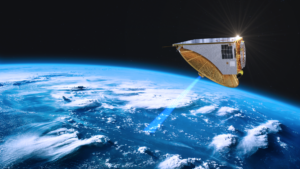
Adding microwave sounders to its constellation will not push back the timeline for startup Tomorrow.io to begin gathering weather data via satellite.
The post Tomorrow.io on track for 2024 weather constellation appeared first on SpaceNews.
NOAA seeks input on new satellite sensors and digital twin
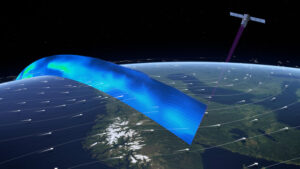
The National Oceanic and Atmospheric Administration is holding a series of meetings next week with potential government, academic and industry partners to discuss the agency’s plan to evaluate emerging satellite and ground architecture technologies.
The post NOAA seeks input on new satellite sensors and digital twin appeared first on SpaceNews.
NASA, Boeing ready for second Starliner test flight
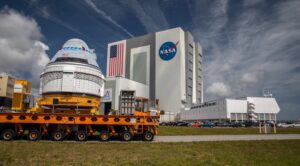
NASA and Boeing say they’re confident they have resolved a valve issue that delayed a test flight of the company’s CST-100 Starliner commercial crew vehicle last year and are ready to try again later this month.
NASA's Psyche spacecraft starts processing at Kennedy Space Center
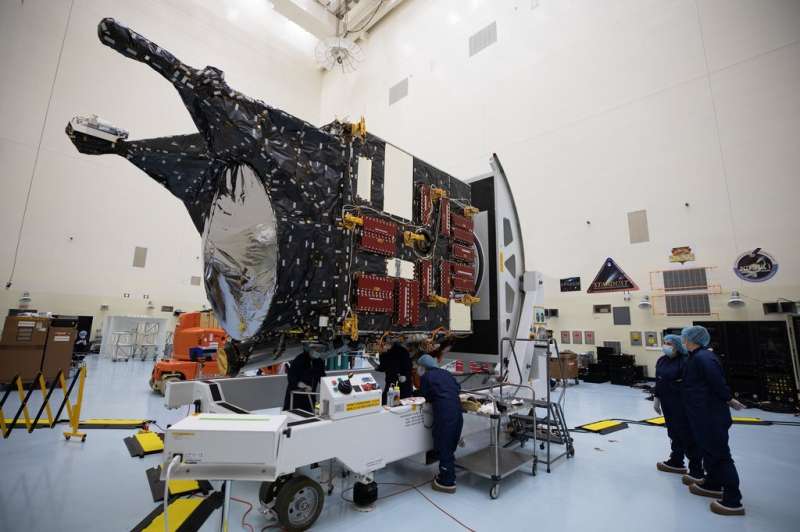
Bound for an asteroid of the same name, the orbiter is undergoing final preparations for its August launch.
Since its arrival on April 29, the Psyche spacecraft has moved into the Payload Hazardous Servicing Facility at NASA's Kennedy Space Center in Florida, where technicians removed it from its protective shipping container, rotated it to vertical, and have begun the final steps to prepare the spacecraft for launch. In the coming months, crews will perform a range of work including reinstalling solar arrays, reintegrating a radio, testing the telecommunications system, loading propellants, and encapsulating the spacecraft inside payload fairings before it leaves the facility and moves to the launch pad.
Astronaut crew returning to Earth after six months on ISS
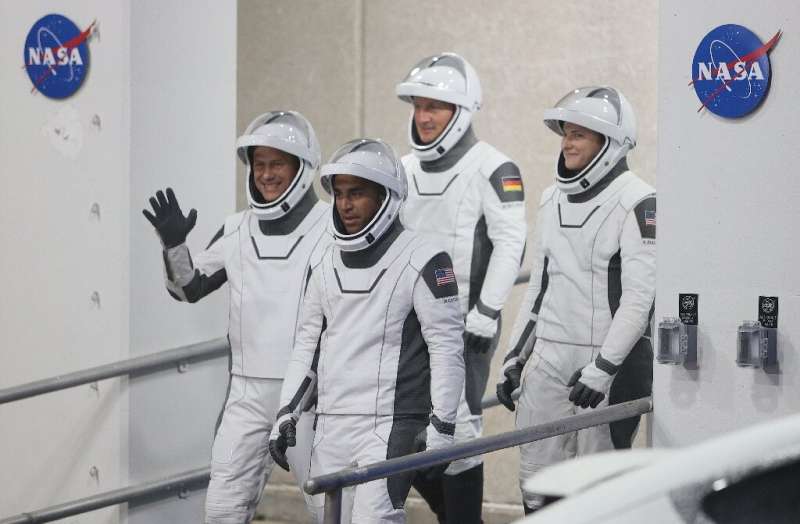
NASA's Crew-3 mission was returning home to Earth on Thursday after six months aboard the International Space Station.
The SpaceX Dragon Endurance spacecraft with NASA astronauts Kayla Barron, Raja Chari, and Tom Marshburn, as well as European Space Agency astronaut Matthias Maurer undocked from the orbital laboratory overnight.
Their 23.5 hour journey back should see them splash down off the coast of Florida at 12:43 am on Friday (0443 GMT).
They leave behind the one Italian and three American astronauts of Crew-4, and three Russian cosmonauts.


