

SwRI-led team finds younger exoplanets better candidates when looking for other Earths
 As the scientific community searches for worlds orbiting nearby stars that could potentially harbor life, new Southwest Research Institute-led research suggests that younger rocky exoplanets are more likely to support temperate, Earth-like climates.
In the past, scientists have focused on planets situated within a star's habitable zone, where it is neither too hot nor too cold for liquid s
As the scientific community searches for worlds orbiting nearby stars that could potentially harbor life, new Southwest Research Institute-led research suggests that younger rocky exoplanets are more likely to support temperate, Earth-like climates.
In the past, scientists have focused on planets situated within a star's habitable zone, where it is neither too hot nor too cold for liquid s NASA visualization rounds up the best-known black hole systems
 Nearby black holes and their stellar companions form an astrophysical rogues' gallery in this new NASA visualization.
Stars born with more than about 20 times the Sun's mass end their lives as black holes. As the name implies, black holes don't glow on their own because nothing can escape them, not even light. Until 2015, when astronomers first detected merging black holes through the spac
Nearby black holes and their stellar companions form an astrophysical rogues' gallery in this new NASA visualization.
Stars born with more than about 20 times the Sun's mass end their lives as black holes. As the name implies, black holes don't glow on their own because nothing can escape them, not even light. Until 2015, when astronomers first detected merging black holes through the spac Concrete Hardening | Cosmic Kiss 360°
 Video:
00:02:47
Video:
00:02:47
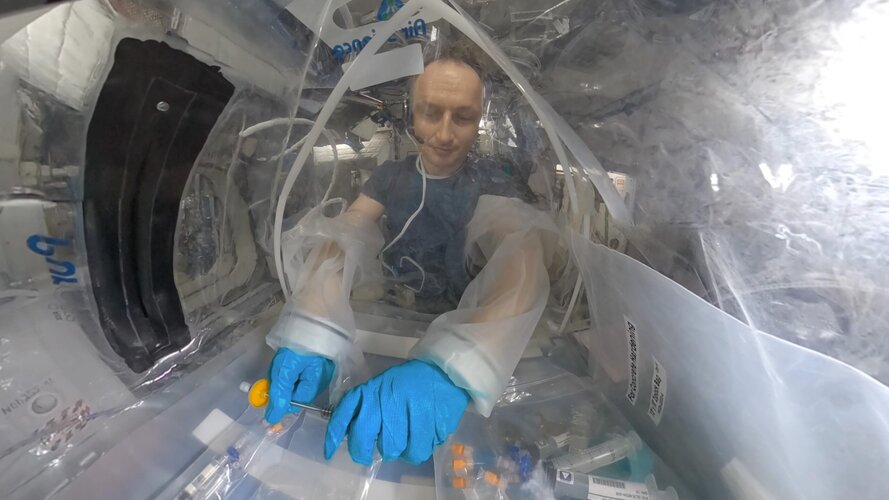
Take a look inside the box and join ESA astronaut Matthias Maurer from a very special perspective as he supports the @DLR Mason/Concrete Hardening experiment.
The Concrete Hardening experiment investigates the behaviour of various concrete mixtures containing cement and sand or simulated ‘Moon dust’ combined with water and various admixtures. On Earth, higher density components tend to move downward but in weightlessness they are likely to be more evenly distributed.
Researchers will analyse the concrete mixed by Matthias in space for strength, bubble and pore distribution as well as crystal structures, comparing this to ground samples. Their findings will
LISA mission moves to final design phase
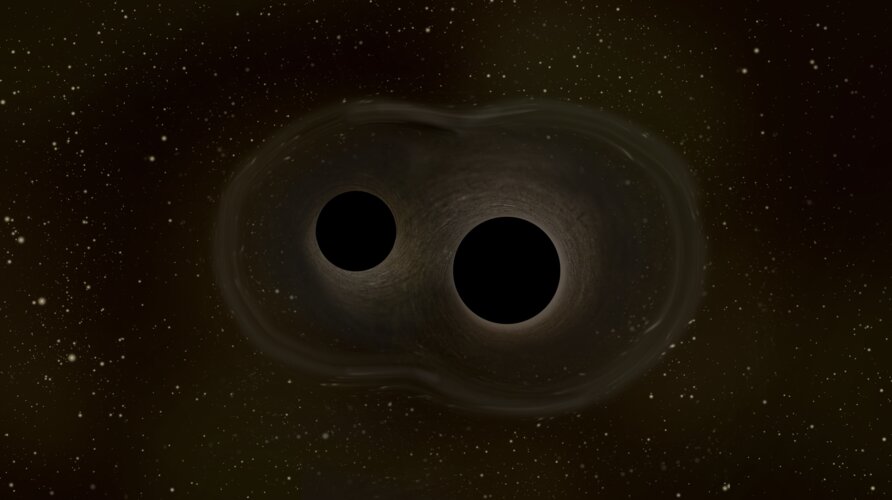
ESA’s Laser Interferometer Space Antenna (LISA) passed an important review that marks the mission as feasible for final technology development and design before adoption.
Nelson criticizes “plague” of cost-plus NASA contracts

NASA Administrator Bill Nelson offered a surprisingly strong endorsement of fixed-price contracts and competition at a congressional hearing May 3, calling traditional cost-plus contracts a “plague” on the agency.
The post Nelson criticizes “plague” of cost-plus NASA contracts appeared first on SpaceNews.
Mission Minerva meets Cosmic Kiss | Two astronauts in orbit
 Video:
00:04:42
Video:
00:04:42
For the first time since mid 2011, ESA has two astronauts living and working together aboard the International Space Station. Watch a conversation between Samantha Cristoforetti and Matthias Maurer in this rare moment for Europe in space.
The astronauts’ meeting marks a brief crossover between the start of Samantha’s second space mission, Minerva, and Matthias’s final days in orbit for his first mission, Cosmic Kiss.
Samantha arrived with Crew-4 on 28 April in SpaceX Crew Dragon Freedom, while Matthias will depart with Crew-3 in SpaceX Crew Dragon Endurance in May after almost six months on the Station.
In this video
Watch live – Matthias Maurer returns to Earth
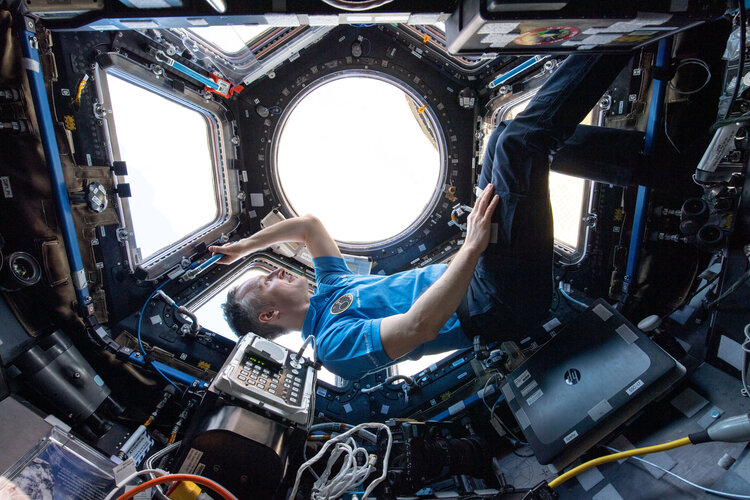
After almost six months aboard the International Space Station, ESA astronaut Matthias Maurer is coming home. Watch all the action, from undocking to splashdown, live on ESA Web TV.
Meet the IT team | Space jobs
 Video:
00:05:50
Video:
00:05:50
Meet the IT Team, see behind the scenes and find out how it is to work for the IT Department at the European Space Agency.
Astroscale debris-removal demo makes close approach despite thruster issues
Astroscale said May 4 it made another close-approach rendezvous between its two ELSA-d spacecraft last month but ongoing thruster problems continue to hold up a capture demonstration delayed from January.
The post Astroscale debris-removal demo makes close approach despite thruster issues appeared first on SpaceNews.
The Laser Interferometer Space Antenna reaches a crucial milestone
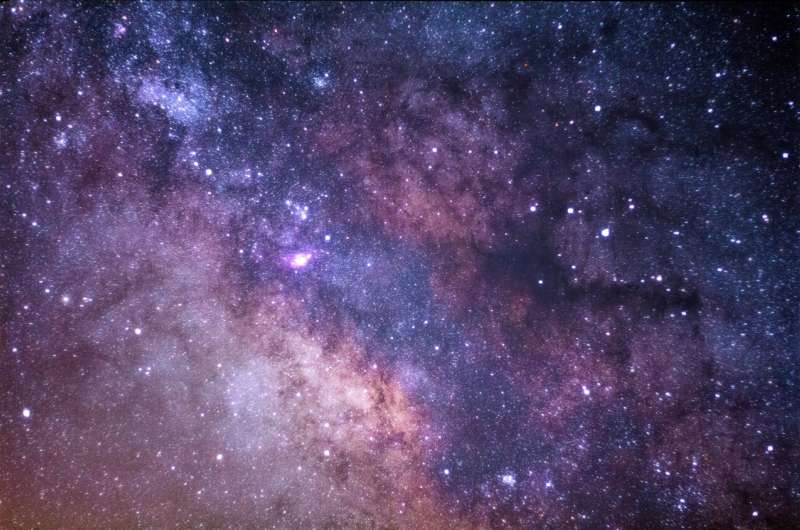
LISA, the Laser Interferometer Space Antenna, has reached an important milestone: it has passed the comprehensive "Mission Formulation Review" (MFR) and now enters the next phase of development. The review team, consisting of experts from ESA, NASA, the scientific community and industry, identified no showstoppers and confirmed that LISA has successfully reached a maturity sufficient to proceed to the next stage of development.
The MFR confirms the feasibility of the LISA mission and identifies a clear path of technology developments needed to reach the next major milestone: the mission adoption. The MFR is a checkpoint to ensure that the technology and planning for LISA is sufficiently mature; this is a prerequisite for mission development to continue. In an ESA mission lifetime cycle, the MFR is the formal end of Phase A (mission feasibility). LISA now enters Phase B1, which is focused on the preliminary definition of the mission.
"LISA is well underway. We are now entering phase B1, during which we do more detailed design work to establish the complete set of mission requirements and the verifications approach," says Prof. Karsten Danzmann, lead of the LISA Consortium.


