

Solar-power satellites to collect stronger sunlight
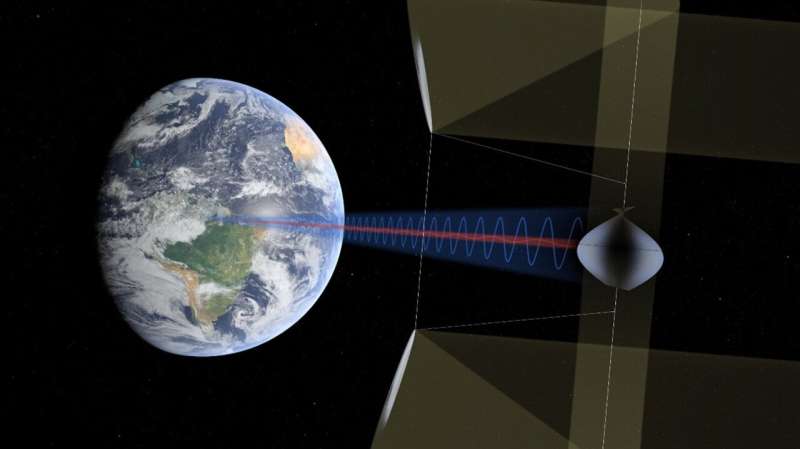
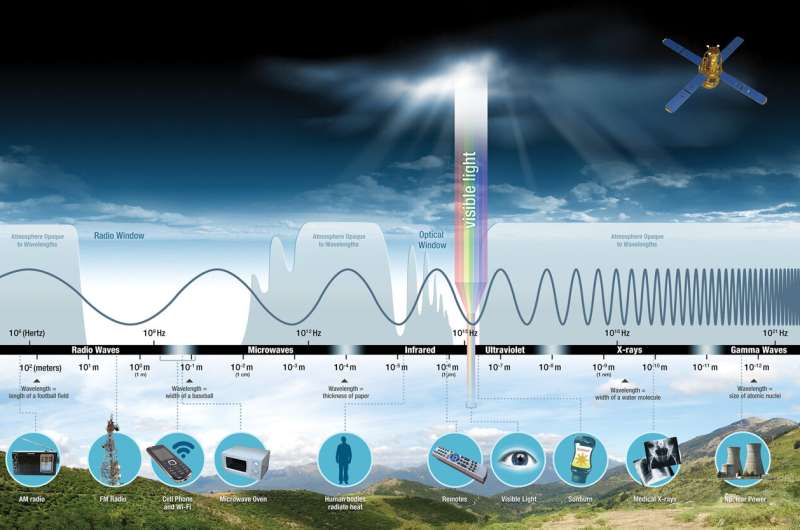
Solar energy generation keeps on becoming cheaper and more efficient, but some basic limitations will always apply: solar panels can only generate power during the daytime, and much of the sunlight is absorbed by the atmosphere as it shines downward. So ESA is working on the concept of collecting solar power up in orbit, where sunlight is up to 11 times more intense than across European territory, then beaming it down to the ground for use.
As part of that effort, a new project looks into designing solar-power satellites, which would become the largest structures ever built in space. Frazer-Nash Consultancy will study the modular construction of solar-power satellites, to efficiently disassemble them as they come to their end-of-life for reuse or recycling.
Explore further
Space investors predict more acquisitions to combat hiring challenges
Hiring challenges in the space industry will lead to more acquisitions as way for companies to access talent and expand their workforces, investors said during an April 4 space finance session at the 37th Space Symposium.
NASA plans talks with partners on ISS and Artemis
NASA Deputy Administrator Pam Melroy plans to use this week’s Space Symposium to meet with international partners on both the long-term future of the International Space Station and roles in later phases of NASA’s Artemis lunar exploration effort.
Millennium prepares for mass manufacturing
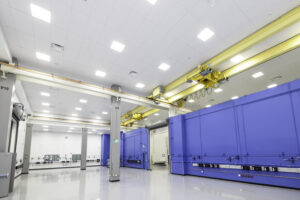
For the moment, Millennium Space System’s new small satellite factory looks like a series of huge rooms that are mostly empty except for powerful yellow cranes in the corners and impressive power strips lining the walls.
The post Millennium prepares for mass manufacturing appeared first on SpaceNews.
Millennium works with Boeing to address smallsat demand
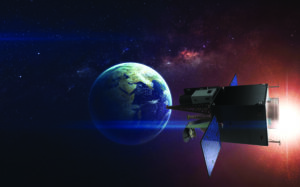
Millennium Space Systems is working closely with Boeing, its corporate parent, to gear up for rapid production of spacecraft for government and commercial constellations.
The post Millennium works with Boeing to address smallsat demand appeared first on SpaceNews.
Spaceborne Computer-2 completes 24 experiments on ISS
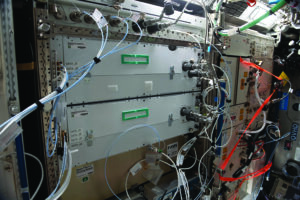
Hewlett Packard Enterprise, Microsoft and NASA will share details at the 37th Space Symposium on 24 research experiments completed to date on the International Space Station’s HPE Spaceborne Computer-2.
The post Spaceborne Computer-2 completes 24 experiments on ISS appeared first on SpaceNews.
Op-ed | Russian aggression underscores need for greater U.S. space leadership

In light of Russia’s reckless behavior, which even endangered its cosmonauts aboard the International Space Station, the U.S. and European roles in space governance become more imperative.
The post Op-ed | Russian aggression underscores need for greater U.S.
German environmental satellite EnMAP successfully launched into space
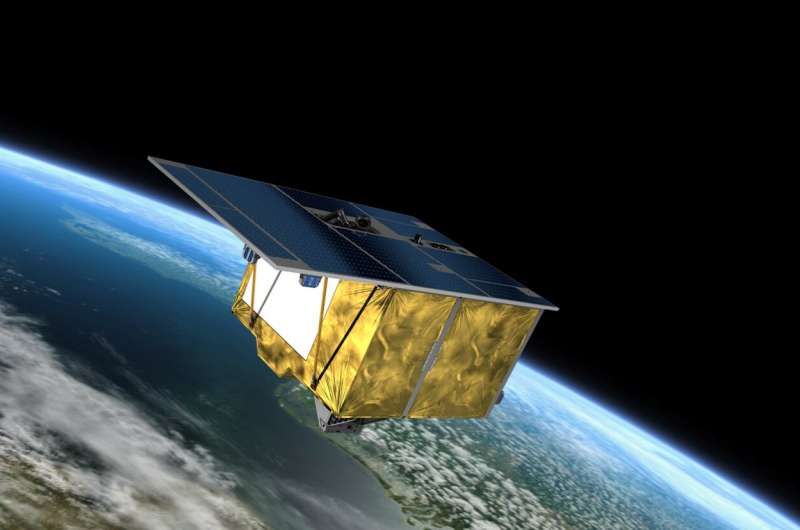
The German environmental satellite EnMAP was successfully launched into space on Friday evening from Cape Canaveral in Florida on board a SpaceX Falcon 9 rocket. The "science" team of the EnMAP mission at the German Research Centre for Geosciences Potsdam celebrated the exciting minutes before and during the launch with a diverse and informative event. Lectures, talks and live broadcasts gave an impression of the scientific background, many years of preparations and various current and future fields of application of the mission. Also joining the event was Potsdam's Lord Mayor Mike Schubert, who was equally excited and congratulated on the successful launch.
Over the next few years, the hyperspectral mission will take pictures of the Earth's surface in around 250 colors ("spectral bands") and thus provide information on the condition of vegetation, soils and waters more precisely than ever before. Even short-term changes can be recorded with the help of the satellite, which is about the size of a wardrobe.
Shake and bake: NASA's Psyche is tested in spacelike conditions
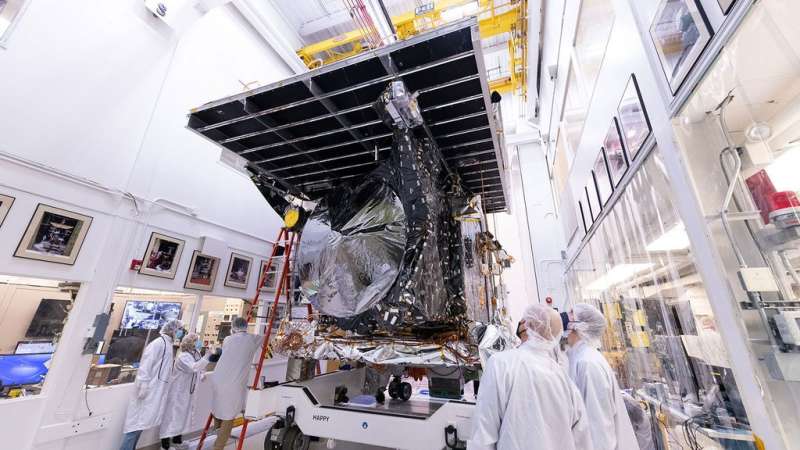
To prepare for its launch in August, the Psyche spacecraft has been tested to ensure it can operate in the extreme conditions it will face on its trip to a metal-rich asteroid.
The conditions that a NASA spacecraft endures are extreme: the violent shaking and cacophony of a rocket launch, the jolt of separating from the launch vehicle, the extreme temperature fluctuations in and out of the sun's rays, the unforgiving vacuum of space.
Before launch, engineers do their best to replicate these harsh conditions in a rigorous series of tests to ensure the spacecraft can withstand them. NASA's Psyche spacecraft has just completed its own gauntlet of electromagnetic, thermal-vacuum, vibration, shock, and acoustic testing at the agency's Jet Propulsion Laboratory in Southern California.
NASA uses moonlight to improve satellite accuracy
NASA's airborne Lunar Spectral Irradiance, or air-LUSI, flew aboard NASA's ER-2 aircraft from March 12 to 16 to accurately measure the amount of light reflected off the Moon. Reflected moonlight is a steady source of light that researchers are taking advantage of to improve the accuracy and consistency of measurements among Earth-observing satellites.
"The Moon is extremely stable and not influenced by factors on Earth like climate to any large degree. It becomes a very good calibration reference, an independent benchmark, by which we can set our instruments and see what's happening with our planet," said air-LUSI's principal investigator, Kevin Turpie, a research professor at the University of Maryland, College Park.


