




Sunday afternoon depression is one of the most commonly reported emotional patterns in adult life, and it has almost nothing to do with the workweek ahead. People who are unemployed feel it. Retirees feel it. Teenagers on summer break feel it. The Monday-dread theory cannot explain why a freelance writer with no boss, no commute, and no meetings still finds herself crying at 4 p.m. on a Sunday for reasons she cannot name.
Something else is happening. Something older.
The feeling has a shape, and the shape is familiar
People who describe Sunday afternoon sadness often use similar language. A flatness. A heaviness in the light. The sense that time is moving differently, more slowly, with a quality of waiting. Many people locate it physically: a tightness in the chest, a low hum in the stomach, a reluctance to move from wherever they are sitting.
What is striking is how specific the timing is. Not Sunday morning. Not Sunday night. The window falls roughly in the late afternoon, when the light starts to change and the day begins its long exhale toward evening.
That window is not arbitrary. It is when, for most of us, childhood Sundays began to end.
What the body remembers about Sunday
For a child, Sunday afternoon is a structurally strange time. The morning had its routines, religious or otherwise. Lunch happened. And then a long, undefined stretch opened up before bath time and bedtime, with no school to organize it and no friends easily reachable. Adults who report Sunday sadness often describe their childhood Sundays in similar terms: quiet houses, parents who were tired or distant, the muffled sound of a television in another room, homework looming, the weekend ending without quite having happened.
The brain encodes emotional context alongside time-of-day cues. The slant of late-afternoon light, the particular silence of a residential street on Sunday, the smell of cooking that signals dinner is coming — these can act as retrieval cues for emotional states laid down decades earlier. You are not necessarily remembering a specific Sunday. You are re-entering a feeling tone your nervous system practiced hundreds of times before you had language for it.
This is why the sadness can feel both intensely personal and oddly impersonal. It is yours. It is also a tape that started playing a long time ago.
Why “Monday dread” is the wrong diagnosis
The cultural script blames the workweek. The Sunday Scaries, the inbox waiting, the meetings on the calendar. There is real anticipatory anxiety about Mondays, and it is worth taking seriously. But it does not explain the texture of what most people are feeling.
Anticipatory anxiety is sharp. It pulls you forward, into rehearsal, into planning. Sunday afternoon sadness pulls you backward, into something softer and more diffuse. People describe wanting to nap, wanting to be held, wanting to cry without knowing why. Those are not the symptoms of someone worried about a 9 a.m. status meeting. Those are the symptoms of grief.
Grief for what, exactly, is the question worth sitting with.
The childhood you never quite left
For some people, Sunday afternoon was when a parent who had been around all weekend started to retreat — back to work prep, back to silence, back to whatever made them less available during the week. For others, Sunday was when conflict tended to surface, the slow-burn arguments that simmered through breakfast and exploded by dinner. For others still, Sunday was simply lonely. The weekend’s promise of family time turned out to be a few hours of cartoons and a long afternoon of figuring out what to do with yourself.
Children do not process these patterns as events. They process them as weather. The feeling becomes the day, fused at a level deeper than memory. Decades later, when the same light hits the same kind of window at the same hour, the weather returns.
This is part of why grief that began in childhood can persist quietly for a lifetime. As I wrote in a recent piece on how grief works, the feeling does not shrink. You build a larger life around it. But the original room is still there, and Sunday afternoon is one of the hallways that leads back to it.
The biology underneath the memory
There is also a hormonal layer worth taking seriously. Mood is not purely psychological — it is shaped by chemical messengers that fluctuate across the day, the week, and the season. Reporting from the BBC on the role of hormones in mental health describes how cortisol, the body’s main stress hormone, follows a daily rhythm that typically peaks in the morning and drops through the afternoon. For many people, the late-Sunday low coincides with a natural cortisol trough at the same time the social structure of the weekend collapses.
The hippocampus plays a central role in how emotional memory is formed and retrieved. Research published in Nature on the hormonal mechanisms of depression describes how chronic stress reshapes the brain regions that store emotional context. The same brain structures that encoded your childhood Sundays are the ones now retrieving them, sometimes without your conscious permission.
None of this means the feeling is medical. It means the feeling has roots in real biology, not just imagination.
Why high-functioning adults feel it most
The people who report Sunday sadness most acutely are often the ones whose weekdays are most structured. The competent ones. The capable ones. The dependable ones.
This is not a coincidence. During the week, structure protects them. There are meetings to run, problems to solve, people who need things. Sunday afternoon is the first stretch of unstructured time long enough for the underlying feeling to surface. The protection thins out. Whatever was being held at bay arrives.
I wrote recently about the quiet exhaustion of being the dependable one, and Sunday is often when that exhaustion becomes legible. Not as exhaustion, exactly. As sadness without an object. As wanting something you cannot name.
What you are wanting, often, is the thing the child version of you wanted on those same afternoons. Attention. Presence. Someone to come find you in your room and ask how you were.
The difference between a mood and a disorder
It matters to draw a line here. A recurring Sunday afternoon dip that lifts by Monday morning, or by the time you sit down for dinner, is a mood pattern. It is not, on its own, depression. Psychology Today’s overview of depression and mood disorders is careful about this distinction. Clinical depression involves persistent symptoms — loss of interest, changes in sleep and appetite, feelings of worthlessness — that last most of the day, most days, for at least two weeks.
If your Sunday sadness is bleeding into Wednesday, if the flatness is no longer time-limited, that is information worth taking to a professional. The Atlantic’s reporting on seasonal affective disorder notes a similar pattern: what starts as a normal seasonal mood shift can shade into something clinical when it stops responding to the usual rhythms.
But for most people who feel the Sunday afternoon thing, this is not pathology. It is memory wearing the face of mood.
What helps, and what doesn’t
The most common advice — distract yourself, plan something fun, fill the calendar — tends not to work for this particular kind of sadness. It treats Sunday afternoon as a vacuum to be filled. The vacuum is the point. The empty time is what allowed the feeling to rise in the first place, and stuffing it with brunch reservations only delays the encounter.
What seems to help, based on both clinical practice and what people report informally, falls into a few categories.
Naming what’s actually happening. Readers might find it helpful to acknowledge the source of the feeling by recognizing it as something that began in childhood, rather than a response to adult responsibilities. The feeling does not need to be solved. It needs to be recognized as old.
Moving the body gently. Not a punishing workout. A walk. Stretching. Something that signals to your nervous system that you are safe and present. Reporting on post-holiday blues emphasizes how small physical rituals — opening curtains, making the bed, a short walk — interrupt low-mood loops without requiring you to feel better first.
Contact, not entertainment. A phone call to someone who knows you. Sitting in a room with a partner. Texting a friend something honest. The sadness is, at root, about a child who felt unseen on Sunday afternoons. Being seen now, even briefly, addresses the actual wound.
Letting it pass without performance. You do not have to fix it. Sometimes the sadness is just visiting, and the most useful thing is to make tea, sit by a window, and let the hour move through you. By 7 p.m. it will likely be gone.
The version of you still on the bedroom floor
There is a tendency, when we identify a childhood pattern in adult emotional life, to treat it as a problem to dismantle. As if the goal is to outgrow Sunday afternoon entirely.
That framing misses something important. The child who felt that particular flatness was paying attention. They noticed the silence in the house. They noticed the parent who was technically home but emotionally elsewhere. They noticed time moving in a way that adults around them seemed to have stopped noticing. That noticing is part of who you became. The same sensitivity that made Sunday afternoons hard at eight is often what makes you good at your job, attentive in your relationships, and trusted by people who need to be understood.
The sadness is not a malfunction. It is an old companion checking in.
You can answer it without inviting it to stay. You can acknowledge the child who is still, in some sense, on the bedroom floor at four in the afternoon, waiting for someone to come find them, and you can be the one who finally does. Not by fixing them. By sitting down next to them and letting the light fade together until it is time for dinner.
That is what Sunday afternoon is asking for. Not productivity. Not optimism. A small act of company, extended backward through time, to a version of you who never got it the first time around.
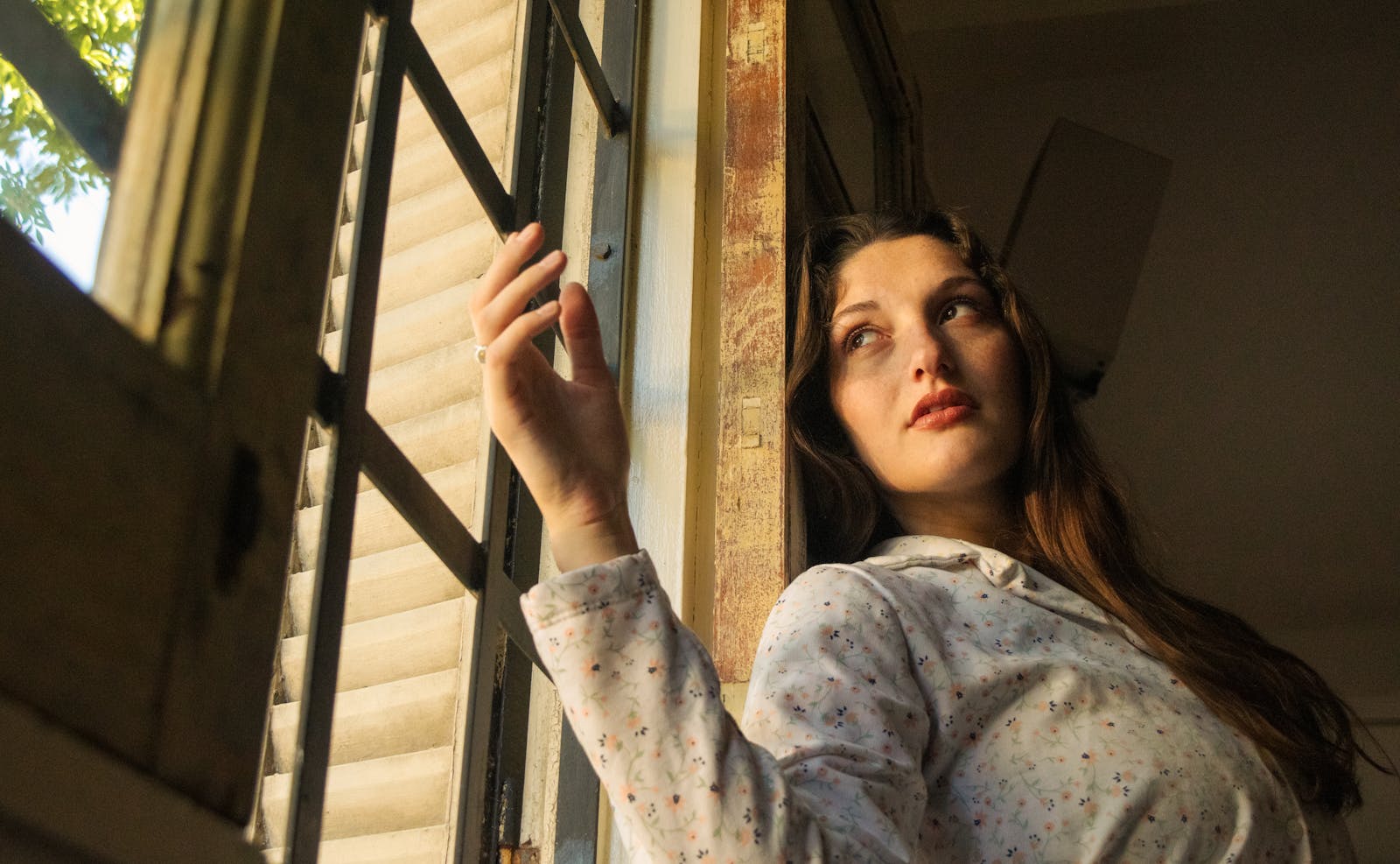
The Monday meetings will still be there in the morning. They were never the real story. The real story is older, quieter, and waiting for you to recognize it for what it is — which, more often than not, is enough to let it loosen its hold.
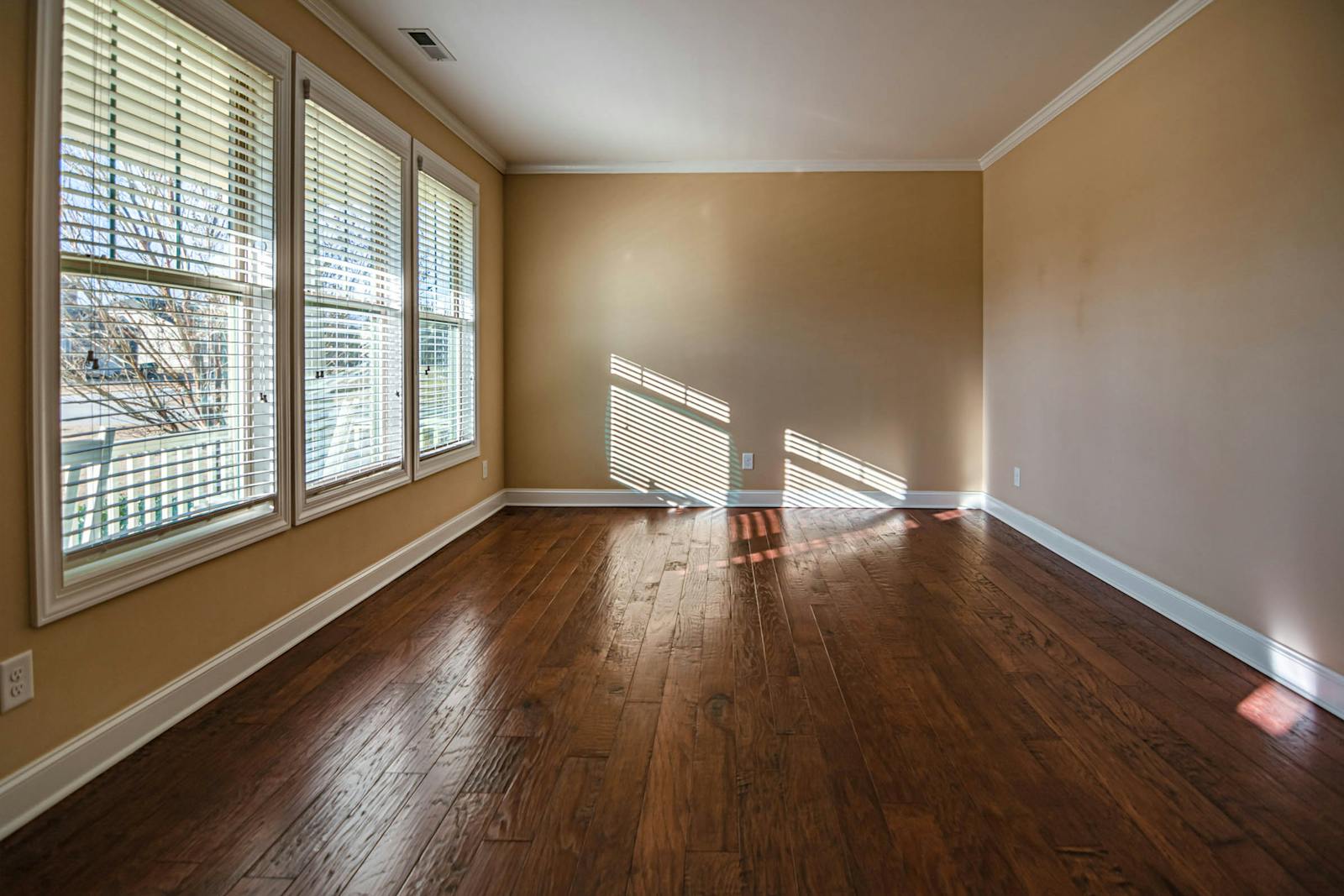
Photo by Tan Danh on Pexels