
Copernical Team
NASA's Lucy to fly past thousands of objects for Earth gravity assist
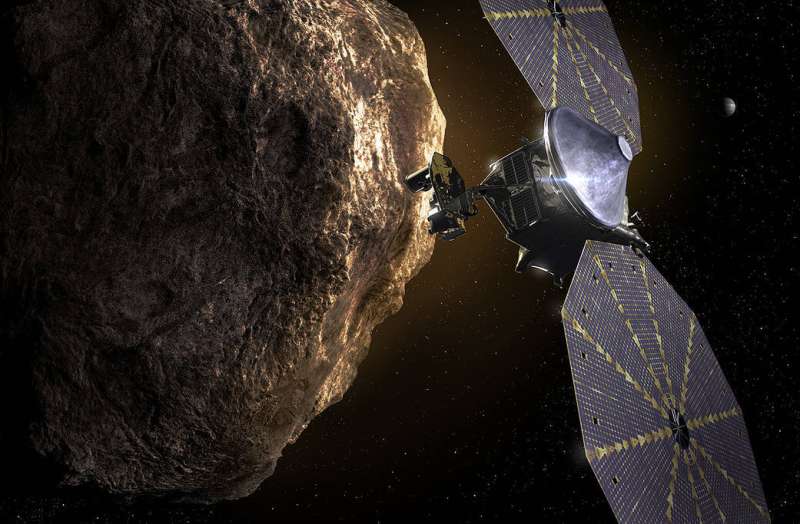
Mission engineers will track NASA's Lucy spacecraft nonstop as it prepares to swoop near Earth on Oct. 16 to use this planet's gravity to set itself on a course toward the Jupiter Trojan asteroids.
But they also will be closely tracking something else: more than 47,000 satellites, debris, and other objects circling our planet. A greater than 1-10,000 chance that Lucy will collide with one of these objects will require mission engineers to slightly adjust the spacecraft's trajectory.
Although an adjustment is unlikely, and collisions are rare, the chances are increasing as the number of objects in Earth's orbit grows, NASA experts say.
The International Space Station, for instance, has maneuvered out of the way of space debris 31 times since 1999, including three times since 2020.
"Low-Earth orbit is getting more crowded, so that has to be part of the consideration nowadays, especially for missions that fly low, like Lucy," said Dr.
First Eurostar Neo satellite launched
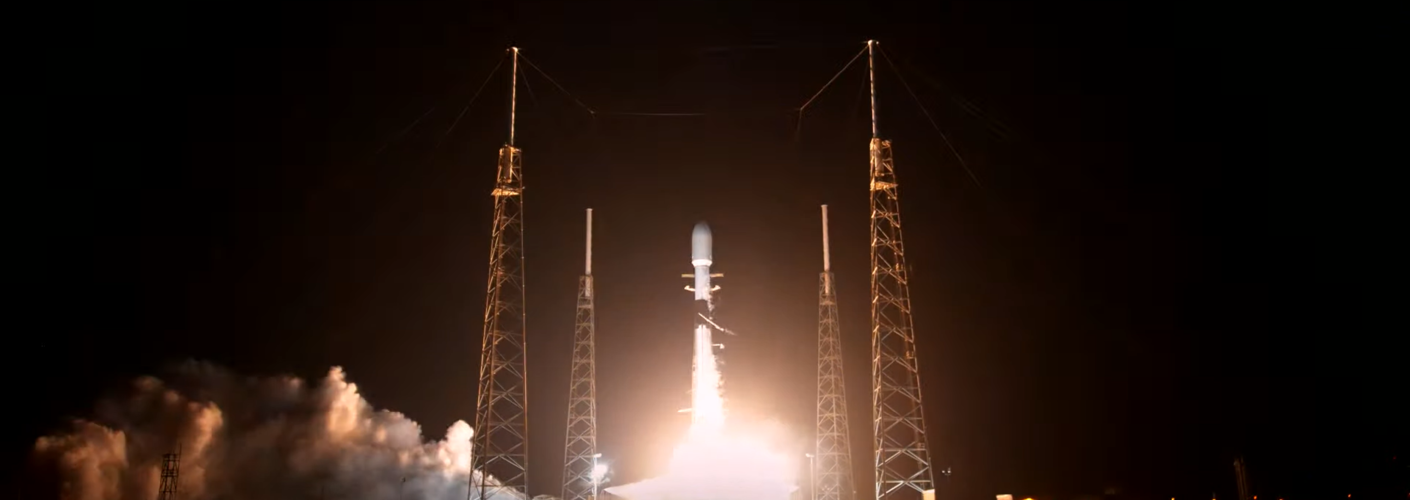
The first satellite to be built under ESA’s Eurostar Neo programme has launched.
ESA astronaut Samantha Cristoforetti returns from her second mission to the International Space Station
Press Release N° 53–2022
ESA astronaut Samantha Cristoforetti returned to Earth alongside NASA astronauts Kjell Lindgren, Bob Hines and Jessica Watkins, marking the end of her second mission to the International Space Station (ISS), Minerva.
Week in images: 10-14 October 2022
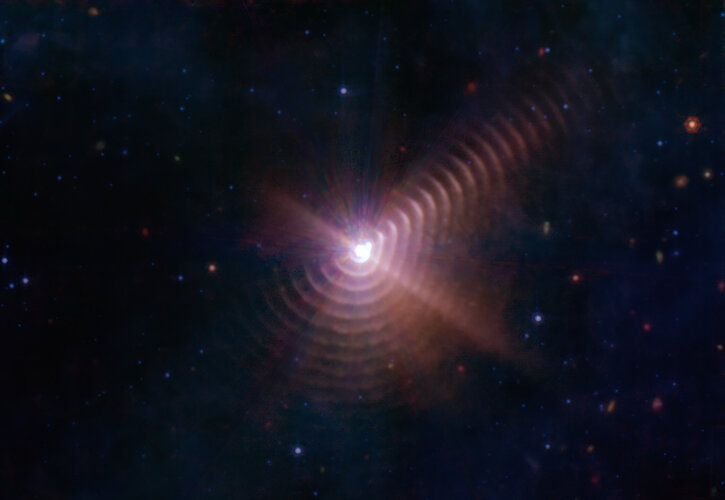
Week in images: 10-14 October 2022
Discover our week through the lens
Examining our options for automated in-orbit assembly of large structures

The construction of large structures such as space stations, space solar power stations, and space telescopes is one of the main development trends for space exploration in the future.
Homeward bound
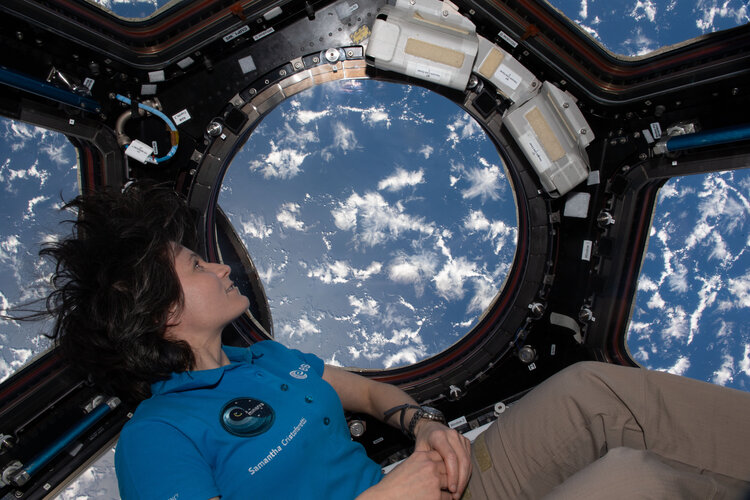 Image:
ESA astronaut Samantha Cristoforetti looks out the window of the cupola while the International Space Station flies above the Pacific Ocean off the coast of Peru.
Taken earlier this month, this image captures one of Samantha’s favourite things to do in space – in addition to performing research or spacewalks – looking down on our beautiful planet – and one of the precious last views she’ll get from the Station’s ‘window to the world’, known as the Cupola, as she wraps up the end of her mission Minerva.
Samantha and fellow expedition 68 crew members NASA astronauts Kjell Lindgren, Bob Hines
From Space to Rome
 Video:
00:00:47
Video:
00:00:47
In October 2022, ESA Space Shop opened its first temporary concept store on one of Europe’s busiest shopping streets. Located in Rome’s city centre, the first physical ESA Space Shop outside an ESA establishment aims to bring ESA and its space missions closer to the general public. For a period of three months only, the store offers a mix of cosmic fashion, space fun and official ESA merchandise.
To mark the store’s opening in Rome, the ESA Space Shop brand also received an image boost! ESA clothing feels modern, cool and comfy, so you can have fun in
Optical foundations illuminated by quantum light
 Optics, the study of light, is one of the oldest fields in physics and has never ceased to surprise researchers. Although the classical description of light as a wave phenomenon is rarely questioned, the physical origins of some optical effects are. A team of researchers at Tampere University have brought the discussion on one fundamental wave effect, i.e., the debate around the anomalous behavi
 Esri partners with Digital Earth Africa to support sustainable growth
 Climate change is compounding risks of food insecurity, displacement, and natural disasters across broad regions of the African continent, with vulnerable populations facing especially grave outcomes. However, several countries in Africa are already innovating and driving the next big tech sector boom, with companies creating solutions to close social and economic gaps. To support local organiza
 NASA's solid-state battery research exceeds initial goals, draws interest
 NASA researchers are making progress with developing an innovative battery pack that is lighter, safer, and performs better than batteries commonly used in vehicles and large electronics today.
Their work - part of NASA's commitment to sustainable aviation - seeks to improve battery technology through investigating the use of solid-state batteries for aviation applications such as electric
NASA researchers are making progress with developing an innovative battery pack that is lighter, safer, and performs better than batteries commonly used in vehicles and large electronics today.
Their work - part of NASA's commitment to sustainable aviation - seeks to improve battery technology through investigating the use of solid-state batteries for aviation applications such as electric