


Copernical Team
High winds delay SpaceX launch after a switch to Cape Canaveral
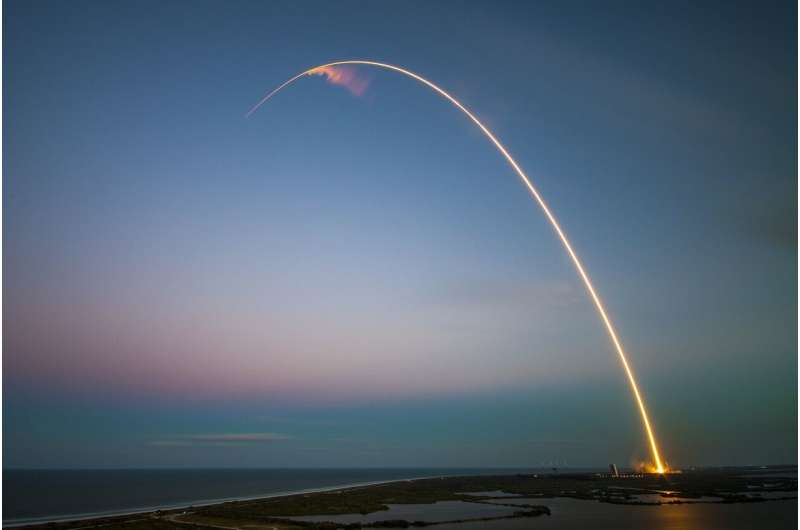
A late scrub due to weather on June 18 means it will have been at least 12 days since SpaceX last lit up the Space Coast sky with a rocket launch, the longest run between launches in more than a year.
It's not for a lack of trying, though. Bad weather and a scrub as the countdown clock hit 0 last week led to SpaceX taking down a Falcon 9 rocket for a Starlink mission and switching it up with a Falcon 9 to launch a European TV satellite. The first try on Tuesday night, though, faced high winds at the launch site.
The SES 24 mission flying the ASTRA 1P communication satellite for Luxembourg-based communications company SES will now try to launch from Cape Canaveral Space Force Station's Space Launch Complex 40 on Wednesday during a two-hour, 49-minute window that opens at 5:25 p.m. The satellite will service TV markets in Germany, Spain and France.
Space Launch Delta 45's weather squadron forecasts only a 45% chance for good conditions for June 19.
If it does launch, the first-stage booster will be making its ninth flight and will aim for a landing downrange on the droneship.
New training programs will prepare astronauts to perform medicine while thousands of miles away from Earth
In the coming decade, more people will go to space than ever before as human spaceflight enters a new era. NASA, the European Space Agency and other governmental agencies are partnering to develop crewed missions beyond the moon. At the same time, these agencies are collaborating with private companies using new technologies to drive down the price of space exploration.
Companies such as SpaceX, Blue Origin and Sierra Space have developed vehicles with reusable boosters, automated flight systems and lightweight materials to support these deep space missions.
327th ESA Council : Media information session at ESA HQ
 Video:
00:36:48
Video:
00:36:48
ESA Director General Josef Aschbacher and ESA Council Chair Renato Krpoun brief journalists on decisions taken at the ESA Council meeting held in Paris on 18 and 19 June 2024.
Φsat-2 website for navigator

Φsat-2
Arctic Weather Satellite
Arctic Weather Satellite
 Image:
Metallic Mars
Image:
Metallic Mars Monitoring marine litter from space is now a reality
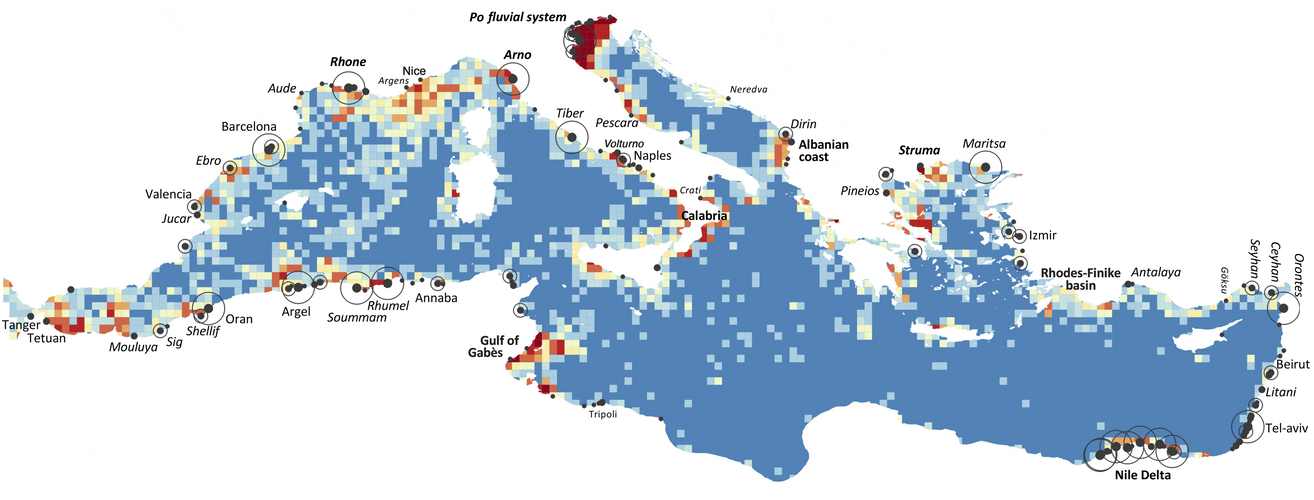
Every 60 seconds the equivalent of a lorry-load of plastic enters the global ocean. Where it goes after that remains largely unknown. But a new ESA Discovery study reported in Nature Communications has proven the concept of monitoring floating plastic litter using satellites.
Black hole observed 'awakening' for the first time
 Astronomers have been able to observe a supermassive black hole waking up and setting the heart of its host galaxy alight for the first time, the European Southern Observatory said on Tuesday.
The galaxy 300 million light years from Earth in the Virgo constellation had been quiet for decades until late 2019, when it suddenly began to shine brighter than ever before.
The centre of the gal
Astronomers have been able to observe a supermassive black hole waking up and setting the heart of its host galaxy alight for the first time, the European Southern Observatory said on Tuesday.
The galaxy 300 million light years from Earth in the Virgo constellation had been quiet for decades until late 2019, when it suddenly began to shine brighter than ever before.
The centre of the gal NASA Satellites Find Snow Didn't Offset Southwest US Groundwater Loss
 Record snowfall in recent years has not been enough to offset long-term drying conditions and increasing groundwater demands in the U.S. Southwest, according to a new analysis of NASA satellite data.
Declining water levels in the Great Salt Lake and Lake Mead have been testaments to a megadrought afflicting western North America since 2000. But surface water only accounts for a fraction of
Record snowfall in recent years has not been enough to offset long-term drying conditions and increasing groundwater demands in the U.S. Southwest, according to a new analysis of NASA satellite data.
Declining water levels in the Great Salt Lake and Lake Mead have been testaments to a megadrought afflicting western North America since 2000. But surface water only accounts for a fraction of Space Force Assigns Ursa Space to Deliver Analytics to USINDOPACOM Post-Japanese Disaster
 Ursa Space Systems, Inc., a leader in satellite insights, has completed a U.S. Space Force Space Systems Command (SSC) task order supporting the US Indo-Pacific Command (USINDOPACOM) in response to Japan's recent natural disaster. Ursa Space has provided analysis of commercial space remote sensing data to assess the damage through Operational Planning Products (OPPs). The products supplied inclu


