

Australian startups join forces to test AI computing in space
 Two emerging Australian space startups - AICRAFT and Antaris Space Space - have signed of a memorandum of understanding (MOU) to test new Artificial Intelligence and Machine Learning (AI/ML) models in space, with the goal of developing and space-qualifying new computational capabilities for satellite-based applications.
Under the MoU the two startups, who are both members of the SmartSAT C
Two emerging Australian space startups - AICRAFT and Antaris Space Space - have signed of a memorandum of understanding (MOU) to test new Artificial Intelligence and Machine Learning (AI/ML) models in space, with the goal of developing and space-qualifying new computational capabilities for satellite-based applications.
Under the MoU the two startups, who are both members of the SmartSAT C Xplore secures $16.2M in venture funding and customer contracts
 Xplore Inc. announced it has received $16.2 million in funding to date. The company has aligned itself with exceptional strategic and veteran space sector investors, including: Alumni Ventures, Brightstone Venture Capital, KittyHawk Ventures, Private Shares Fund, Starbridge Venture Capital, Helios Capital, Lombard Street and Gaingels. Notable investors also include Tremendous View, Kingfisher Ca
 SpaceX Falcon 9 rocket to launch Inmarsat's newest satellite
 A SpaceX Falcon 9 rocket will launch the second in the Inmarsat-6 series of satellites, I-6 F2, from Cape Canaveral, Florida in Q1 2023. Japan's Mitsubishi Heavy Industries launched the first of the series, I-6 F1, in December 2021 and its fully electric propulsion system is now raising it to a geostationary orbital slot, 36,000km (22,000 miles) over the Indian Ocean. I-6 F1 will enter service i
 Atlas 5 launches GOES-T weather satellite

An Atlas 5 successfully launched the latest in a series of geostationary weather satellites March 1, exactly four years after the launch of the satellite it is replacing.
The post Atlas 5 launches GOES-T weather satellite appeared first on SpaceNews.
General Atomics and Orion Space win contracts for military weather satellites
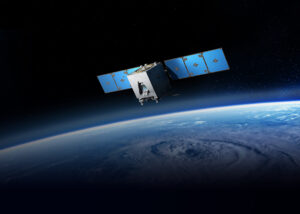
The U.S. Space Force selected General Atomics Electromagnetic Systems and Orion Space Solutions to each develop and launch demonstration satellites for weather imaging and cloud characterization.
The post General Atomics and Orion Space win contracts for military weather satellites appeared first on SpaceNews.
Lockheed Martin and Northrop Grumman select payload providers for Space Force missile-warning satellites
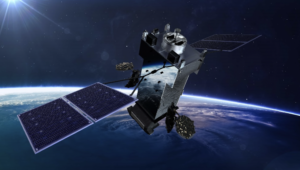
Lockheed Martin announced March 1 it has selected Raytheon Technologies to supply a second payload for the Next Generation Overhead Persistent Infrared (Next Gen OPIR) geosynchronous satellites.
The post Lockheed Martin and Northrop Grumman select payload providers for Space Force missile-warning satellites appeared first on SpaceNews.
Space Development Agency awards 126 satellites to Build Tranche 1 Transport Layer
 The Space Development Agency (SDA) has announced the awards of three prototype agreements worth approximately $1.8 billion to establish the foundation for Tranche 1 Transport Layer (T1TL), a mesh network of 126 optically-interconnected space vehicles (SV) that will provide a resilient, low-latency, high-volume data transport communication system, and be ready for launch starting in September 202
 Northrop Grumman wins SDA contract in development of Joint All-Domain constellation
 Northrop Grumman has received an award with a potential value of $692 million from the Space Development Agency (SDA) to produce and field an innovative, proliferated constellation of 42 low-Earth orbit (pLEO) satellites for the Tranche 1 Transport Layer (T1TL) mesh satellite communications network.
T1TL will provide resilient, low-latency, high-volume data transport supporting U.S. milita
Northrop Grumman has received an award with a potential value of $692 million from the Space Development Agency (SDA) to produce and field an innovative, proliferated constellation of 42 low-Earth orbit (pLEO) satellites for the Tranche 1 Transport Layer (T1TL) mesh satellite communications network.
T1TL will provide resilient, low-latency, high-volume data transport supporting U.S. milita North Korea claims latest missile launch was spy satellite test
 North Korea said Monday that it successfully conducted a test of a "reconnaissance satellite" over the weekend in a launch of what the South Korean and Japanese militaries described as a ballistic missile.
The test helped "confirm the characteristics and working accuracy of high-definition photographing system, data transmission system and attitude control devices," according to a brief re
North Korea said Monday that it successfully conducted a test of a "reconnaissance satellite" over the weekend in a launch of what the South Korean and Japanese militaries described as a ballistic missile.
The test helped "confirm the characteristics and working accuracy of high-definition photographing system, data transmission system and attitude control devices," according to a brief re Lockheed Martin to deliver 42 smallsats for SDA's Transport Layer
 The Space Development Agency (SDA) has awarded Lockheed Martin a prototype agreement with a potential value of approximately $700 million to design and build 42 small satellites. These satellites are part of Tranche 1, the initial warfighting capability of the agency's Transport Layer, which will connect space with other domains on Earth in a highly capable, networked environment of Joint All-Do


