

Envisat 20-year anniversary
 Video:
00:04:00
Video:
00:04:00
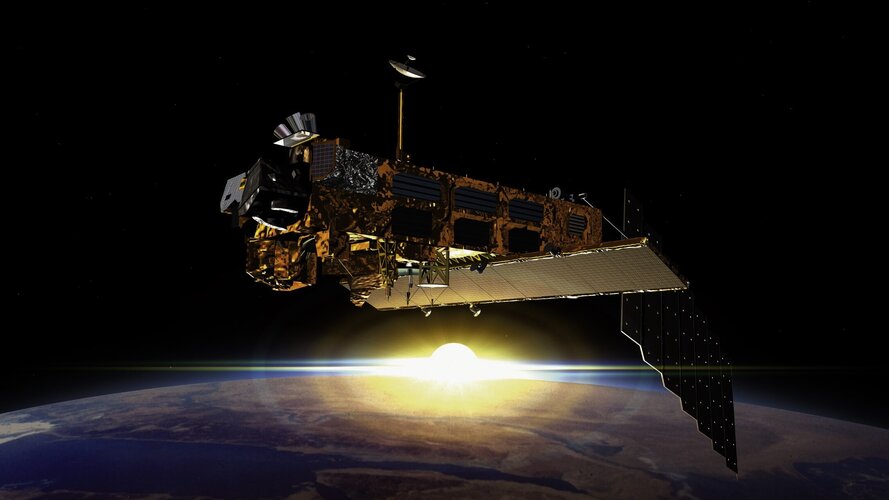
Twenty years ago, on the first of March 2002, ESA launched a new satellite to monitor our planet from space: Envisat. This research mission, which carried 10 instruments, would become a beacon for the development of future Earth observation satellites. In orbit for 10 years, double its projected lifespan, this flagship mission provided science with a wealth of data on the health of our planet and climate change – a treasure trove of data that is still used today. Thanks to the Heritage Space Programme, ESA ensures these precious data are preserved and made accessible for
Envisat: 20 years after launch
 Video:
00:04:00
Video:
00:04:00
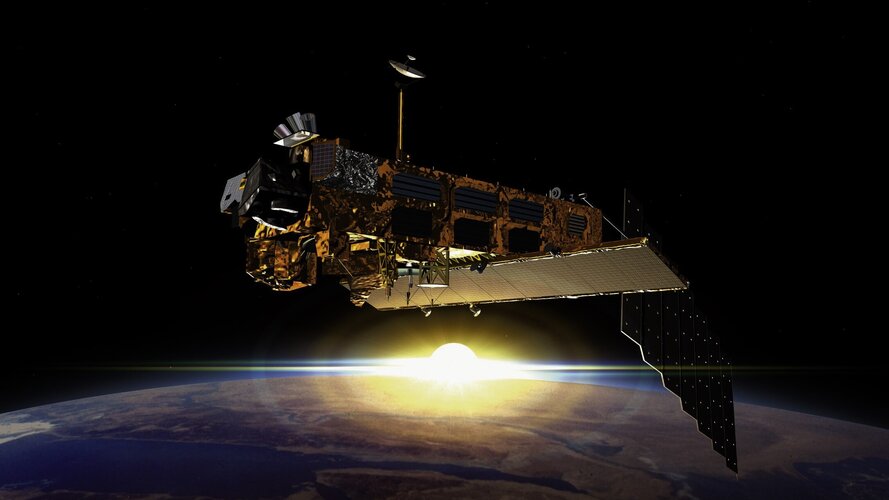
Twenty years ago, on the first of March 2002, ESA launched a new satellite to monitor our planet from space: Envisat. This research mission, which carried 10 instruments, would become a beacon for the development of future Earth observation satellites. In orbit for 10 years, double its projected lifespan, this flagship mission provided science with a wealth of data on the health of our planet and climate change – a treasure trove of data that is still used today. Thanks to the Heritage Space Programme, ESA ensures these precious data are preserved and made accessible for
ISS operations remain normal ahead of private astronaut mission
NASA said that operations of the International Space Station remain normal despite the growing rift between Russia and the West in response to Russia’s invasion of Ukraine.
The post ISS operations remain normal ahead of private astronaut mission appeared first on SpaceNews.
Rocket Lab launches Electron rocket, selects Virginia for Neutron factory
Rocket Lab carried out its first Electron launch of the year Feb. 28, placing a Japanese radar imaging satellite into orbit at the same time the company released its financial results and selected Virginia for a rocket factory.
Boeing increases use of 3D printing to speed up production of WGS military satellite
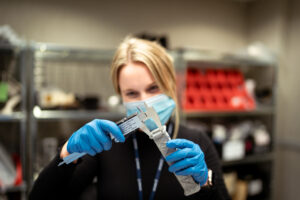
Boeing is 3D printing more than a thousand parts for WGS-11+, a new communications satellite it is producing for the U.S. Space Force
The post Boeing increases use of 3D printing to speed up production of WGS military satellite appeared first on SpaceNews.
Russia looks to China for collaboration in space but faces isolation over Ukraine invasion
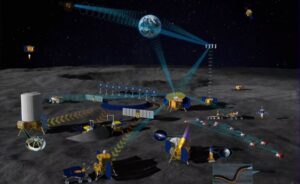
Roscosmos is looking to China as a supplier of components and a partner in missions following the invasion of Ukraine, but sanctions could still heavily impact any new plans.
A rocket is going to crash into the moon: Accidental experiment on the physics of impacts in space
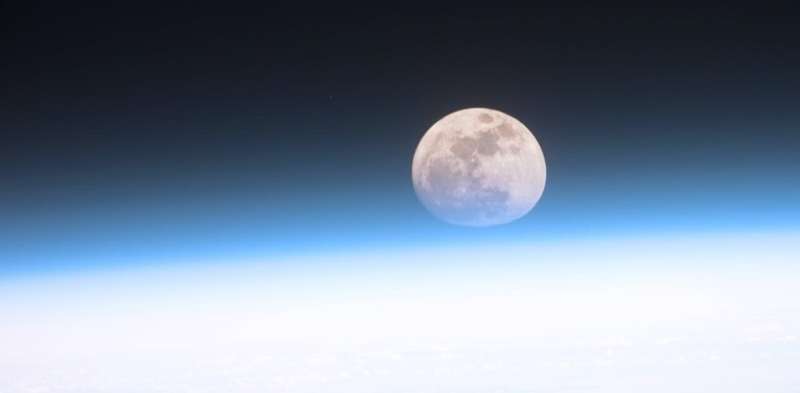
On March 4, 2022, a lonely, spent rocket booster will smack into the surface of the moon at nearly 6,000 mph. Once the dust has settled, NASA's Lunar Reconnaissance Orbiter will move into position to get an up-close view of the smoldering crater and hopefully shed some light on the mysterious physics of planetary impacts.
As a planetary scientist who studies the moon, I view this unplanned impact as an exciting opportunity. The moon has been a steadfast witness to solar system history, its heavily cratered surface recording innumerable collisions over the last 4 billion years. However, scientists rarely get a glimpse of the projectiles—usually asteroids or comets—that form these craters. Without knowing the specifics of what created a crater, there is only so much scientists can learn by studying one.
How the Wallops Command and Data Acquisition Station prepares for GOES-T satellite launch
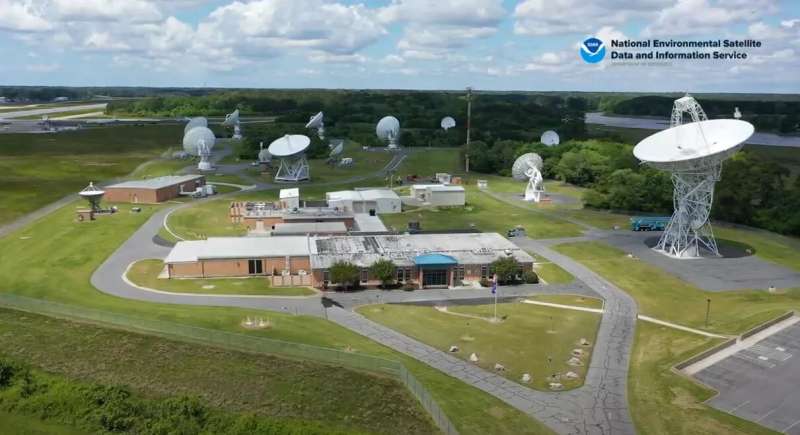
With the upcoming launch of NOAA's new GOES-T satellite, staff at ground stations such as NOAA's Wallops Command and Data Acquisition Station (WCDAS) located at NASA's Wallops Flight Facility are in full swing preparing for the event.
Although Wallops launches smaller rockets as well as research aircraft, unmanned aerial systems, and high-altitude balloons, the facility also supports NOAA's satellite tracking and commanding capabilities.
We spoke with Gregory Johnson, a GOES Ground System Engineer, and Jesse Speidel, Chief of Operations, about just what goes on at Wallops before and after a satellite launch.
First however, they explained that ground stations, like Wallops, are basically radio stations that communicate with satellites from the ground by transmitting and receiving radio waves via large parabolic antennas. Wallops tracks many satellites orbiting Earth this way, as well as deep space satellites that monitor solar activity. The ground stations can send commands to the satellites as well as receive data from them that they then send to be processed.
Russian-European Mars rover 'very unlikely' to launch this year
 A Russian-European mission to land a rover on Mars is "very unlikely" to launch this year due to sanctions over Moscow's invasion of Ukraine, the European Space Agency said.
The launch of the Rosalind Franklin rover, whose mission is to drill into Martian soil to seek out signs of life, was originally planned for 2020 but postponed due to Covid-19 and technical delays.
In January the ESA
A Russian-European mission to land a rover on Mars is "very unlikely" to launch this year due to sanctions over Moscow's invasion of Ukraine, the European Space Agency said.
The launch of the Rosalind Franklin rover, whose mission is to drill into Martian soil to seek out signs of life, was originally planned for 2020 but postponed due to Covid-19 and technical delays.
In January the ESA NASA to launch sophisticated weather satellite
 NASA plans to launch the latest in an advanced series of weather satellites, the GOES-T, from Florida on Tuesday to improve weather forecasting over the Pacific and western United States.
United Launch Alliance's Atlas V rocket is prepared for liftoff during a two-hour window starting at 4:38 p.m. EST from Complex-41 at Cape Canaveral Space Force Station.
Meteorologists around th
NASA plans to launch the latest in an advanced series of weather satellites, the GOES-T, from Florida on Tuesday to improve weather forecasting over the Pacific and western United States.
United Launch Alliance's Atlas V rocket is prepared for liftoff during a two-hour window starting at 4:38 p.m. EST from Complex-41 at Cape Canaveral Space Force Station.
Meteorologists around th 


